US Deindustrialization: Why Manufacturing Left America and What It Means for India
When we talk about US deindustrialization, the long-term decline of manufacturing output and jobs in the United States since the 1970s. Also known as manufacturing decline in America, it’s not just about factories closing—it’s about entire towns losing their economic heartbeat, supply chains shifting overseas, and a generation of workers left behind. This wasn’t an accident. It was the result of cheaper labor abroad, automation, trade deals like NAFTA, and a focus on finance over production. By 2020, the U.S. lost over 5 million manufacturing jobs since 2000, and many of those roles never came back.
Meanwhile, countries like India stepped in—not by copying the old model, but by building something new. While the U.S. focused on cutting costs, India focused on scale, government support like Make in India, and building local supply chains. Factories in Tamil Nadu now make textiles that outlast European ones. BEML in Bengaluru builds earth-moving equipment that powers Asia’s infrastructure. China led the charge in low-cost production, but India is carving out its own space: higher quality, better customization, and smarter use of local materials. The rise of India’s electronics industry—now worth $180 billion—isn’t random. It’s the direct result of companies seeing opportunity where the U.S. walked away.
US deindustrialization didn’t just move jobs—it moved expertise. Engineers who once designed assembly lines in Detroit now consult for factories in Gujarat. Suppliers who once made parts for American cars now ship them to Chennai. The tools, systems, and even the mindset of modern manufacturing shifted east. And it’s not just about who makes what anymore. It’s about who can respond faster, adapt better, and build with fewer imports. India’s textile hubs like Tirupur and Mirzapur aren’t just producing fabric—they’re preserving craftsmanship that American factories abandoned decades ago. The same logic applies to steel, furniture, and chemicals. Sodium hydroxide? Used everywhere in India—from soap to textiles. In the U.S., it’s still made, but not as much, and not as urgently.
What does this mean for you? If you’re in manufacturing, logistics, or even retail, the story of US deindustrialization isn’t history—it’s a playbook. It shows what happens when you stop investing in your own production. It also shows what’s possible when you build from the ground up with local talent, smart policy, and real grit. The posts below dive into exactly that: who’s winning now, what’s being made where, and how India’s factories are quietly becoming the new global standard.
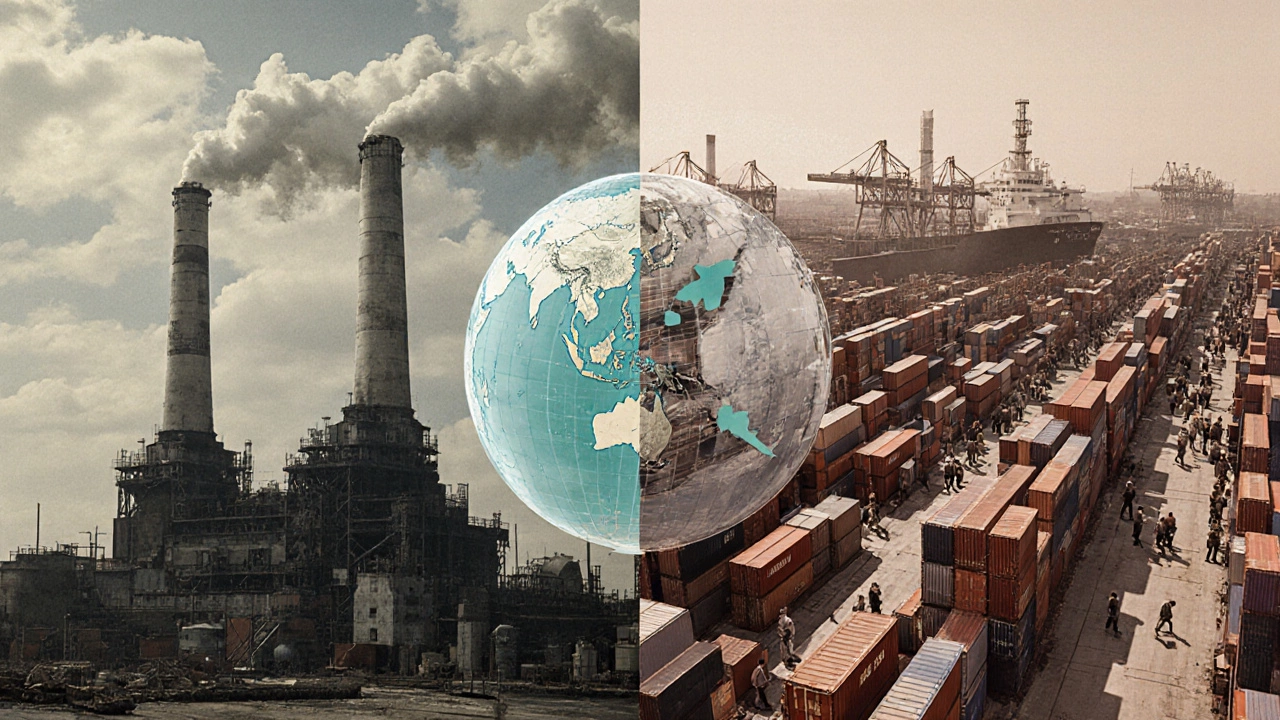
Explore why U.S. manufacturing fell-from globalization and automation to policy choices-plus its impact on jobs, the Rust Belt, and recent reshoring attempts.