Manufacturing Processes in India: How Things Are Made and Why It Matters
When we talk about manufacturing processes, the series of steps used to turn raw materials into finished goods. Also known as production methods, these are the hidden engines behind everything from the smartphone in your pocket to the wooden chair in your living room. In India, these processes aren’t just about machines—they’re about people, tradition, and smart adaptation. From tiny workshops in Mirzapur carving sheesham wood by hand to massive plants in Tamil Nadu spinning denim on automated looms, the country runs on a mix of old-school skill and modern efficiency.
What makes Indian manufacturing unique is how it blends scale with flexibility. You’ll find small scale manufacturing, businesses operating with minimal capital but high craftsmanship. Also known as local production, these operations make soap, metal planters, and custom furniture—often from home or small sheds. At the same time, textile manufacturing, the large-scale production of fabrics using spinning, weaving, and dyeing. Also known as fabric production, it’s the backbone of states like Tamil Nadu and Gujarat, where cotton and silk are turned into global exports. Meanwhile, electronics manufacturing, the assembly of devices like phones, TVs, and chips. Also known as electronic production, it’s exploded in the last decade, with India now producing $180 billion worth of gadgets annually. These aren’t isolated systems—they feed into each other. Sodium hydroxide from chemical plants cleans fabrics. Steel from mills builds machinery. Plastic from factories wraps products. Everything connects.
And it’s not just about making things—it’s about making them well. The 7S of manufacturing—Sort, Set, Shine, Standardize, Sustain, Safety, Save—isn’t some fancy theory. It’s what keeps workshops in Coimbatore running smoothly and factories in Uttar Pradesh from wasting materials. Companies that get this right don’t just cut costs—they build trust. That’s why global brands choose Indian textiles, why BEML dominates Asia’s earth-moving market, and why local furniture makers outperform big-name imports on quality and customization.
What you’ll find below isn’t a list of random articles. It’s a real look at how India builds things—whether it’s the cheapest steel, the most profitable food processing, or the most durable furniture material. These are the stories behind the products you use every day. No fluff. Just facts, figures, and the people making it happen.
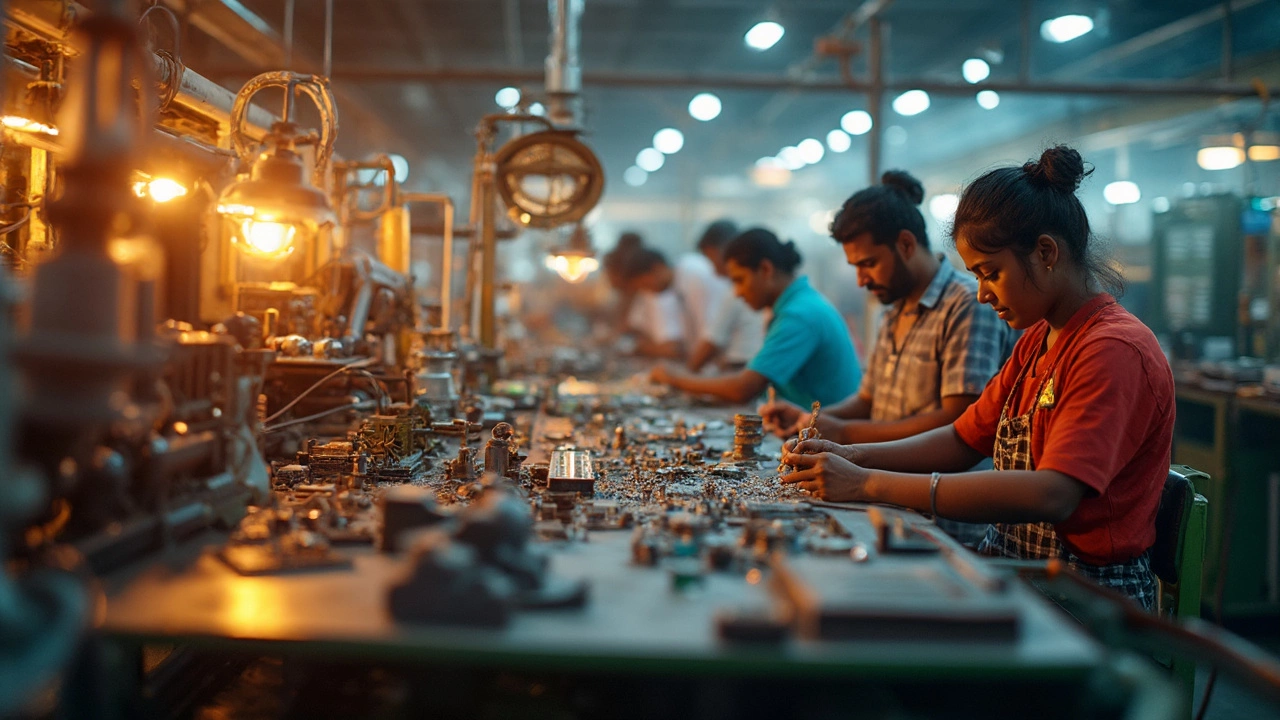
Discover the six main manufacturing processes pivotal to government schemes worldwide. This article delves into each process, highlighting its purpose and application within industrial planning. Learn how assembly, fabrication, molding, machining, joining, and additive manufacturing play crucial roles in economic development. With insights into governmental strategies, uncover practical tips for navigating the manufacturing landscape.