Manufacturing Jobs Loss: Why It's Happening and What It Means for India
When we talk about manufacturing jobs loss, the decline in employment within factories and production units due to automation, policy shifts, or global competition. Also known as industrial job displacement, it's not just about fewer workers on the floor—it's about entire communities losing their economic backbone. In India, this isn’t a new story, but it’s changing fast. As factories get smarter, cheaper, and more efficient, the human role is shrinking—not because people are lazy, but because machines can now do the same job faster, with fewer errors, and without breaks.
This shift isn’t happening in a vacuum. It’s tied to factory automation, the use of robotics, AI, and digital systems to run production lines with minimal human input. Look at electronics manufacturing in India: plants that once needed 500 workers to assemble phones now run with 150, thanks to automated soldering, testing, and packing lines. The same is true in textiles—Tamil Nadu’s weaving mills are replacing handloom operators with computer-controlled looms that produce 10 times more fabric in the same time. And it’s not just big companies. Even small-scale manufacturers are buying used CNC machines from China because the cost of labor is rising faster than the cost of machines.
Then there’s industrial policy, government rules and incentives that shape where and how manufacturing happens. Policies like Make in India promised jobs—but they also pushed factories to upgrade fast. Subsidies went to tech adoption, not hiring. Imported machinery got tax breaks. Local suppliers had to meet global standards or get left behind. The result? Many small workshops closed because they couldn’t afford the upgrade. Workers who spent 20 years cutting metal or stitching fabric suddenly found their skills outdated. No retraining. No safety net. Just silence where the machines used to hum.
But here’s the thing: manufacturing jobs loss doesn’t mean manufacturing is dying. It’s evolving. India still makes $180 billion worth of electronics every year. It still leads the world in textile quality. BEML builds heavy machinery that powers Asia’s infrastructure. The difference? Fewer hands are needed. More brains are required. The jobs that remain demand technical skills—programming a robot, fixing a sensor, managing a digital supply chain. And those jobs? They’re not in every village. They’re clustered in industrial zones, near ports, or in cities with training centers.
What you’ll find in these articles isn’t just data. It’s real stories—from Mirzapur’s woodworkers facing cheaper imports, to Tamil Nadu’s textile workers learning to operate automated looms, to small manufacturers in Gujarat switching from manual cutting to laser machines. You’ll see why Chinese steel is cheaper, how IKEA’s entry changed furniture jobs, and what happens when a factory replaces 100 workers with one technician. This isn’t about blaming technology. It’s about understanding how change really works—and what comes next for the people who built India’s factories.
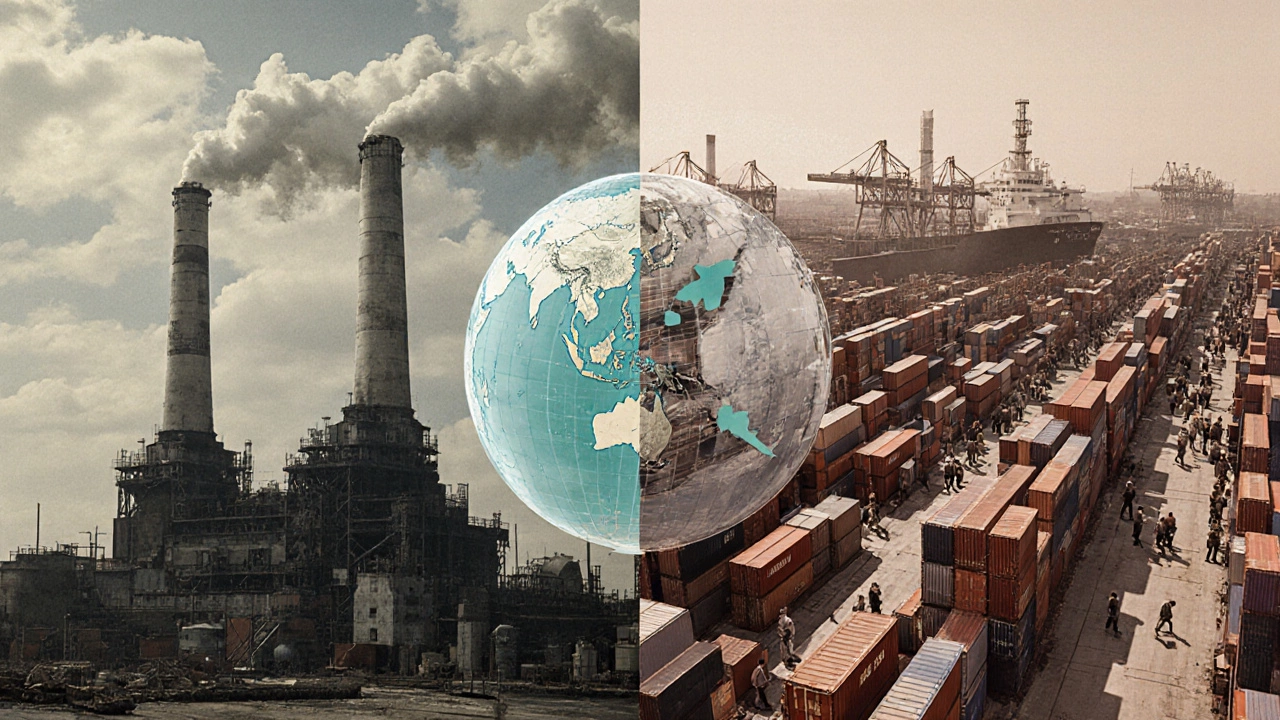
Explore why U.S. manufacturing fell-from globalization and automation to policy choices-plus its impact on jobs, the Rust Belt, and recent reshoring attempts.