Manufacturing Giants: India's Biggest Players in Heavy Industry and Production
When we talk about manufacturing giants, large-scale industrial enterprises that dominate production, supply chains, and export markets. Also known as industrial powerhouses, these are the companies that don’t just make products—they shape entire industries. In India, these giants aren’t just foreign brands with local factories. They’re homegrown champions like Bharat Earth Movers Limited (BEML), Asia’s largest manufacturer of earth-moving equipment, built for India’s infrastructure needs and backed by local service networks, and textile powerhouses in Tamil Nadu, the state producing 30% of India’s textile output, from denim to knitwear, with exports reaching global brands. These aren’t small workshops. They’re factories with thousands of workers, complex supply chains, and tech that rivals the best in the world.
What makes a manufacturing giant? It’s not just size. It’s control over raw materials, distribution, and innovation. Take electronics manufacturing in India, a $180 billion industry that now produces smartphones, TVs, and components at scale, thanks to government incentives and local talent. Or look at sodium hydroxide, the most used chemical in India, driving soap, textiles, and food processing across thousands of small and large factories. These aren’t isolated facts—they’re threads in the same fabric. The same companies that make heavy machinery also supply parts to electronics plants. The same textile mills in Coimbatore rely on chemical suppliers from Gujarat. These giants don’t operate in silos. They feed each other.
And it’s not just about what they make—it’s how they make it. From the 7S of manufacturing keeping workshops clean and efficient, to the hand-carved wooden furniture from Mirzapur using century-old techniques, Indian manufacturing giants blend tradition with technology. They compete with global names like Caterpillar and IKEA—not by copying them, but by being smarter about local needs, costs, and materials. You’ll find stories here about who’s winning, why they’re winning, and what it takes to build something that lasts in a market where price wars are fierce and quality is non-negotiable. Below, you’ll see real examples of these giants, their rivals, their supply chains, and the hidden players behind the scenes. No fluff. Just facts about who runs the factories, who buys the output, and where India’s industrial future is being forged.
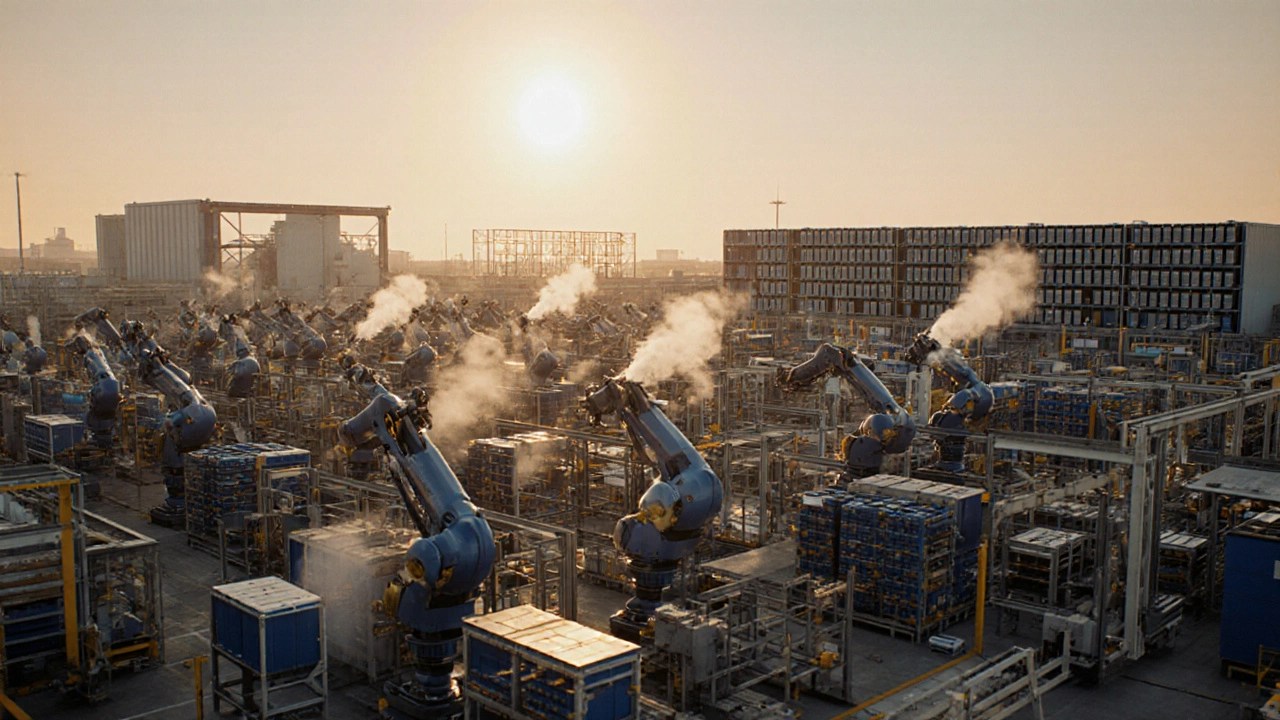
As of 2025, Toyota Motor Corporation is the world's largest manufacturing company by revenue, surpassing Samsung, Volkswagen, and Apple. Learn why vertical integration and supply chain control make Toyota the leader.