Manufacturing Revenue Comparison Tool
Compare Manufacturing Revenue
Compare revenue of major manufacturing companies against Toyota's $297 billion 2024 revenue
Enter company details above to see comparison
Why Revenue Matters More Than Volume
Toyota's revenue ($297B) is measured differently than companies like BYD or Foxconn. Revenue reflects the value of manufacturing operations, not just production volume. Companies like Foxconn produce more units but for lower-profit margin brands.
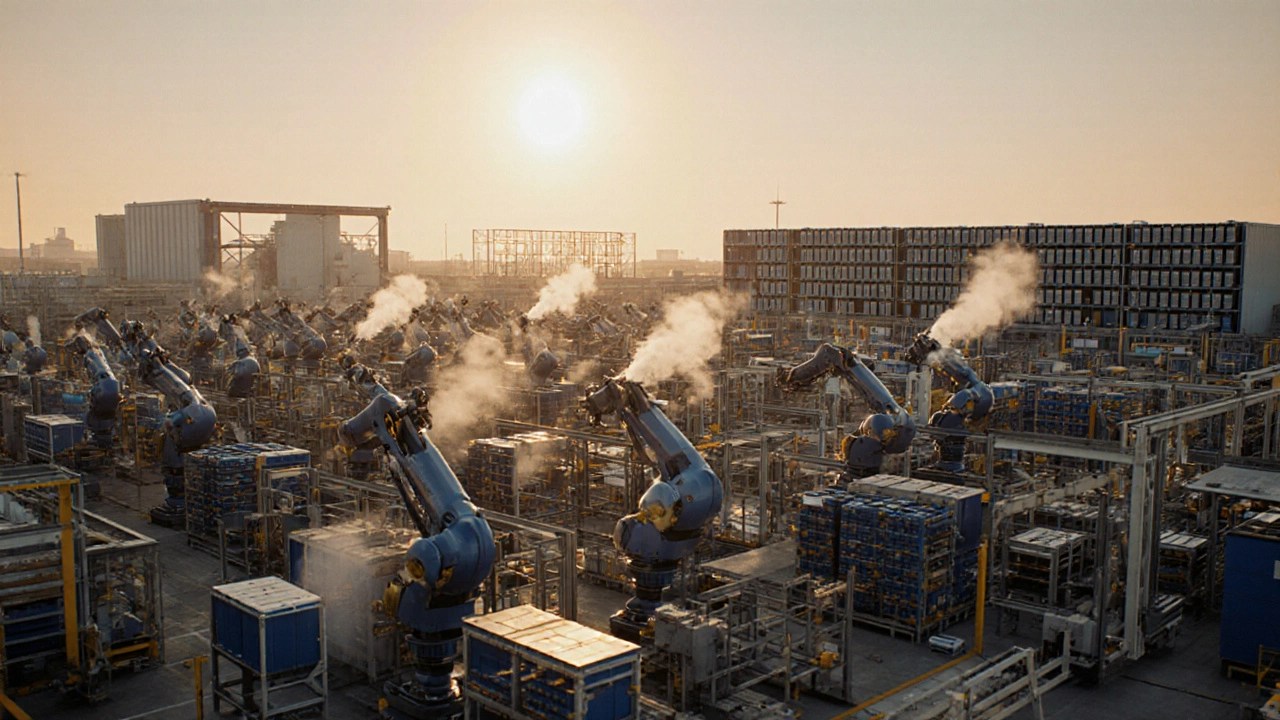
When you think of the biggest manufacturing company in the world, you might picture a massive factory with rows of robots assembling cars or smartphones. But the answer isn’t as simple as picking the company with the most factories. It’s about total revenue, global reach, supply chain control, and the sheer scale of what they produce. As of 2025, the largest manufacturing company by revenue is Toyota Motor Corporation.
Why Toyota Leads the Pack
To understand why Toyota is on top, you need to look beyond just car sales. Toyota doesn’t just build vehicles-it designs engines, makes batteries, produces electronics for its cars, and even manufactures components for other automakers. In 2024, Toyota reported $297 billion in revenue, far ahead of its closest competitors. That’s more than the GDP of many small countries.
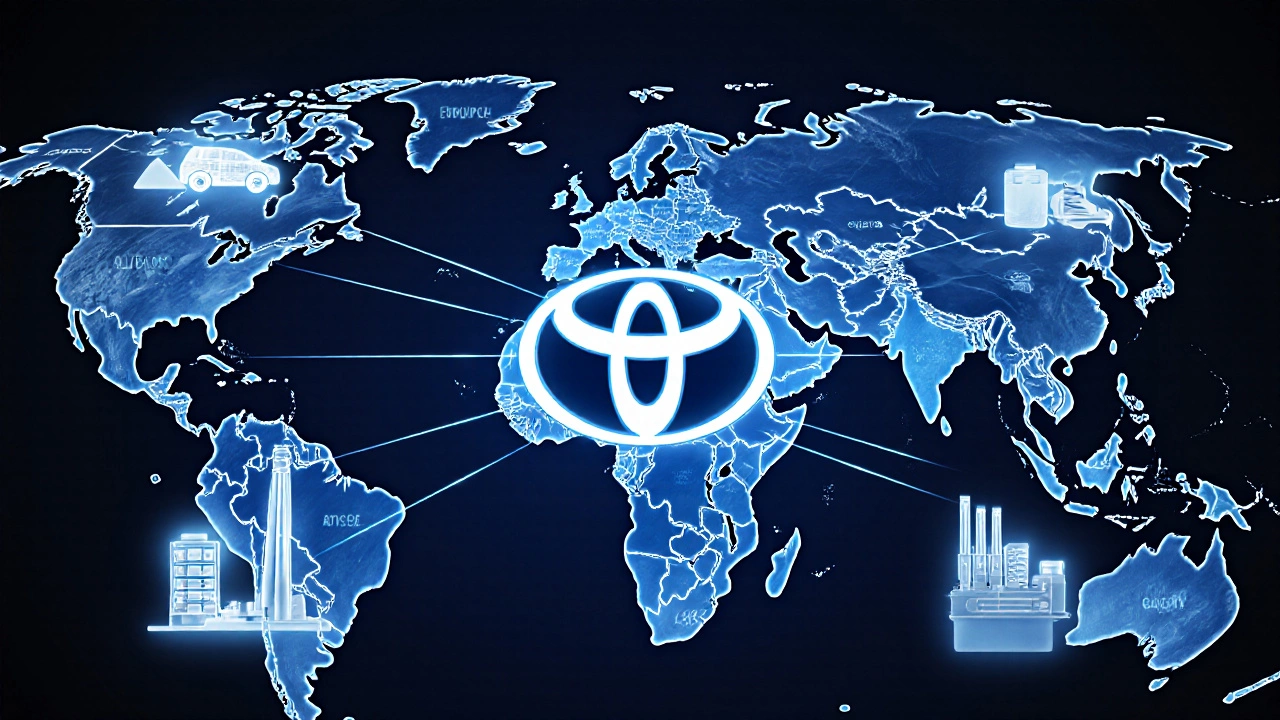
Toyota’s edge comes from its supply chain mastery. It doesn’t just outsource parts-it owns key suppliers, co-develops technology with them, and uses its scale to drive down costs without sacrificing quality. The company sells over 10 million vehicles a year across 170 countries. But it’s not just about cars. Toyota’s manufacturing empire includes hybrid and electric powertrains, fuel cell systems, and even robotics used in hospitals and warehouses.
How Revenue Beats Other Metrics
Some people assume the largest manufacturer must be the one with the most employees or the biggest factories. But that’s misleading. Samsung, for example, has more employees and builds more smartphones than anyone else. Yet its total manufacturing revenue in 2024 was $210 billion-still $87 billion behind Toyota.
Why? Because Samsung’s revenue includes software, services, and retail. When you strip out those non-manufacturing parts, its actual production output is smaller than Toyota’s. Apple is another example. It designs the iPhone, but doesn’t own the factories that make it. Apple’s manufacturing revenue comes from the devices it sells, but it doesn’t control the physical production the way Toyota does.
Toyota, on the other hand, owns its production lines, its stamping plants, its casting facilities, and its battery labs. That vertical integration gives it more control over costs, quality, and timing. When a parts shortage hit in 2021, Toyota kept producing cars while others shut down. That’s manufacturing muscle.
Top 5 Manufacturing Companies by Revenue (2024)
Here’s how the top players stack up when you measure by actual manufacturing output:
| Rank | Company | Revenue (USD) | Primary Products | Headquarters |
|---|---|---|---|---|
| 1 | Toyota Motor Corporation | $297 billion | Automobiles, hybrid systems, batteries, robotics | Japan |
| 2 | Samsung Electronics | $210 billion | Smartphones, semiconductors, displays | South Korea |
| 3 | Volkswagen Group | $192 billion | Automobiles, commercial vehicles, EV platforms | Germany |
| 4 | Apple Inc. | $187 billion | Smartphones, tablets, wearables | United States |
| 5 | Siemens AG | $107 billion | Industrial automation, medical equipment, energy systems | Germany |
Notice something? Four of the top five are either carmakers or electronics giants. That’s no accident. These industries require massive capital investment, complex supply chains, and global distribution networks. They’re the hardest to scale-and the most rewarding when you get it right.
What About China’s Manufacturing Powerhouse?
You might expect a Chinese company like BYD or Huawei to be on top. BYD, for example, sold more electric vehicles than Tesla in 2024 and is now the second-largest EV maker in the world. But its total revenue was $118 billion-still behind Siemens. Why?
Chinese manufacturers often focus on volume over premium pricing. They produce more units, but at lower average selling prices. Toyota sells cars with an average price of $36,000. BYD’s average is closer to $18,000. That means even if BYD sells twice as many vehicles, its revenue doesn’t catch up.
Plus, many Chinese manufacturers rely on contract production for global brands. They’re the factory floor, not the brand owner. That’s why they don’t show up at the top of revenue lists-even if they’re making the actual products.
Manufacturing vs. Assembly: The Real Difference
There’s a big difference between assembling products and manufacturing them. Apple doesn’t manufacture iPhones-it assembles them using parts made by dozens of suppliers. Foxconn builds the phones, but Apple doesn’t own the factories. That’s why Apple doesn’t qualify as a true manufacturer in the same way Toyota does.
True manufacturers design, source raw materials, refine them, shape them, and assemble them under one roof-or under one tightly controlled global network. Toyota makes its own steel, casts its own engine blocks, and builds its own transmission systems. It even owns mines in Australia and Brazil for key minerals used in batteries.
That’s why when supply chains break, Toyota doesn’t just wait for parts to arrive. It redesigns them, finds alternatives, and keeps rolling cars off the line. That’s not just efficiency-it’s manufacturing dominance.

What’s Next for the Largest Manufacturer?
Toyota isn’t resting on its laurels. It’s investing $70 billion over the next five years into electric vehicles, hydrogen fuel cells, and AI-driven production systems. It’s building new battery plants in the U.S., Canada, and Europe. It’s also expanding its robotics division, which now supplies automated systems to hospitals and warehouses around the world.
Its goal isn’t just to sell more cars. It’s to become the world’s largest provider of mobility solutions-from cars to drones to autonomous delivery robots. That’s the next level of manufacturing: not just making things, but making systems that change how people live.
Why This Matters to You
If you’re in business, this isn’t just about who’s #1. It’s about what winning looks like in global manufacturing. Toyota’s success shows that control over the entire production chain matters more than brand recognition or advertising spend. If you want to compete, you need to think like a manufacturer-not just a seller.
Small businesses can learn from this too. Even if you’re making a single product, owning your supply chain-even just one key component-gives you leverage. You don’t need to be Toyota to think like Toyota. Start by asking: Where do my parts come from? Can I make them myself? What happens if one supplier fails?
The largest manufacturer didn’t get there by luck. It got there by control, consistency, and long-term planning. That’s the real lesson.
Is Toyota the largest manufacturer by production volume?
No, Toyota is the largest by revenue, not volume. Companies like Foxconn and BYD produce more units annually. Foxconn assembles over 500 million smartphones a year. But since those phones are sold under Apple’s brand at a lower profit margin, Foxconn’s revenue doesn’t match Toyota’s. Revenue reflects value, not just quantity.
Why isn’t Tesla the largest manufacturer?
Tesla’s 2024 revenue was around $96 billion-less than half of Toyota’s. While Tesla designs and assembles its own vehicles, it still relies on outside suppliers for critical components like batteries and semiconductors. Toyota owns more of its supply chain, from raw materials to final assembly. Tesla is growing fast, but it hasn’t yet matched Toyota’s scale of vertical integration.
Does the U.S. have any manufacturing companies in the top 5?
Yes, Apple is the only U.S.-based company in the top 5. But Apple’s manufacturing is mostly outsourced. Its revenue comes from selling finished products, not from owning production facilities. True U.S. manufacturers like General Electric and Boeing are far behind in revenue, mostly due to slower growth in their core industries and heavy reliance on government contracts.
Can a company be the largest manufacturer without making cars?
Absolutely. Siemens, ranked #5, makes industrial machines, medical devices, and energy systems-not cars. But its global footprint in automation and infrastructure gives it massive revenue. Manufacturing isn’t just about consumer goods. Heavy industry, medical tech, and industrial equipment can generate more revenue than smartphones or vehicles, depending on pricing and scale.
Is Toyota’s lead likely to be challenged soon?
BYD and Samsung are the biggest threats. BYD’s EV sales are growing over 40% a year, and Samsung controls the global supply of memory chips used in everything from phones to cars. But Toyota’s investments in hydrogen, batteries, and robotics give it multiple growth paths. It’s not betting on one technology-it’s betting on all of them. That diversification makes it harder to overtake.
Final Thought: Size Isn’t Just About Numbers
The largest manufacturing company isn’t just the one with the most workers or the biggest factory. It’s the one that controls the most value-from raw materials to final delivery. Toyota doesn’t just build cars. It builds systems that move people, power homes, and drive innovation. That’s why it leads. And until another company can match that level of control, it’s unlikely anyone will take the top spot.