Make in India: How Local Manufacturing Is Reshaping the Economy
When you hear Make in India, a national initiative launched in 2014 to boost domestic manufacturing and attract global investment. Also known as India Manufacturing Mission, it’s not just about policy papers—it’s about factories in Tamil Nadu making denim, workshops in Mirzapur carving wooden furniture, and plants in Gujarat producing sodium hydroxide for global brands. This isn’t a dream. It’s happening right now, in real factories, with real people, making real products.
The push behind Make in India isn’t just patriotism—it’s economics. India’s electronics industry alone hit $180 billion in 2024, up ninefold since 2014. That’s not luck. It’s policy, investment, and local skill coming together. Small scale manufacturing is a big part of that story. From handmade soaps in Karnataka to custom metal planters in Pune, these tiny operations are the backbone of job creation and innovation. And they don’t need billion-dollar factories to succeed. They need access to raw materials, fair rules, and customers who trust Indian-made goods.
It’s not just about size—it’s about quality. India leads the world in textile quality, not because it’s cheap, but because it’s precise. The cotton from Gujarat, the silk from Banaras, the denim from Coimbatore—they’re not just exported. They’re chosen by global brands because they last longer, feel better, and are made with care. Meanwhile, companies like Bharat Earth Movers Limited (BEML) are building earth-moving equipment that outperforms imports, thanks to local engineering and service networks that no foreign competitor can match.
What makes Make in India different from other national campaigns is its focus on real, measurable outcomes. It’s not about slogans on billboards. It’s about the pharmacy owner in Hyderabad sourcing medicines from local pharma manufacturers. It’s about the furniture buyer in Delhi choosing Pepperfry over IKEA because the wood is local, the delivery is faster, and the craftsmanship is better. It’s about the factory in Uttar Pradesh using sodium hydroxide to make soap, and the one in Tamil Nadu spinning thread that ends up in European clothing.
There are gaps, sure. Supply chains still have bottlenecks. Some policies are slow to change. But the momentum is real. Every time someone buys an Indian-made smartphone, a handwoven sari, or a locally built construction machine, they’re not just spending money—they’re supporting a system that’s building skills, creating jobs, and rewriting the global manufacturing map.
Below, you’ll find real stories from inside this movement—the businesses that won, the industries that grew, and the hidden hubs you’ve never heard of but are now shaping the world’s supply chains.
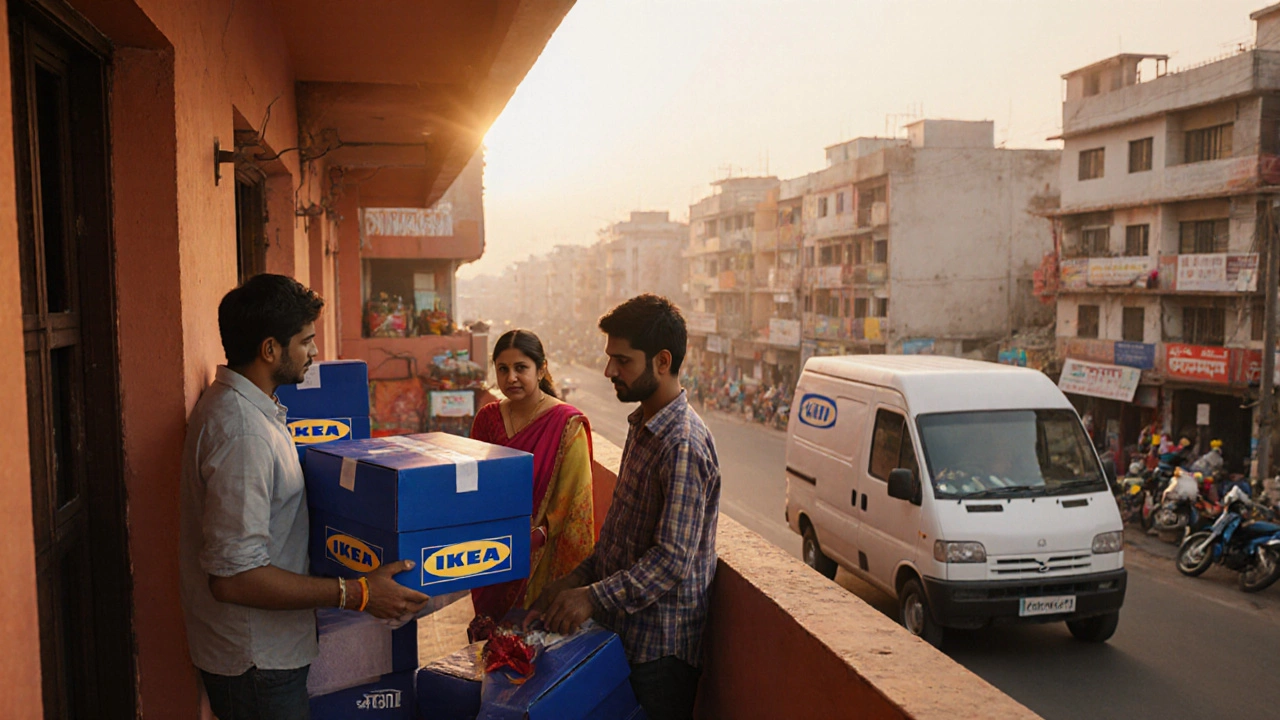
Explore why IKEA saw India as a prime market: middle‑class growth, Make in India benefits, affordable real‑estate, and a local supply chain.