Globalization Impact on Indian Manufacturing: Trends, Winners, and Real Changes
When we talk about globalization impact, the way global trade, supply chains, and foreign investment reshape local industries. Also known as international economic integration, it’s not just a buzzword—it’s changing how factories in India operate, who wins, and what gets made. India isn’t just being pulled into the global economy—it’s actively reshaping it. From textile mills in Tamil Nadu exporting denim to Europe, to BEML building earthmovers for African infrastructure, Indian manufacturers are no longer just suppliers. They’re becoming key players with global reach.
One big driver? global supply chains, the interconnected network of factories, logistics, and suppliers that move goods across borders. Also known as international production networks, they’ve forced Indian makers to get faster, cheaper, and more reliable. Look at the electronics industry: it grew ninefold in a decade, hitting $180 billion in 2024, because global brands like Apple and Samsung moved production here to avoid tariffs and tap into local talent. Meanwhile, Indian manufacturing, the ecosystem of factories, small workshops, and large plants producing goods within India. Also known as domestic industry, it’s no longer just about low labor costs. It’s about quality—like Indian textiles outlasting fabrics from other countries, or Mirzapur’s hand-carved wood furniture competing with European imports. Even IKEA came here not just to sell, but to source locally, proving Indian suppliers can meet global standards.
The flip side? globalization impact also means pressure. Chinese steel floods the market because of subsidies and lower environmental costs. Local furniture brands like Pepperfry had to step up their game to beat IKEA’s prices and design. But here’s the truth: globalization doesn’t just threaten—it creates openings. The companies that win are the ones that use global trends as fuel. They use foreign demand to upgrade tech, attract investment, and train workers. Sodium hydroxide, the most used chemical in India, powers everything from soap to textiles, and its demand keeps rising because global buyers want Indian-made products. The same goes for small businesses making custom metal planters or recycled plastic goods—they’re not just surviving; they’re exporting.
What you’ll find below are real stories from inside this shift. You’ll see how Caterpillar dominates over Komatsu not just because of size, but because of service networks that span continents. You’ll learn why Tamil Nadu became India’s textile hub—not by accident, but by adapting to global buyers’ demands. And you’ll understand why a pharmacy owner in Jaipur or a furniture maker in Mirzapur now thinks globally from day one. This isn’t theory. It’s what’s happening on the factory floor, in the warehouse, and at the port. The globalization impact isn’t coming. It’s already here—and the winners are those who built for it, not against it.
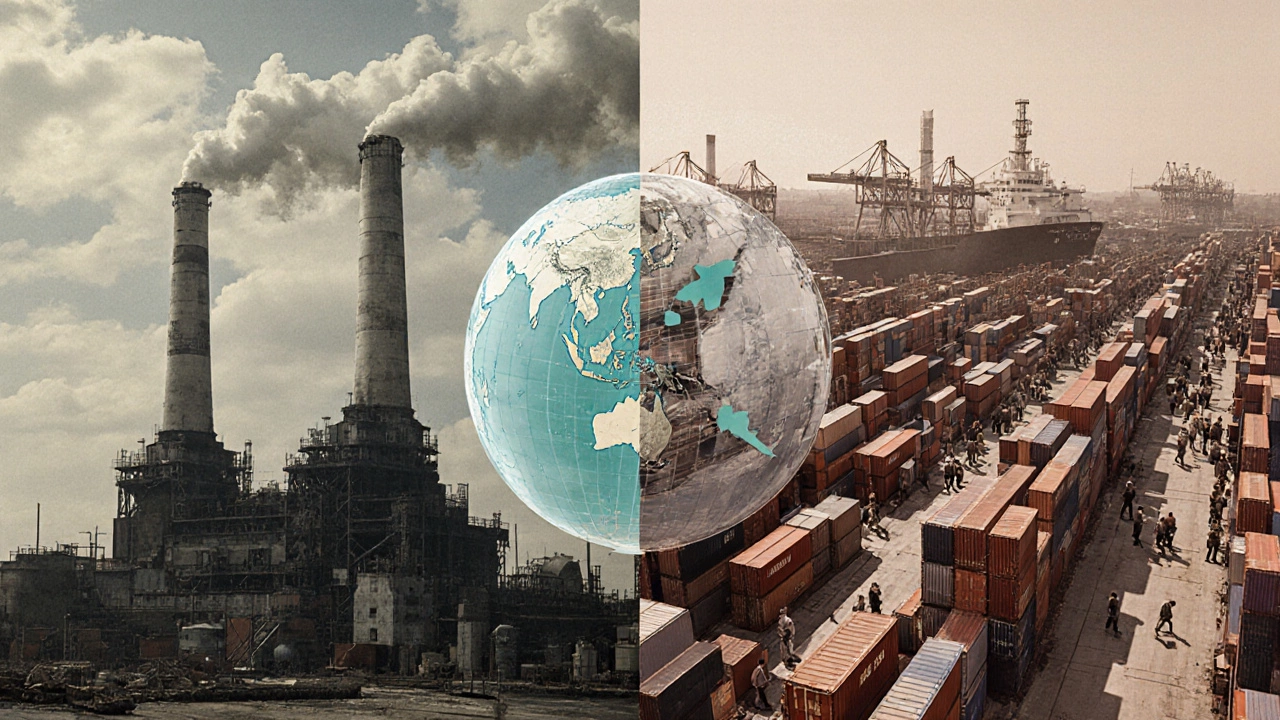
Explore why U.S. manufacturing fell-from globalization and automation to policy choices-plus its impact on jobs, the Rust Belt, and recent reshoring attempts.