Chemical Used in India: Key Types, Industries, and Applications
When we talk about chemical used in India, any substance intentionally produced or applied in industrial, agricultural, or consumer processes within the country. Also known as industrial chemicals, these are the invisible backbone of everything from textiles and medicines to fertilizers and packaging. India doesn’t just import chemicals—it makes them, modifies them, and puts them to work in ways that match local needs and scale.
The biggest users? Textile mills in Tamil Nadu rely on dyes and bleaching agents to treat cotton and silk. Food processors in Maharashtra use preservatives and flavor enhancers to extend shelf life and meet taste preferences. Pharmaceutical companies across Gujarat and Hyderabad depend on active ingredients and solvents to produce medicines sold globally. Even furniture makers in Mirzapur use chemical treatments to protect wood from termites and moisture. These aren’t niche uses—they’re daily operations.
What’s driving this? Lower production costs, government incentives under Make in India, and a growing domestic market. Local chemical manufacturers have stepped up to supply everything from basic acids to specialty polymers, reducing reliance on imports. You’ll find small-scale labs in Ludhiana mixing adhesives for shoe factories, and giant plants in Jamnagar producing ethylene for plastic bottles. The same chemicals that go into your detergent might also be in the yarn of your shirt or the packaging of your snack.
Not all chemicals are created equal. Some are regulated tightly—like those in food or medicine—while others, like industrial solvents, face looser oversight. That’s why knowing which ones are used where matters. It affects safety, environmental impact, and even export compliance. Companies that track chemical sourcing and usage aren’t just being careful—they’re building trust with global buyers.
Below, you’ll find real examples of how chemicals show up in Indian manufacturing—from the dye in a saree to the resin in a smartphone case. These aren’t theoretical discussions. They’re snapshots of what’s happening in factories, labs, and workshops across the country.
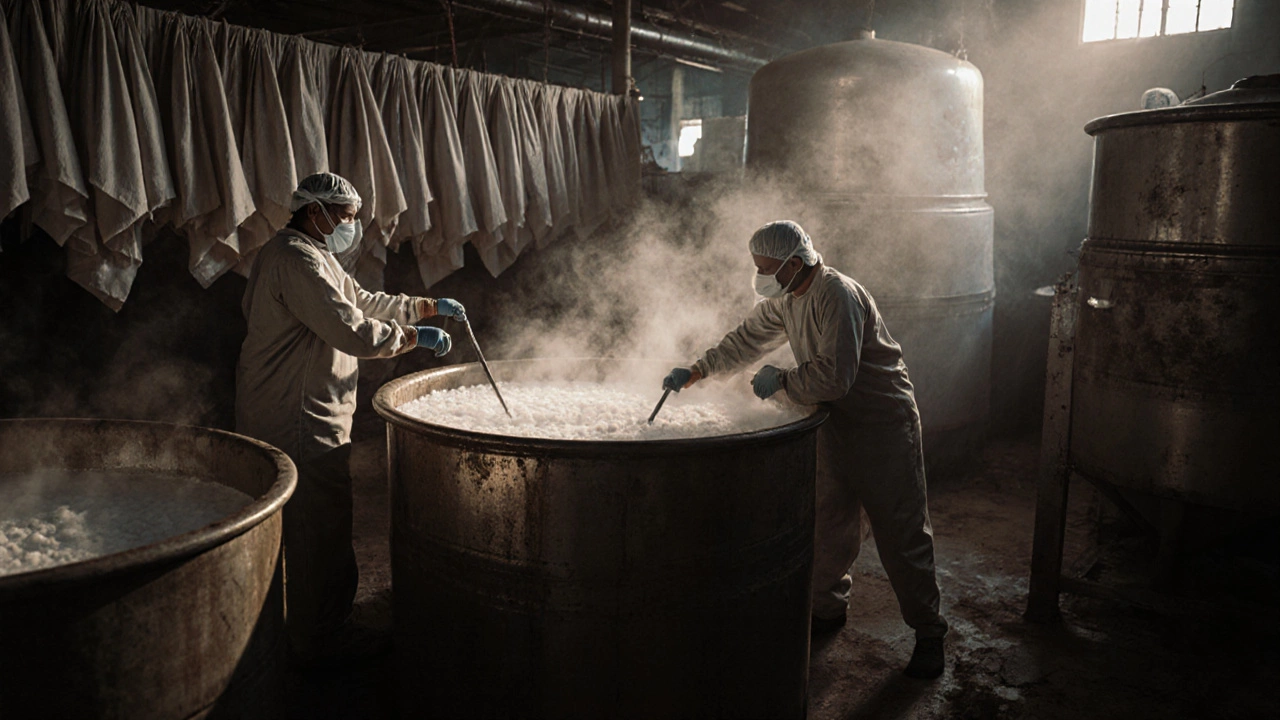
Sodium hydroxide is the most heavily used chemical in India, powering everything from soap and textiles to food processing and fertilizers. Learn why this simple compound drives the nation's manufacturing and daily life.