American Manufacturing Decline: Why It Happened and What India Is Doing Differently
When people talk about the American manufacturing decline, the reduction in industrial output, factory jobs, and domestic production capacity in the United States since the 1980s. Also known as deindustrialization, it’s not just about factories closing—it’s about who made the rules, who paid the price, and who stepped in. Between 1980 and 2020, the U.S. lost over 5 million manufacturing jobs. That’s not a glitch. It was a strategy. Cheap labor overseas, tax breaks for outsourcing, and weak trade enforcement made it easier to build things in China, Vietnam, or Mexico than in Ohio or Pennsylvania. Meanwhile, the U.S. shifted focus to finance, tech, and services—and forgot how to make things at scale.
But here’s the twist: while American factories emptied out, other countries didn’t sit still. Indian manufacturing, the growing ecosystem of factories, small-scale producers, and export-focused industries across India started rising—not because of luck, but because of clear policy, local demand, and government push. India didn’t wait for foreign companies to bring jobs. It built incentives for them to stay. The Make in India campaign, lower energy costs, skilled labor in textiles and electronics, and local supply chains turned India into a real alternative. Today, India produces $180 billion in electronics, exports billions in textiles, and makes earth-moving equipment that rivals global giants. This isn’t about replacing America—it’s about proving you don’t need to follow its path to succeed.
The global manufacturing, the interconnected network of factories, suppliers, and logistics systems that produce goods worldwide isn’t a single race anymore. It’s a board with multiple players. China still dominates volume, but India is winning on flexibility, customization, and responsiveness. Countries like Vietnam and Bangladesh are strong in textiles, but none match India’s mix of scale, skill, and government support. Even in heavy machinery, companies like BEML are making machines that outlast and outperform imports. And when it comes to small businesses, India’s informal manufacturing sector—think hand-carved furniture in Mirzapur or metal workshops in Coimbatore—is quietly powering local economies.
What’s missing in the American story isn’t technology. It’s will. The U.S. has the engineers, the robots, the capital. But without a national plan to rebuild supply chains, support small manufacturers, or protect skilled labor, the decline keeps rolling. Meanwhile, India’s approach is simple: build where you are, grow with what you have, and make it matter. You won’t find a single reason for the American decline—it’s a mix of policy, economics, and culture. But you will find clear lessons in what’s working elsewhere.
Below, you’ll find real stories from the frontlines of manufacturing—how Indian factories compete with global giants, why certain materials dominate local markets, and what small businesses are actually making right now. No theory. No fluff. Just what’s happening on the ground.
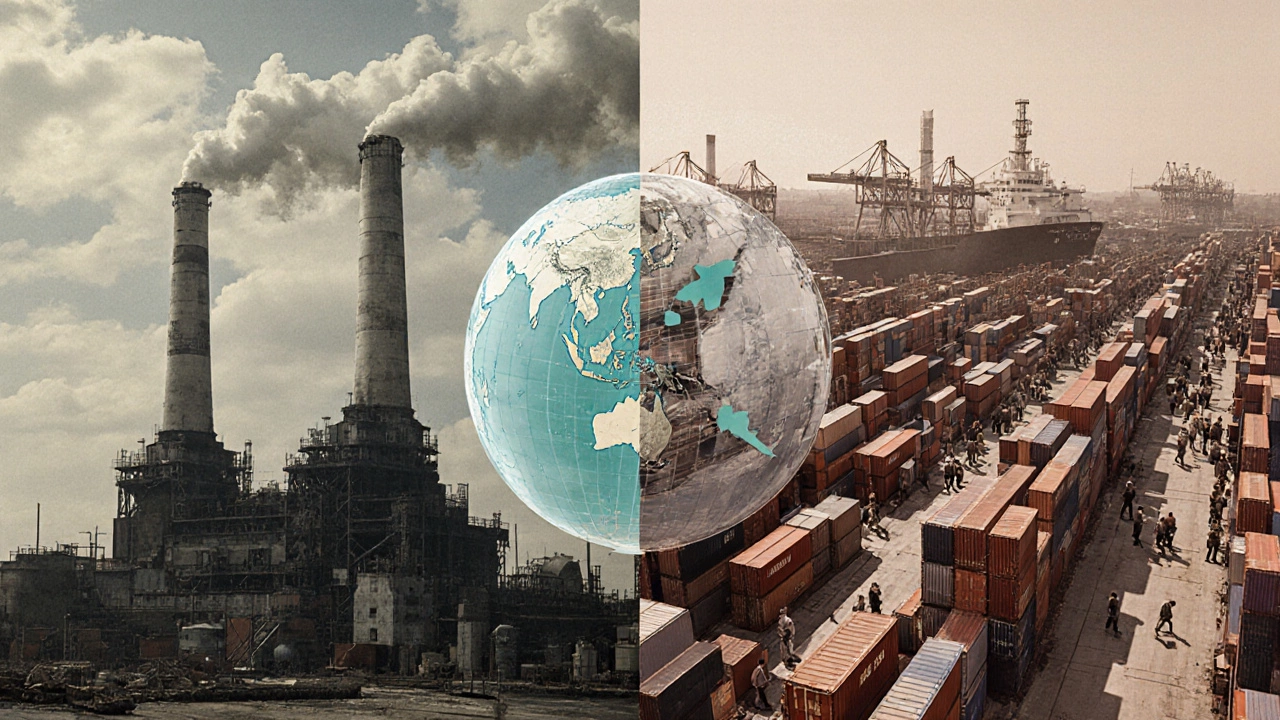
Explore why U.S. manufacturing fell-from globalization and automation to policy choices-plus its impact on jobs, the Rust Belt, and recent reshoring attempts.