Mexico Manufacturing Cost Calculator
See how much you could save by manufacturing in Mexico compared to the U.S. or China.
Your Production Details
Location Comparison
Cost Comparison
Mexico
U.S.
China
Based on your production volume and current costs
For startups and small manufacturers looking to cut costs without sacrificing quality, Mexico has become one of the most talked-about options in recent years. It’s not just a rumor - it’s a measurable shift. Companies that moved production from China to Mexico saw their shipping times drop by 60%, labor costs fall by 40%, and tariffs vanish under USMCA rules. But why does this happen? And is it really that simple?
Lower Labor Costs Without the Trade-Off
One of the biggest reasons manufacturing in Mexico is cheaper comes down to wages. The average hourly wage for a manufacturing worker in Mexico is around $5.50 USD. Compare that to $28 in the U.S. or $14 in Vietnam. That’s not a small difference - it’s a game-changer for businesses running on thin margins.
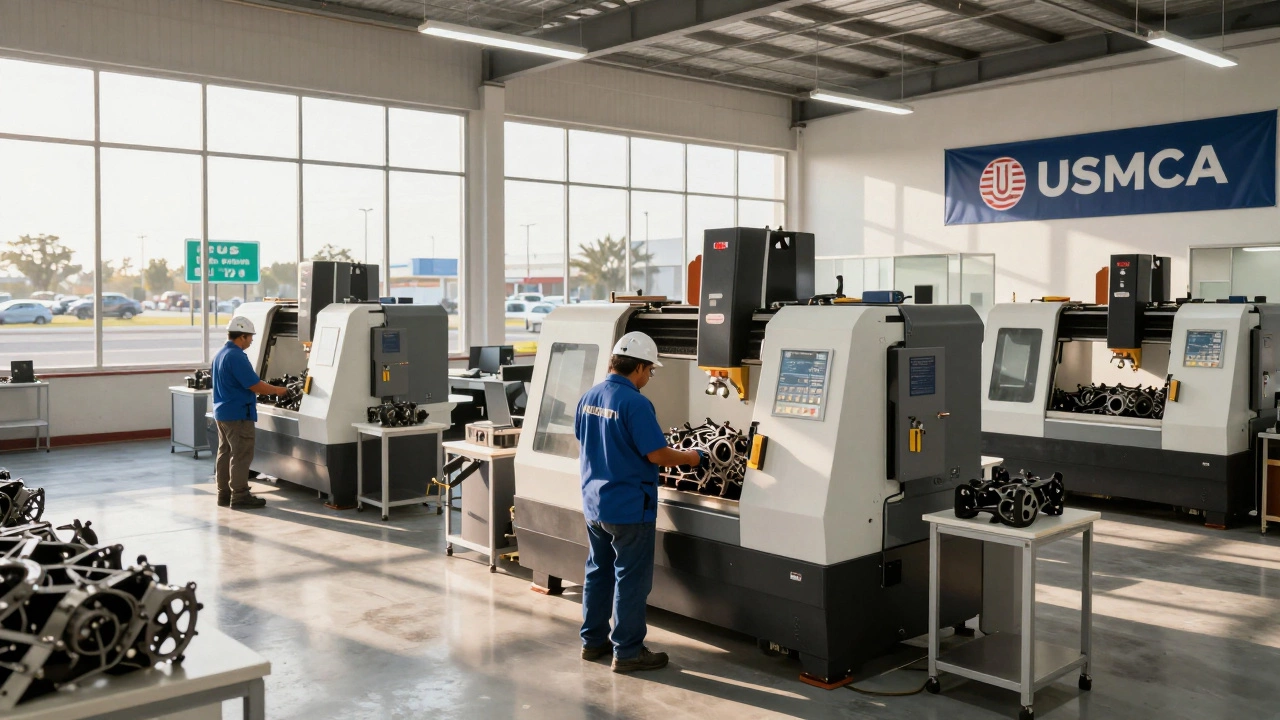
But here’s the catch: Mexican workers aren’t less skilled. Many factories in northern states like Monterrey and Tijuana have been producing for U.S. brands for decades. Workers know how to operate CNC machines, assemble automotive parts, and run quality control systems. The difference isn’t skill - it’s cost. A factory in Guadalajara can hire a team of 50 technicians for the same price as 15 in Ohio.
Proximity to the U.S. Market
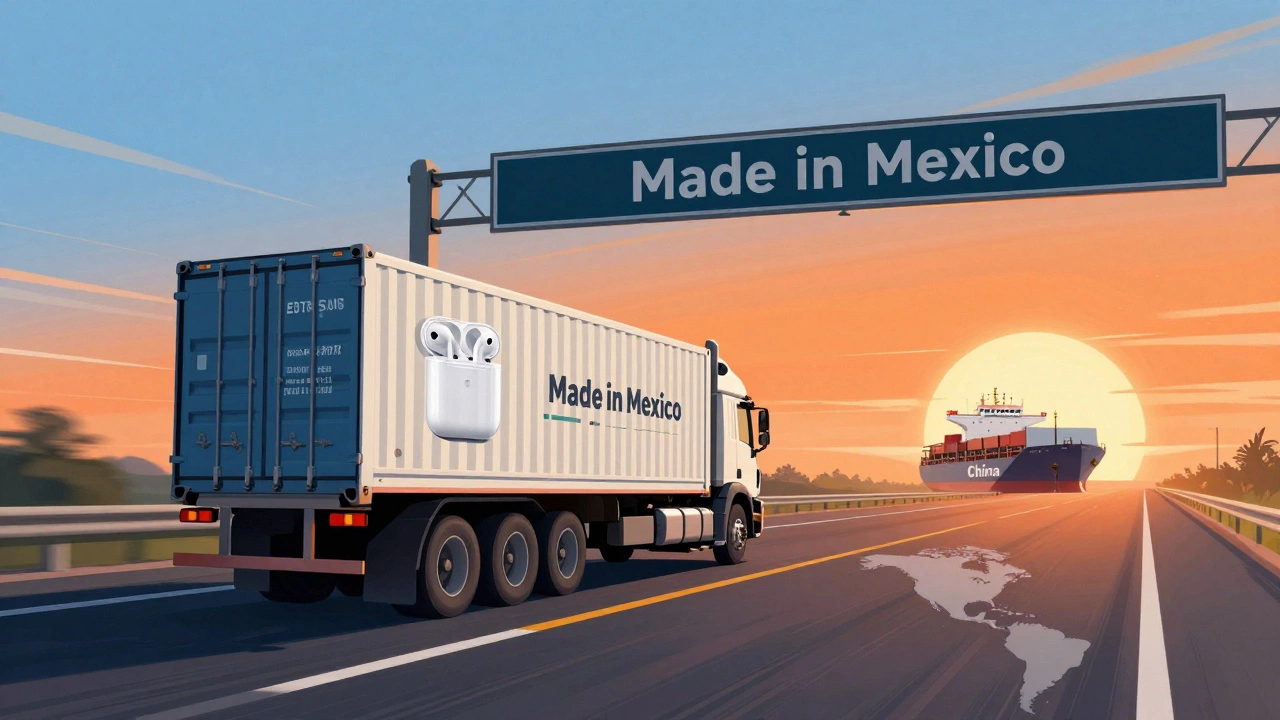
Shipping goods from China to the U.S. takes 30-45 days by sea. From Mexico? Three to five days by truck. That means less inventory sitting in warehouses, fewer delays, and faster response to market changes.
For startups, this isn’t just about speed - it’s about cash flow. When you can ship a prototype, test demand, and scale production in under a week, you don’t need to order 50,000 units upfront. You can start small, test, then ramp up. That reduces risk. It also cuts down on storage costs and the chance of being stuck with unsold stock.
Companies like Tesla and Apple already use this model. Tesla’s battery parts for its Texas plant come from Mexico. Apple’s AirPods and HomePod components are assembled just across the border. These aren’t small players - they’re giants betting big on Mexico’s logistics edge.
USMCA Makes Tariffs Disappear
The United States-Mexico-Canada Agreement (USMCA), which replaced NAFTA in 2020, is one of the most underrated advantages for manufacturers. If your product is made with at least 75% North American content - including parts from the U.S. or Canada - it enters the U.S. duty-free.
This means you can source materials from Texas, assemble them in Juárez, and ship them to Chicago without paying a single dollar in import tax. That’s not possible with China. Even if you pay 2.5% in tariffs, that adds up fast. For a $100 product, that’s $2.50 per unit. Multiply that by 100,000 units, and you’re talking $250,000 in extra costs.
USMCA also has strict rules on labor. Factories must prove they’re paying fair wages and respecting worker rights. That sounds like a burden - but it’s actually a benefit. It filters out fly-by-night operators and gives buyers confidence they’re not funding exploitation.
Lower Energy and Infrastructure Costs
Electricity in Mexico is about 30% cheaper than in the U.S. for industrial users. Natural gas prices are also lower, especially in states like Nuevo León and Coahuila, where pipelines connect directly to U.S. supply lines.
Plus, many industrial parks in Mexico come with pre-built factories, water treatment systems, and even on-site security. You don’t have to spend $2 million building a facility from scratch. You can lease a 20,000-square-foot plant for $12,000 a month - fully wired, zoned, and ready to go. That’s a huge win for startups that need to move fast.
Skilled Workforce with U.S. Standards
Mexico doesn’t just have cheap labor - it has trained labor. Over 400 technical schools across the country focus on manufacturing. Many of them partner with U.S. companies to design curriculums that match American industry standards.
In cities like Reynosa and Ciudad Juárez, you’ll find workers who speak English, know ISO 9001 protocols, and have experience working with U.S. quality inspectors. It’s not unusual for a Mexican factory to have a U.S.-based quality manager on-site three days a week. That level of integration isn’t common in Southeast Asia.
One startup in Phoenix started making medical device housings in Hermosillo. They trained their first 20 workers in Arizona, then flew them back to Mexico to train others. Within six months, their defect rate was lower than their old U.S. facility.
Government Incentives Are Real
Mexican state governments aren’t sitting still. They know manufacturing is their future. So they offer real incentives: tax holidays, reduced property taxes, free land for large investors, and even grants for training programs.
In Sonora, a company that hires 100 new workers can get up to $500,000 in training subsidies. In Querétaro, new factories get a 10-year property tax exemption. These aren’t empty promises - they’re legally binding agreements signed with state governors.
For a startup, that could mean saving $100,000 in the first year just for showing up. No need to wait for federal grants. No red tape. Just a signed letter and a factory lease.
What You Need to Watch Out For
It’s not all perfect. Mexico has challenges. Corruption still exists in some local offices. Bureaucracy can slow down permits. And while violence has dropped sharply in manufacturing zones, you still need to do your due diligence.
Here’s what works:
- Stick to the northern states - Tijuana, Ciudad Juárez, Monterrey, Hermosillo, Querétaro. These are safe, well-connected, and business-friendly.
- Work with a maquiladora - a factory that operates under special export rules. They handle customs, payroll, and compliance so you don’t have to.
- Use a local partner. Don’t try to run everything from Sydney or San Francisco. Hire a local operations manager. Pay them $3,000 a month. It’s cheaper than hiring a U.S.-based logistics firm.
Many startups fail because they treat Mexico like a cheap version of the U.S. It’s not. It’s a different system - one that rewards local knowledge, patience, and relationships.
Real Example: A $200K Startup That Scaled in 18 Months
A small company in Austin made solar-powered garden lights. They were losing money on every unit because of U.S. labor costs. They moved production to a maquiladora in Tijuana.
Here’s what changed:
- Production cost per unit dropped from $18 to $7.50
- Shipping time went from 45 days to 4 days
- They doubled their monthly output without hiring more staff
- They saved $120,000 in tariffs over 12 months
Today, they’re profitable, have 12 employees, and export to Canada and Australia. All because they moved 200 miles south.
Final Thought: It’s Not About Cheap - It’s About Smart
Mexico isn’t cheap because it’s poor. It’s cheap because it’s smartly positioned. Close to the U.S. market. With skilled workers. With legal advantages. With infrastructure built for export.
If you’re a startup looking to scale without burning cash, this isn’t a gamble. It’s a strategy. And it’s working for thousands of businesses right now.
Is manufacturing in Mexico safe?
Yes - if you choose the right locations. Northern states like Tijuana, Monterrey, and Querétaro have some of the lowest crime rates in Mexico and are home to hundreds of foreign-owned factories. These areas are heavily monitored, have private security, and are connected to U.S. supply chains. Avoid border towns with known instability. Stick to industrial parks with established companies - they’re the safest bet.
Do I need to speak Spanish to manufacture in Mexico?
Not necessarily. Most maquiladoras have English-speaking managers, especially those serving U.S. clients. Many factories even have bilingual HR teams and quality control staff. But if you plan to visit often or handle permits yourself, learning basic Spanish will make things smoother. It’s not required - but it’s helpful.
How long does it take to set up a factory in Mexico?
With a maquiladora, you can start production in as little as 30 days. You just sign a lease, send your equipment, and hire workers through them. Building your own facility from scratch can take 6-12 months, depending on permits and construction. For startups, using an existing maquiladora is the fastest and cheapest route.
Can I use Mexican manufacturing and still sell in Europe?
Yes. While Mexico’s biggest advantage is access to the U.S. market, many factories also ship to Europe, Canada, and Australia. The key is understanding customs rules. Products made in Mexico may still face EU tariffs, but they’re often lower than if shipped from Asia. Some companies use Mexico as a staging point to avoid high shipping costs from China.
Are Mexican factories reliable for quality control?
Absolutely. Many Mexican factories meet ISO 9001, IATF 16949 (for automotive), and even FDA standards. Companies like Boeing, General Motors, and Honeywell have been producing high-precision parts in Mexico for over 20 years. The key is choosing a factory with a track record - ask for audit reports, client references, and quality metrics before signing.
If you’re considering moving production, start by visiting one of the top industrial zones. Talk to three maquiladoras. Compare their pricing, lead times, and compliance records. Don’t just take a quote - ask for a trial run. You might be surprised how easy it is to make the switch.