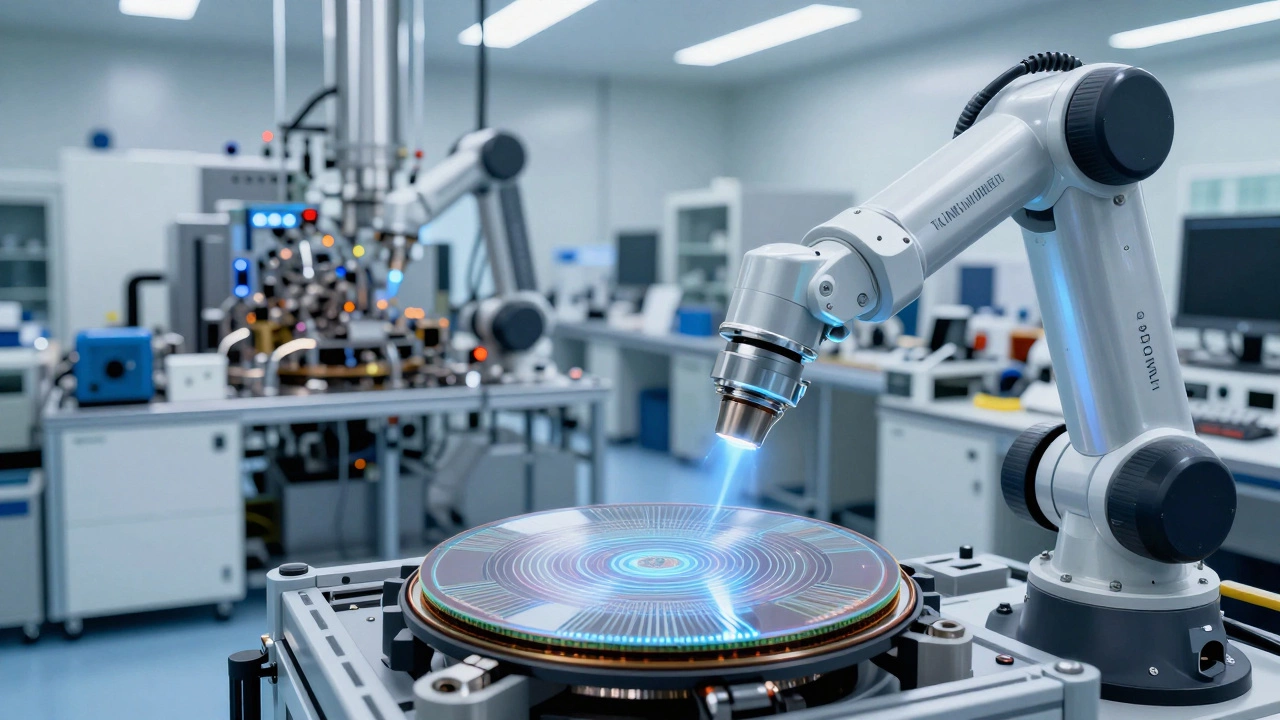
Semiconductor Strategy Simulator
Intel (IDM Model)
Designs AND manufactures chips internally
TSMC (Foundry Model)
Manufactures chips for external customers only
Watch how different business models affected technology advancement
For decades, Intel was the undisputed king of silicon. If you bought a PC in the late 90s or early 2000s, it almost certainly had an Intel chip inside. But today, the crown has slipped. The company that once defined Moore's Law is now struggling to catch up with its former student, TSMC. This isn't just a story about bad luck; it’s a case study in strategic divergence. While Intel tried to do everything itself, Taiwan Semiconductor Manufacturing Company (TSMC) focused on one thing: making chips better than anyone else.
The Fork in the Road: IDM vs. Foundry
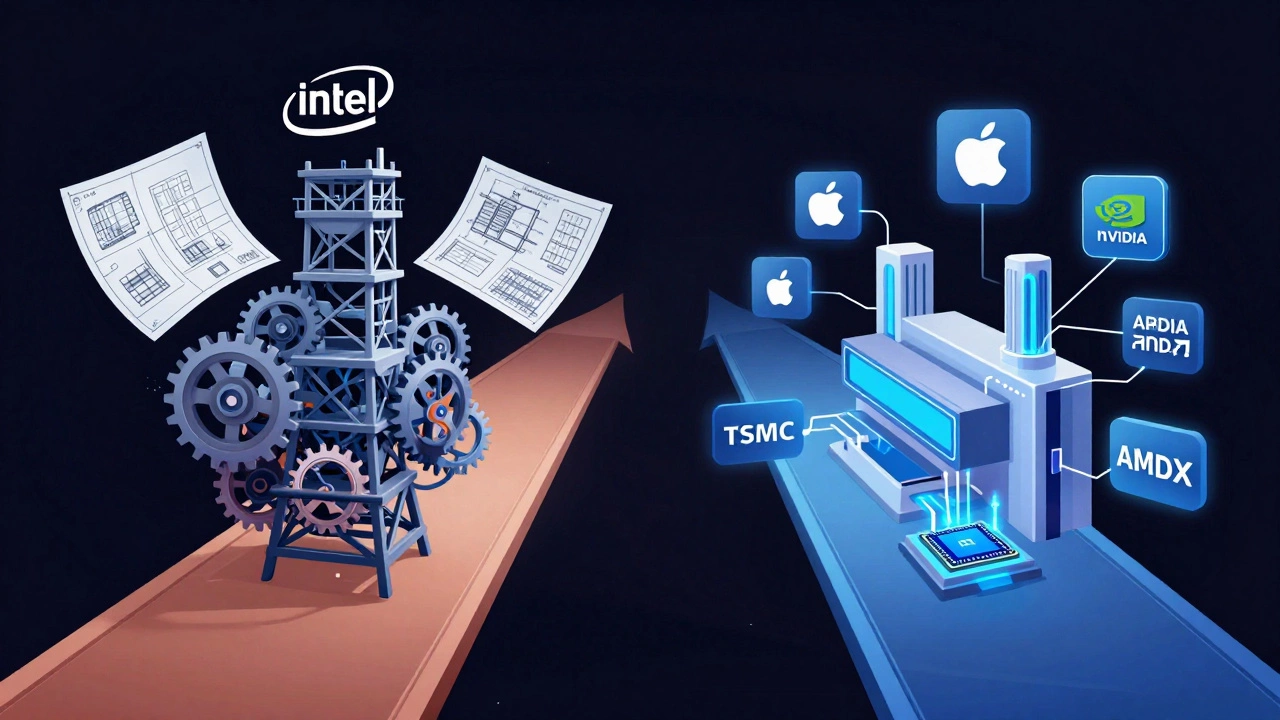
To understand why Intel fell behind, you have to look at their business models. They are fundamentally different animals. Intel operates as an Integrated Device Manufacturer (IDM). This means they design the chips AND build the factories to manufacture them. It sounds efficient, right? You control the whole supply chain. But it creates massive complexity. When your designs fail, your factories sit idle. When your factories break, your designs can’t be tested.
TSMC took a different path. They became a pure-play foundry. They don’t design any chips themselves. Instead, they rent out their factory capacity to companies like Apple, NVIDIA, and AMD. This allowed TSMC to focus entirely on process engineering-how to shrink transistors and make them run faster. Meanwhile, Intel had to split its brain between product design and manufacturing efficiency. As the technology got harder, this split focus became a fatal weakness.
The Cost of 'Moore's Law' Hubris
In 2015, Intel CEO Brian Krzanich famously declared, "Moore's Law is dead." He meant that the era of rapid, predictable improvement in chip performance was over. By saying this publicly, Intel signaled to the market that they were slowing down their innovation pace. TSMC didn’t say that. They kept pushing.
This hubris led to a series of disastrous decisions. Intel stuck with older manufacturing nodes for far too long. Their 14nm process, used in the Core i7-7000 series, was stretched across multiple generations (often jokingly called "14nm++" or "14nm+++") because they couldn’t get their 10nm process working reliably. During those years, TSMC moved smoothly from 16nm to 7nm, then to 5nm. Every time Intel delayed, TSMC pulled further ahead in yield rates and power efficiency.
The Complexity of EUV Lithography
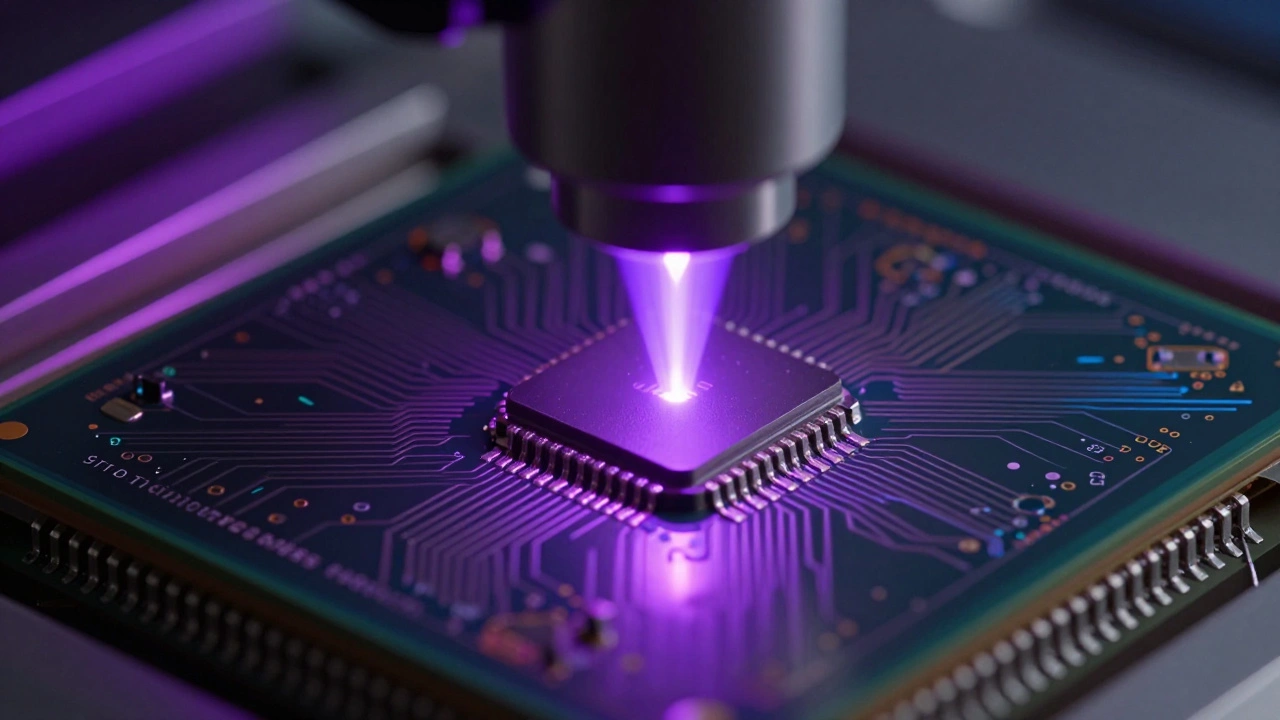
The real technical gap opened up with Extreme Ultraviolet (EUV) lithography. This is the machine made by ASML that prints the circuit patterns onto silicon wafers. It is incredibly complex, expensive, and difficult to operate. TSMC adopted EUV aggressively for their 7nm node. They worked closely with ASML to optimize the tools. Intel, however, hesitated. They relied on their own multi-patterning techniques using older Deep Ultraviolet (DUV) machines to try and squeeze more performance out of existing tech.
When Intel finally switched to EUV for their Intel 4 node (formerly known as 7nm), they faced steep learning curves. They had lost their lead in process knowledge. TSMC had already mastered the art of printing these tiny features. The result? TSMC’s 5nm and 3nm chips offered significantly better performance per watt than Intel’s equivalent nodes. For mobile devices and high-performance servers, power efficiency is everything. Intel’s chips were simply hotter and less efficient.
| Feature | Intel (IDM) | TSMC (Foundry) |
|---|---|---|
| Business Model | Designs & Manufactures Chips | Manufactures Only (for others) |
| Primary Customers | Internal Product Teams | Apple, NVIDIA, AMD, Qualcomm |
| Risk Profile | High (Bets on own designs) | Low (Diversified client base) |
| Process Innovation | Sometimes delayed by internal politics | Focused solely on manufacturing excellence |
| Key Strength | Vertical Integration | Scale & Yield Optimization |
The Customer Lock-In Effect
There is a powerful network effect in semiconductor manufacturing. Once a major customer like Apple or NVIDIA qualifies a foundry for a specific node, they tend to stay there. Why? Because switching manufacturers is risky and expensive. You have to re-verify your entire chip design on new equipment. TSMC became the default choice for the world’s most advanced chips because they delivered when Intel didn’t.
As more customers flocked to TSMC, the foundry could invest more heavily in R&D. They built larger fabs, hired top talent, and secured exclusive access to the latest ASML tools. Intel, meanwhile, saw its external manufacturing revenue stagnate. They couldn’t compete on price or quality for third-party clients because their internal priorities always came first. This created a vicious cycle: fewer external customers meant less capital for innovation, which led to worse technology, which drove away even more customers.
Can Intel Come Back?
Intel isn’t dead. Under new leadership, they launched "IDM 2.0," a strategy to turn themselves into a foundry competitor. They are building new fabs in the US, Germany, and Israel, often subsidized by government incentives like the CHIPS Act. They also acquired foundry services from GlobalFoundries to jumpstart their external business.
However, catching up is hard. Trust takes years to build. Companies like NVIDIA have committed billions to TSMC’s upcoming 2nm and beyond nodes. Intel needs to prove that their new processes (Intel 3, Intel 20A) are not only fast but reliable at scale. They are playing catch-up in a game where the leader keeps moving the goalposts. The gap may narrow, but TSMC’s lead in ecosystem loyalty and process maturity remains a formidable barrier.
What is the main difference between Intel and TSMC?
Intel is an IDM (Integrated Device Manufacturer), meaning they design their own processors and build the factories to make them. TSMC is a foundry, meaning they only manufacture chips designed by other companies like Apple, NVIDIA, and AMD. This allows TSMC to focus exclusively on manufacturing efficiency and innovation.
Why did Intel struggle with its 10nm process?
Intel’s transition to 10nm was plagued by technical difficulties and yield issues. To avoid missing market windows, Intel extended the life of its previous 14nm process, stretching it across multiple product generations. This delay gave TSMC time to advance its own technologies and establish a lead in process maturity.
Who are TSMC's biggest customers?
TSMC's largest customers include Apple, NVIDIA, AMD, Qualcomm, and Broadcom. These companies rely on TSMC to manufacture their most advanced chips for smartphones, data centers, and gaming consoles.
What is EUV lithography and why does it matter?
EUV (Extreme Ultraviolet) lithography is a advanced printing technique used to create extremely small circuit patterns on silicon wafers. It is essential for producing modern, high-performance chips below 7nm. TSMC adopted EUV earlier than Intel, giving them a significant advantage in manufacturing efficiency and chip density.
Is Intel still relevant in the semiconductor industry?
Yes, Intel remains a major player, especially in the PC and server CPU markets. However, they face intense competition from AMD (which uses TSMC chips) and must work hard to regain technological parity in manufacturing through their new "IDM 2.0" strategy.