Walk into any home, temple, or office in India, and you’ll see it everywhere - people sitting cross-legged on the floor. No chairs. No cushions. Just legs folded under them, backs straight, hands resting on knees. It’s not just a habit. It’s a way of life. And if you’ve ever wondered why this posture is so common, the answer isn’t just about comfort. It’s tied to centuries of culture, religion, and yes - the very textiles India produces.
The Fabric of Everyday Life
India has been making cloth for over 5,000 years. From the fine cotton of the Indus Valley to the handwoven silk of Banaras and the block-printed fabrics of Rajasthan, textile manufacturing here isn’t just an industry - it’s a cultural backbone. And that fabric shaped how people lived, including how they sat.
Traditional Indian clothing - dhotis, saris, lungis, and kurta-pajamas - are designed for movement and flexibility. They don’t restrict the legs. They don’t need zippers or buttons to sit comfortably. A sari drapes naturally around the body, and a dhoti flows freely when folded at the knees. These garments were never meant to be worn while sitting on chairs. Chairs didn’t exist in most homes until recently. Floors were the surface of life: eating, sleeping, praying, working.
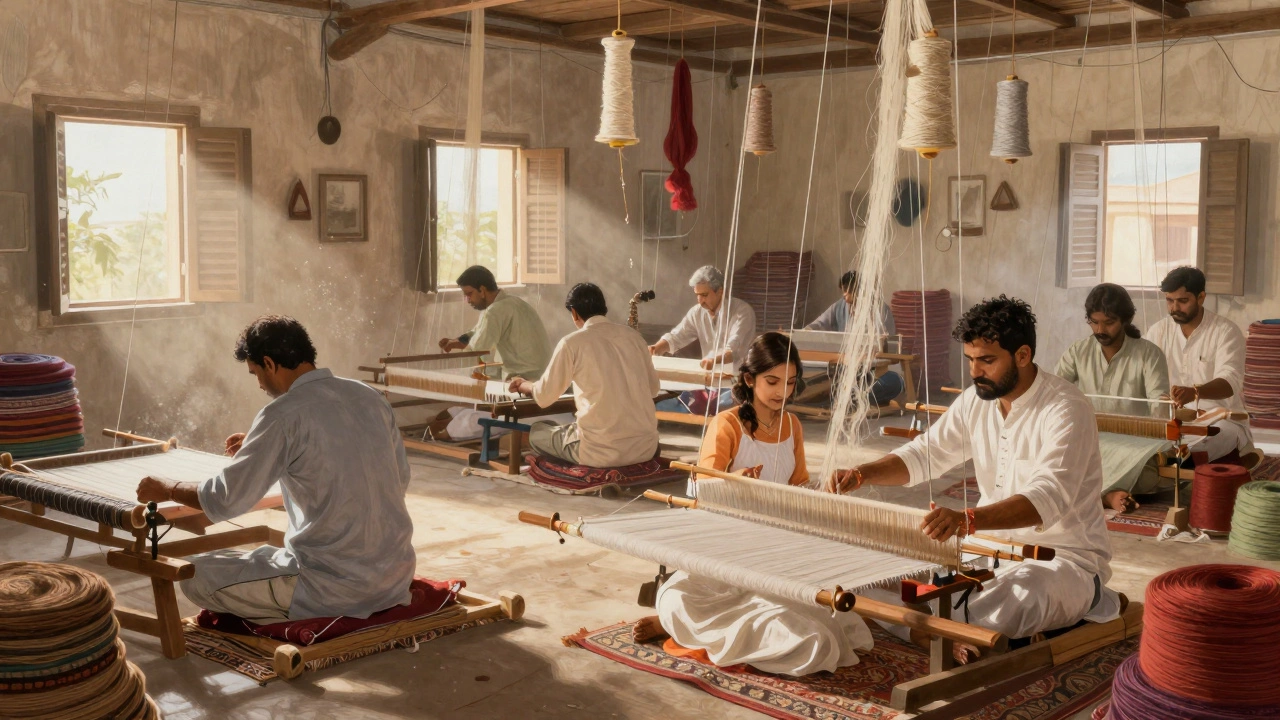
When you sit cross-legged on a floor made of cool stone or woven jute, your clothes don’t bunch up. Your legs don’t get pinched. Your fabric stays in place. In textile manufacturing towns like Surat, Tiruppur, or Ahmedabad, workers spent 10-hour days sitting on the floor, weaving, stitching, or sorting fabric. Sitting cross-legged kept their posture aligned with the loom, reduced back strain from leaning forward, and allowed them to move quickly between tasks.
More Than Just Comfort
There’s a reason yoga and meditation in India are done in lotus or sukhasana poses. Ancient texts like the Yoga Sutras of Patanjali, written over 2,000 years ago, describe sitting cross-legged as the ideal position for focus and breath control. This wasn’t just spiritual advice - it was practical. The body’s weight is evenly distributed across the pelvis, hips, and spine. Blood flow to the lower body remains steady. Digestion improves. No pressure on the abdomen.
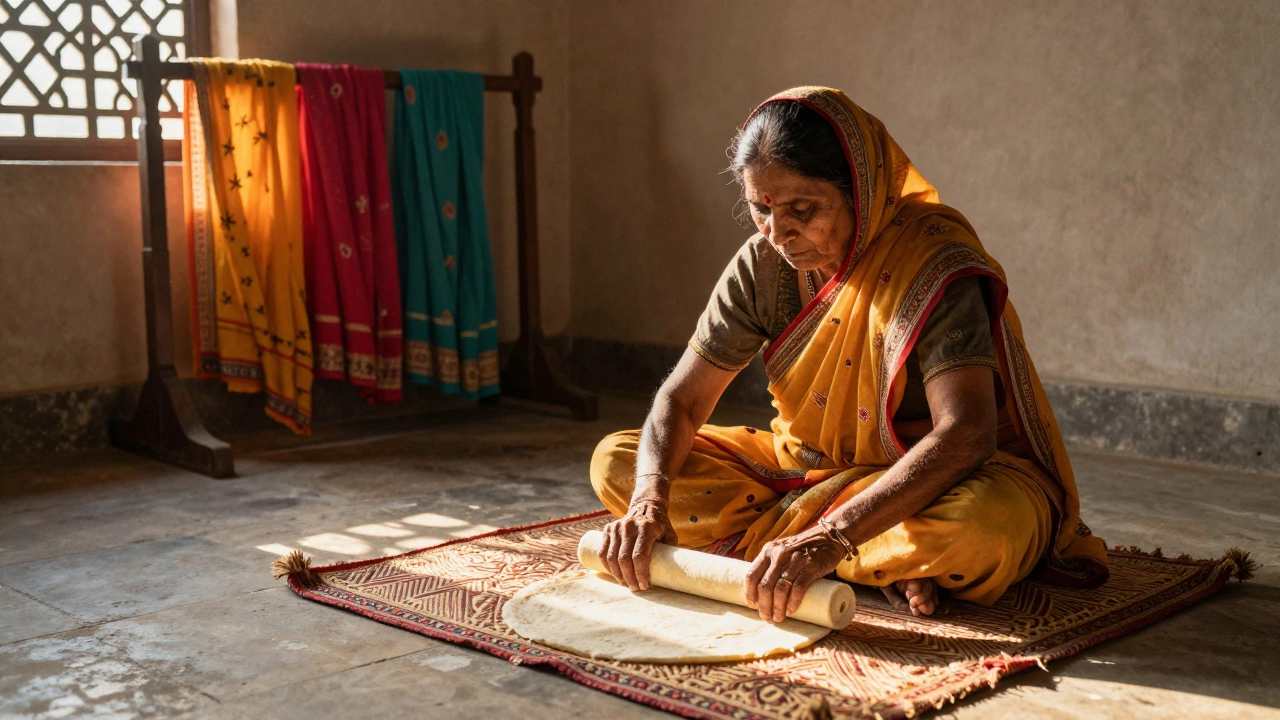
Indian households still follow this pattern. Grandmothers sit cross-legged while rolling chapatis. Children sit like this while doing homework on the floor. Even in modern offices in Bangalore or Delhi, you’ll see employees pulling up mats and sitting cross-legged during tea breaks. It’s not a trend. It’s muscle memory.
Studies from the Indian Council of Medical Research show that people who regularly sit cross-legged on the floor have better hip mobility and lower rates of lower back pain compared to those who sit in chairs all day. That’s not magic. It’s biomechanics. The posture activates core muscles, encourages spinal alignment, and reduces the forward slouch that chairs encourage.
Textiles Made It Possible
Here’s where the textile industry plays a quiet but critical role. In India, floors are rarely carpeted in the Western sense. They’re tiled, concrete, or covered in woven rugs made from cotton, jute, or wool. These materials are breathable, cool in summer, and warm in winter - perfect for bare skin or thin cotton socks.
Imagine trying to sit cross-legged on a thick, padded carpet. Your legs sink in. Your balance wobbles. Your knees get trapped. Now imagine sitting on a thin jute mat - firm, flat, slightly textured. Your feet grip the surface. Your hips stay grounded. That’s why traditional Indian floor mats, called chatai or durries, are woven tightly. They’re not for decoration. They’re functional tools for daily life.
Textile manufacturers in states like Madhya Pradesh and Bihar still produce over 300 million durries a year. Most are sold to households, not hotels. These mats are designed for sitting, not just walking on. Their low pile, natural fibers, and weight make them ideal for long hours of cross-legged sitting. Even in urban apartments today, you’ll find families keeping a durrie near the dining area - not for style, but for practicality.
Why It’s Disappearing - and Why It Matters
Younger generations in cities are sitting in chairs more often. Offices, schools, and even homes are being fitted with Western-style furniture. But the cost is real. Studies from the National Institute of Mental Health and Neurosciences (NIMHANS) in Bengaluru show a 40% increase in hip and knee stiffness among urban Indian teens who don’t sit on the floor regularly.
There’s also a cultural shift. Sitting cross-legged is sometimes seen as “old-fashioned” or “unprofessional” in corporate settings. But in rural India, it’s still the norm. In textile villages, where generations of weavers sit on the floor for 8-10 hours a day, the posture is preserved not out of nostalgia, but necessity. Their bodies are built for it. Their clothes are made for it. Their mats are woven for it.
When you buy a handloom sari from a weaver in Varanasi, you’re not just buying fabric. You’re buying a legacy of posture, patience, and physical wisdom. That weaver sits cross-legged while threading the loom. Her hips haven’t locked up because she never sat in a chair. Her spine hasn’t curved because she never leaned back. Her body moves with the rhythm of the fabric she creates.
What This Means for the Future
The rise of ergonomic chairs and office culture might make cross-legged sitting seem outdated. But the truth is, it’s not about resisting progress. It’s about preserving what works. India’s textile industry didn’t just make clothes - it made a lifestyle possible. The fabric, the mats, the posture - they all fit together like threads in a weave.
Maybe the future isn’t about replacing floor sitting with chairs. Maybe it’s about blending both. Offices could offer floor seating zones with durries. Schools could include floor time in daily routines. Homes could keep a woven mat by the dining table.
Because when you sit cross-legged, you’re not just sitting. You’re connecting - to your body, to your culture, and to the hands that made the cloth you wear.
Is sitting cross-legged bad for your health?
No, not when done regularly and without discomfort. Sitting cross-legged on a firm surface like a floor mat helps maintain hip flexibility, improves posture, and supports circulation. Problems arise only when people sit this way for hours without moving, or when they have pre-existing joint issues. For most healthy people, it’s beneficial.
Why don’t people in the West sit cross-legged on the floor?
Western homes and offices were built around chairs starting in the 18th century. Furniture design, clothing styles (like jeans and suits), and cultural norms all shifted away from floor sitting. Carpets and soft flooring also make it harder to sit comfortably cross-legged without sliding or sinking. It’s not about preference - it’s about environment and history.
Do Indian textiles still support floor sitting today?
Yes. Traditional floor mats like durries and chatais are still widely made, especially in rural areas and by handloom cooperatives. Many modern Indian homes, even in cities, keep at least one woven mat for meals or prayer. Textile manufacturers continue producing these because demand hasn’t disappeared - it’s just quieter in urban markets.
Can I start sitting cross-legged if I’m not used to it?
Absolutely. Start with short sessions - 5 to 10 minutes on a firm surface like a rug or mat. Keep your spine straight and avoid forcing your knees down. Use a folded towel under your hips if needed. Over time, your hips and knees will loosen up. Many people find they sleep better and feel less stiff after just a few weeks.
Is cross-legged sitting only for religious practices in India?
No. While it’s used in prayer and meditation, it’s far more common in daily life - eating, talking, working, teaching, and even watching TV. It’s not tied to religion. It’s tied to practicality, clothing, and centuries of living on the floor.