Indian Car Market Share Calculator
Market Share Calculator
Enter the total Indian car market volume to see how Maruti Suzuki compares to competitors based on 2025 data.
Results
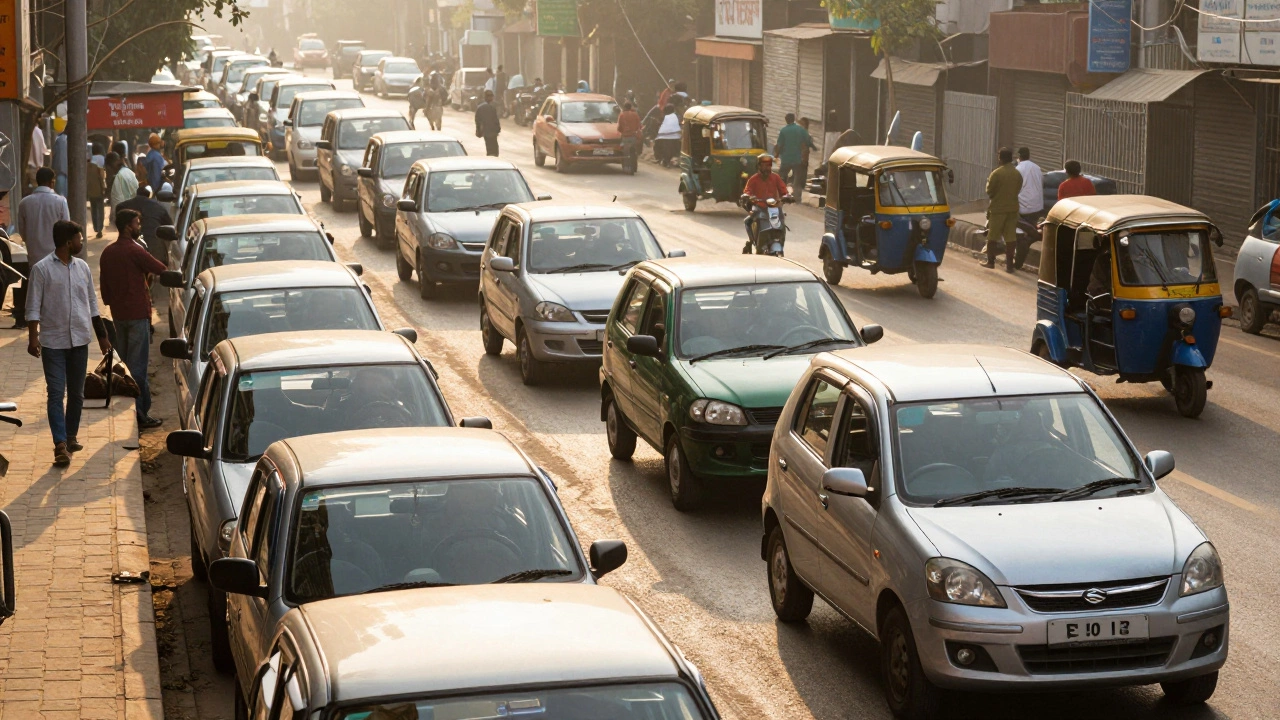
When you walk through any Indian city-whether it’s Delhi, Bangalore, or Jaipur-you’ll see one thing everywhere: cars. Not just any cars, but the same few models dominating the roads. That’s because India’s car market isn’t crowded with dozens of brands. It’s ruled by just a handful. And if you’re asking who’s the No. 1 car manufacturer in India, the answer isn’t complicated. It’s Maruti Suzuki.
Why Maruti Suzuki Leads the Pack
Maruti Suzuki has held the top spot in India for over two decades. In 2025, it sold more than 1.6 million vehicles across the country. That’s nearly 4 out of every 10 cars sold in India. No other brand comes close. Hyundai, its closest competitor, sold around 1.1 million units. Tata Motors, once a distant third, has been climbing fast-but still only hit 750,000 units. Maruti’s lead isn’t a fluke. It’s built on decades of strategy, reliability, and understanding what Indian buyers actually need.
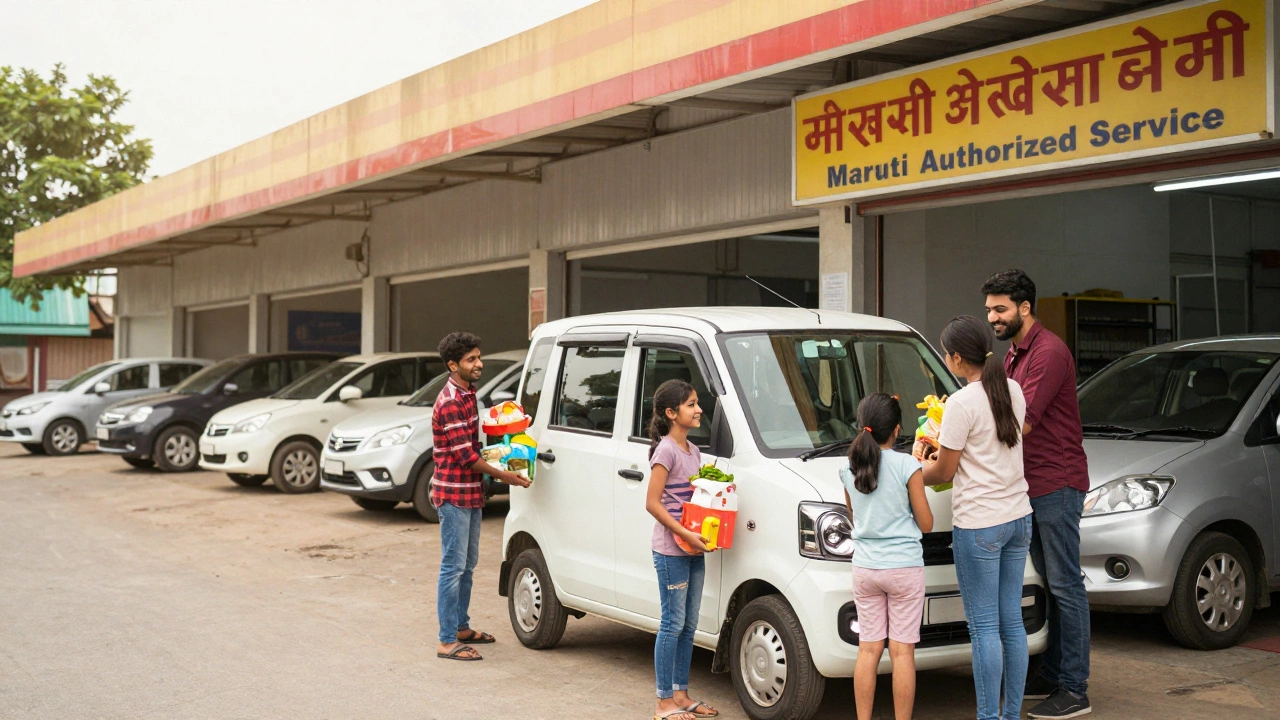
Think about it: the Alto, the Swift, the Wagon R. These aren’t flashy cars. They don’t have leather seats or 12-speaker sound systems. But they’re cheap to buy, cheap to fix, and cheap to run. Fuel efficiency? Around 22-25 km/l for most models. Maintenance costs? Less than ₹5,000 a year for average use. And parts? Available in almost every small town. That’s why Maruti dominates not just in cities, but in villages and semi-urban areas too.
How Did Maruti Suzuki Get So Big?
The story starts in 1981. The Indian government had just opened the auto sector to foreign partnerships. Suzuki Motor Corporation from Japan teamed up with India’s state-owned Maruti Udyog. The goal? Build affordable cars for a nation where most people had never owned one. The first model? The Maruti 800. It was a tiny, rear-engine car based on the Suzuki Alto. It cost less than ₹1 lakh. For many families, it was their first car.
By the early 2000s, Maruti had captured over 70% of the market. Even when competitors like Hyundai and Honda entered, Maruti stuck to its formula: simple, reliable, and priced right. It didn’t chase luxury. It chased volume. And volume meant scale. With 13 manufacturing plants and over 4,000 service centers nationwide, Maruti’s network is unmatched. Need a new headlight in Ranchi? There’s a dealer within 50 km. Need a battery replaced in Patna? Done in under an hour.
How Do Other Brands Compare?
Hyundai has been Maruti’s biggest challenger. It entered India in the late 1990s with the Santro-a stylish, well-built car that appealed to urban buyers. Today, Hyundai’s Creta, Venue, and i20 are huge sellers. But Hyundai’s average price point is 30-40% higher than Maruti’s. That’s fine in metro cities. But in smaller towns, where income levels are lower, Maruti’s pricing is unbeatable.
Tata Motors has made a strong comeback. Its Nexon EV is India’s best-selling electric SUV. The Punch and Harrier have also done well. But Tata’s total sales are still only about half of Maruti’s. Why? Because Tata’s strength is in electric vehicles and premium segments. Maruti’s strength is in the mass market-where 80% of India’s car buyers live.
Toyota and Honda? They’re solid brands, but they focus on higher-end models. The Innova Crysta and City sell well, but they’re not volume drivers. They’re niche. Maruti sells the everyday car-the one that takes kids to school, groceries home, or a worker to their job.
What Makes a Car Manufacturer #1 in India?
It’s not about technology. It’s not about design awards. It’s about three things:
- Price: Can you buy it on a middle-class salary? Maruti’s entry models start under ₹5 lakh.
- Availability: Can you get it, service it, and find parts anywhere? Maruti has the widest network.
- Resale value: When you sell your car after five years, how much do you get back? Maruti models hold their value better than almost any other brand.
These aren’t just marketing claims. Data backs it up. According to the Society of Indian Automobile Manufacturers (SIAM), Maruti Suzuki’s resale value averages 65-70% after five years. Hyundai is around 58%. Tata is 52%. That’s huge for buyers who plan to upgrade every 4-5 years.
What’s Changing in 2026?
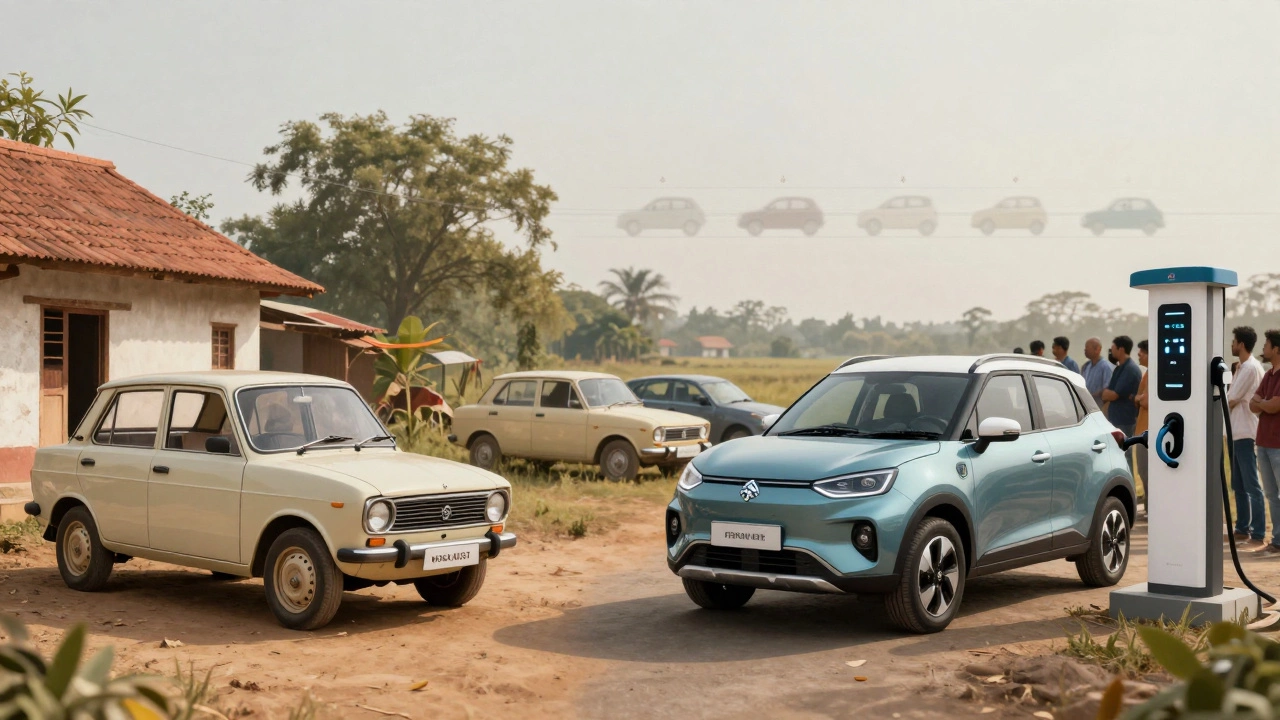
Electric vehicles are growing fast. In 2025, EVs made up 14% of all new car sales in India. Maruti is catching up. It launched the Fronx EV and the e-Vitara last year. But it’s still behind Tata and MG Motor in EV sales. Tata’s Nexon EV alone sold over 120,000 units in 2025. Maruti’s EV sales? Around 25,000.
Still, Maruti isn’t losing its lead. It’s adapting. It’s using its scale to bring EVs down in price. Its new electric models will start under ₹10 lakh-close to the price of a petrol Swift. That’s the real game-changer. If Maruti can make EVs affordable at scale, it could stay on top for another decade.
Hyundai and Tata are pushing hard. But neither has Maruti’s reach. Neither has its trust. And neither has its history of delivering what India actually needs-not what global trends say it should want.
Is Maruti Suzuki Really the Best?
Some people say Maruti’s cars are boring. That’s true. They’re not exciting. But “best” doesn’t mean “most stylish.” In India, “best” means “most practical.” It means “most reliable.” It means “most people can afford it.”
For millions of Indian families, Maruti Suzuki isn’t just the top carmaker. It’s part of their life. It’s the car that got them through college, helped them start a business, or took them to a hospital in the middle of the night. That’s not just market share. That’s trust.
So yes-Maruti Suzuki is the No. 1 car manufacturer in India. Not because it’s the flashiest. Not because it’s the most innovative. But because it’s the one that showed up, stayed consistent, and kept building cars that real people actually drive every day.
Is Maruti Suzuki the largest car manufacturer in India by sales?
Yes. In 2025, Maruti Suzuki sold over 1.6 million vehicles, making it the clear leader in India. It holds nearly 40% of the total market share, far ahead of competitors like Hyundai and Tata Motors.
Which car brand has the highest resale value in India?
Maruti Suzuki cars have the highest resale value in India. On average, they retain 65-70% of their original price after five years. This is due to high demand for used Maruti models, widespread service networks, and strong brand trust.
Why is Maruti Suzuki so popular in small towns?
Maruti Suzuki is popular in small towns because its cars are affordable, fuel-efficient, and easy to maintain. With over 4,000 service centers across India-even in remote areas-parts and repairs are accessible and inexpensive. Models like the Alto and Wagon R are designed for Indian road conditions and daily commuting needs.
How does Tata Motors compare to Maruti Suzuki?
Tata Motors is the second-largest car manufacturer in India by sales volume, but it still trails Maruti Suzuki by a wide margin. Tata is stronger in electric vehicles and premium segments like SUVs, while Maruti dominates the mass market with low-cost, high-volume models. Tata’s total sales in 2025 were around 750,000 units, compared to Maruti’s 1.6 million.
Are electric cars changing the No. 1 ranking in India?
Electric cars are growing fast, but they haven’t changed the overall ranking yet. Tata Motors leads in EV sales with the Nexon EV, but EVs still make up only 14% of total car sales in India. Maruti Suzuki is entering the EV market with affordable models, and if it succeeds in bringing prices down, it could maintain its lead. For now, petrol and diesel cars still dominate.