Pharma Distributor Match & Readiness Tool
Your Product Profile
Recommended Distributor
McKesson
Revenue GiantAmerisourceBergen
Specialty LeaderCardinal Health
Innovation HubMarket Readiness Assessment
Priority Action Items
💡 Key Insight
Fill in your product details
Complete the form to discover which distributor is the best match for your pharmaceutical products and get a readiness assessment.
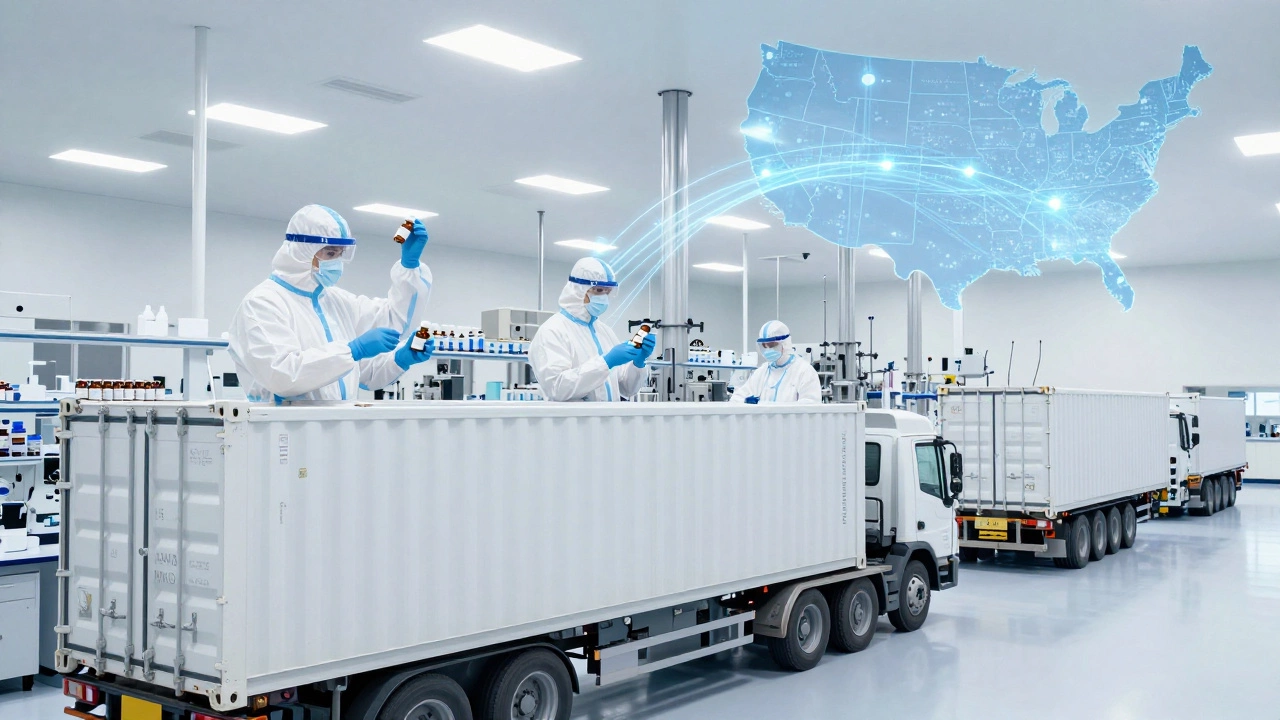
Imagine you have just manufactured a batch of life-saving medication in India. It is packaged, tested, and ready to go. But who actually gets it into the hands of the doctors and patients across the United States? You don't sell directly to every single pharmacy or hospital. That would be a logistical nightmare. Instead, you rely on a few massive gatekeepers. These are the "Big 3" pharmaceutical distributors in the USA.
If you are looking to export pharma products from India to the US market, understanding these three companies is not optional. It is essential. They control roughly 90% of the prescription drug distribution market in America. Knowing how they work, what they demand, and why they matter will determine whether your product sits on a shelf or gathers dust in a warehouse.
The Dominance of the Big 3
The US pharmaceutical distribution landscape is an oligopoly. This means a small number of sellers dominate the entire market. For decades, three specific companies have held this power: McKesson Corporation, a global leader in healthcare supply chain solutions and technology services, AmerisourceBergen (now operating as ASB), one of the largest pharmaceutical wholesale distributors in the world, and Cardinal Health, a diversified healthcare innovation and services company.
Why do these three hold so much power? It comes down to scale and infrastructure. They have built networks that reach virtually every pharmacy, hospital, and clinic in the country. When you partner with one of them, you instantly gain access to thousands of customers without having to build individual relationships with each one. However, this convenience comes with strict requirements and significant leverage on their side.
1. McKesson Corporation: The Revenue Giant
Let's start with the biggest player by revenue. McKesson is often the first name that comes up in discussions about US pharma distribution. Headquartered in Irvine, California, McKesson generates hundreds of billions of dollars in annual revenue. But here is the catch: most of that money isn't profit. It is volume. They move massive amounts of product, which gives them immense bargaining power with manufacturers like you.
McKesson is known for its robust technology platform. If you are an Indian manufacturer, you need to be prepared for high-tech integration. They require seamless data exchange for inventory management, order processing, and compliance tracking. Their system expects real-time visibility into your stock levels. If your IT infrastructure cannot talk to theirs, doing business will be painful.
For generic drugs and over-the-counter (OTC) products coming from India, McKesson offers a broad network. They distribute to independent pharmacies, retail chains, and large health systems. However, getting listed as a supplier can be a hurdle. They prioritize established brands or those with proven demand. New entrants often face a rigorous vetting process regarding quality assurance and regulatory compliance.
2. AmerisourceBergen (ASB): The Specialty Leader
Next is AmerisourceBergen. While McKesson focuses heavily on general medicine, ASB has carved out a strong niche in specialty pharmaceuticals. These are high-cost, complex drugs used to treat chronic conditions like cancer, rheumatoid arthritis, and multiple sclerosis. If your manufacturing facility in India produces biologics or complex generics, ASB might be your best bet.
ASB is headquartered in Pennsylvania and has a reputation for customer service and specialized logistics. They understand that some drugs need cold chain storage-keeping medications at specific temperatures during transport. If your product requires refrigeration, ASB’s infrastructure is well-equipped to handle it. This is crucial because temperature excursions can ruin a shipment and lead to costly recalls.
One key attribute of ASB is their focus on value-added services. They don't just move boxes; they provide clinical support and patient assistance programs. For a manufacturer, this means partnering with ASB can help your product succeed not just through availability, but through education and support for prescribers and patients. However, their fees and terms can be stricter than other distributors due to the complexity of the products they handle.

3. Cardinal Health: The Innovation Hub
The third pillar is Cardinal Health. Based in Dublin, Ohio, Cardinal is unique among the Big 3 because it is not just a distributor. It is also a manufacturer of medical supplies and a provider of healthcare services. This vertical integration allows them to offer a comprehensive solution to hospitals and health systems.
Cardinal Health is particularly strong in hospital distribution. If your target market is institutional rather than retail pharmacies, Cardinal is a critical partner. They have deep relationships with hospital purchasing groups. Being approved by Cardinal can open doors to large-scale contracts that smaller distributors simply cannot facilitate.
They are also known for innovation in supply chain efficiency. Cardinal uses advanced analytics to predict demand and optimize inventory. For a manufacturer, this means less waste and fewer stockouts. However, like the others, they demand high standards of compliance. They adhere strictly to FDA regulations and the Drug Supply Chain Security Act (DSCSA). Any deviation in documentation or labeling can result in rejected shipments.
| Distributor | Headquarters | Key Strength | Best For |
|---|---|---|---|
| McKesson | Irvine, CA | Revenue scale & tech integration | High-volume generics & OTC |
| AmerisourceBergen | Pennsylvania | Specialty drugs & cold chain | Biologics & complex therapies |
| Cardinal Health | Dublin, OH | Hospital networks & innovation | Institutional sales & medical supplies |
Why This Matters for Indian Manufacturers
You might be wondering, "I am in India. Why do I care about US distributors?" Because the path from your factory floor to the American patient is paved with these companies. The US Food and Drug Administration (FDA) has strict rules about importing drugs. One of the key requirements is traceability. Under the DSCSA, every unit of medication must be tracked from manufacture to dispensing.
The Big 3 distributors act as the bridge between your manufacturing capabilities and US regulatory compliance. They verify that your facilities meet Good Manufacturing Practices (GMP). They check your licenses. They ensure your packaging meets US labeling standards. Without their approval, your product cannot legally enter the mainstream US market.
Moreover, payment terms are a major factor. Distributors typically pay manufacturers within 30 to 60 days. But they negotiate hard on pricing. Because they buy in such huge volumes, they expect discounts. As an Indian manufacturer, you need to calculate your margins carefully. Factor in shipping costs, insurance, tariffs, and the distributor's cut. If your base price is too high, they may choose a competitor who can offer a better deal.
How to Get Noticed by the Big 3
So, how do you get their attention? You cannot just send an email to their headquarters. You need a strategy.
- Certify Your Facility: Ensure your plant has current WHO-GMP certification and, ideally, FDA approval. This is non-negotiable.
- Build a Local Presence: Consider hiring a US-based agent or representative. Distributors prefer working with entities that have a local legal presence for accountability.
- Showcase Quality Data: Provide detailed stability studies and bioequivalence data. Prove that your product is consistent and safe.
- Leverage Trade Shows: Attend events like JP Morgan Healthcare Conference or industry-specific expos where procurement officers from these companies attend.
Another tip is to start small. Approach regional distributors first. Build a track record of reliable delivery and quality. Then use that history to pitch to the Big 3. They are risk-averse. They want partners who have already proven themselves in the market.
The Role of Technology in Distribution
Technology is changing how these distributors operate. Artificial intelligence and machine learning are being used to predict demand spikes, such as during flu season or pandemics. Blockchain is being explored for enhanced supply chain transparency. As a manufacturer, you should be aware of these trends. If your ERP system is outdated, you may struggle to integrate with their platforms.
Invest in digital tools that allow for real-time tracking of your shipments. Provide electronic data interchange (EDI) capabilities. This makes your life easier and theirs smoother. Efficiency is currency in the pharmaceutical supply chain. The more efficient you are, the more attractive you become as a supplier.
Challenges and Risks
Working with the Big 3 is not without risks. Their dominance means they have significant pricing power. They can squeeze your margins if they feel there is competition. Additionally, any disruption in their network-whether due to cyberattacks, natural disasters, or labor strikes-can halt your sales entirely. Diversification is key. Do not rely on a single distributor. Try to establish relationships with at least two of the Big 3, or supplement them with smaller regional players.
Regulatory changes are another constant challenge. The US government frequently updates import regulations. Stay informed. Work closely with your legal team and customs brokers to ensure compliance. A single mistake in documentation can lead to seized goods and blacklisting.
Looking Ahead
The pharmaceutical distribution landscape is evolving. Consolidation continues, making the Big 3 even larger. At the same time, there is growing interest in direct-to-consumer models and digital health platforms. However, for traditional prescription drugs, the role of wholesalers remains central. For Indian manufacturers aiming for the US market, mastering the relationship with McKesson, AmerisourceBergen, and Cardinal Health is not just a business tactic. It is a strategic necessity.
By understanding their strengths, weaknesses, and requirements, you can position your company for success. Focus on quality, compliance, and technology. Build strong partnerships. And remember, in the world of pharma distribution, trust is built on consistency and reliability.
Who are the top 3 pharmaceutical distributors in the USA?
The top three pharmaceutical distributors in the USA are McKesson Corporation, AmerisourceBergen (ASB), and Cardinal Health. Together, they control approximately 90% of the prescription drug distribution market in the country.
Can Indian pharmaceutical manufacturers sell directly to US pharmacies?
It is highly unlikely and practically difficult for Indian manufacturers to sell directly to individual US pharmacies. The regulatory burden, logistics, and payment processing complexities make it nearly impossible. Most manufacturers rely on wholesale distributors like the Big 3 to handle these aspects.
What certifications does an Indian pharma company need to work with US distributors?
At a minimum, you need WHO-GMP certification. Ideally, you should have FDA approval for your manufacturing facility and product listings. Compliance with the Drug Supply Chain Security Act (DSCSA) is also mandatory for tracking and tracing medications.
Which distributor is best for specialty pharmaceuticals?
AmerisourceBergen (ASB) is generally considered the leader in specialty pharmaceuticals. They have robust infrastructure for handling complex drugs, including cold chain logistics and patient support services.
How long does it take to get approved by a major US distributor?
The approval process can take anywhere from 3 to 12 months. It involves rigorous vetting of your manufacturing facilities, quality control processes, regulatory compliance, and financial stability. Building a relationship with a local agent can speed up this process.