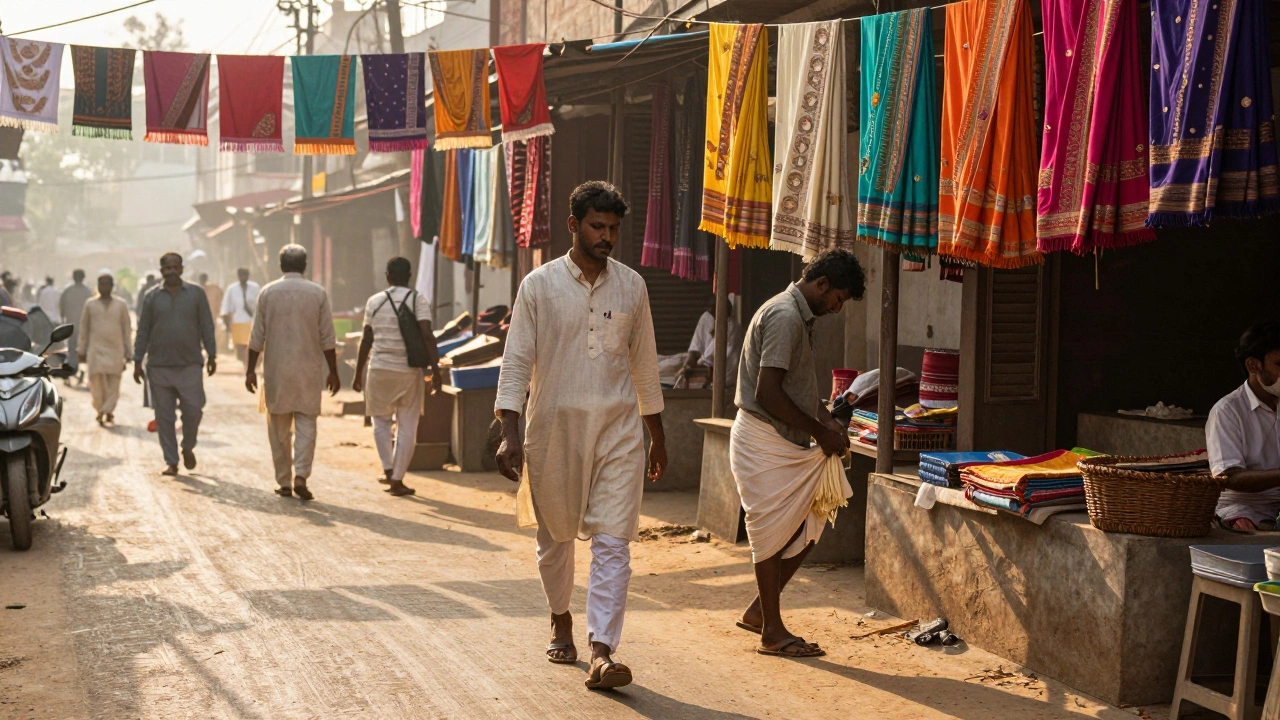
In India, you don’t need to visit a fancy store to see what fabric people wear every day. Walk down any street in Delhi, Mumbai, or a village in Uttar Pradesh, and you’ll see it: cotton. It’s in the kurta a farmer wears to the fields, the sari a grandmother folds with care, the lungi a shopkeeper ties before opening his shop. Cotton isn’t just popular-it’s the backbone of daily life in India. But why? And what else is woven into the country’s fabric-literally?
Cotton Rules the Roost
Cotton makes up over 60% of all textile consumption in India. That’s not a guess-it’s from the Cotton Corporation of India’s latest annual report. The country produces nearly 25% of the world’s cotton and uses most of it at home. Why? Because it’s breathable, affordable, and works in every climate. From the heat of Rajasthan to the monsoon humidity of Kerala, cotton doesn’t stick to the skin. It lets air move. It absorbs sweat. It doesn’t cost a fortune.
Indian farmers grow cotton on over 12 million hectares. States like Gujarat, Maharashtra, and Telangana lead production. The cotton that comes from these fields ends up in mills in Tiruppur, Surat, and Ludhiana, where it’s spun into yarn and woven into cloth. Most of this fabric is sold locally. Only about 15% gets exported. That tells you something: India doesn’t make cotton for the world-it makes it for itself.
Silk Isn’t Just for Special Occasions
If cotton is the everyday hero, silk is the quiet superstar of celebrations. India is the second-largest silk producer in the world, after China. But unlike China, where silk is mostly industrial, India’s silk is deeply cultural. Banarasi silk from Varanasi, Mysore silk from Karnataka, and Assam’s Muga silk are woven into saris worn at weddings, festivals, and religious ceremonies.
What’s surprising is how widely silk is used beyond the elite. In rural Bengal, women wear handloom silk sarees every Sunday. In Tamil Nadu, temple workers wear silk dhotis. The government supports this through schemes like the Silk Samagra initiative, which trains weavers and protects traditional designs. A single Muga silk sari can take 40 days to weave-and still sells for under ₹8,000. That’s affordable for middle-income families. Silk isn’t luxury here. It’s tradition made wearable.
Wool and Synthetic Fibers: Niche but Growing
Wool is rare in most of India. But in the Himalayan states-Jammu & Kashmir, Himachal Pradesh, and Uttarakhand-it’s essential. Pashmina shawls from Kashmir are world-famous, made from the fine undercoat of Himalayan goats. These aren’t mass-produced. Each shawl is hand-spun, often by women working in home-based cooperatives. A real Pashmina can cost ₹15,000 or more, but it lasts decades.
Synthetic fabrics like polyester and nylon are rising fast, especially in cities. They’re cheap, easy to care for, and don’t wrinkle. You’ll see them in school uniforms, office wear, and fast-fashion brands. But they’re not replacing cotton. They’re adding to it. In urban India, people often layer synthetic shirts under cotton kurtas. Or wear polyester blends in monsoon season because they dry faster. It’s not an either/or-it’s a mix.
Handloom and Khadi: More Than Just Fabric
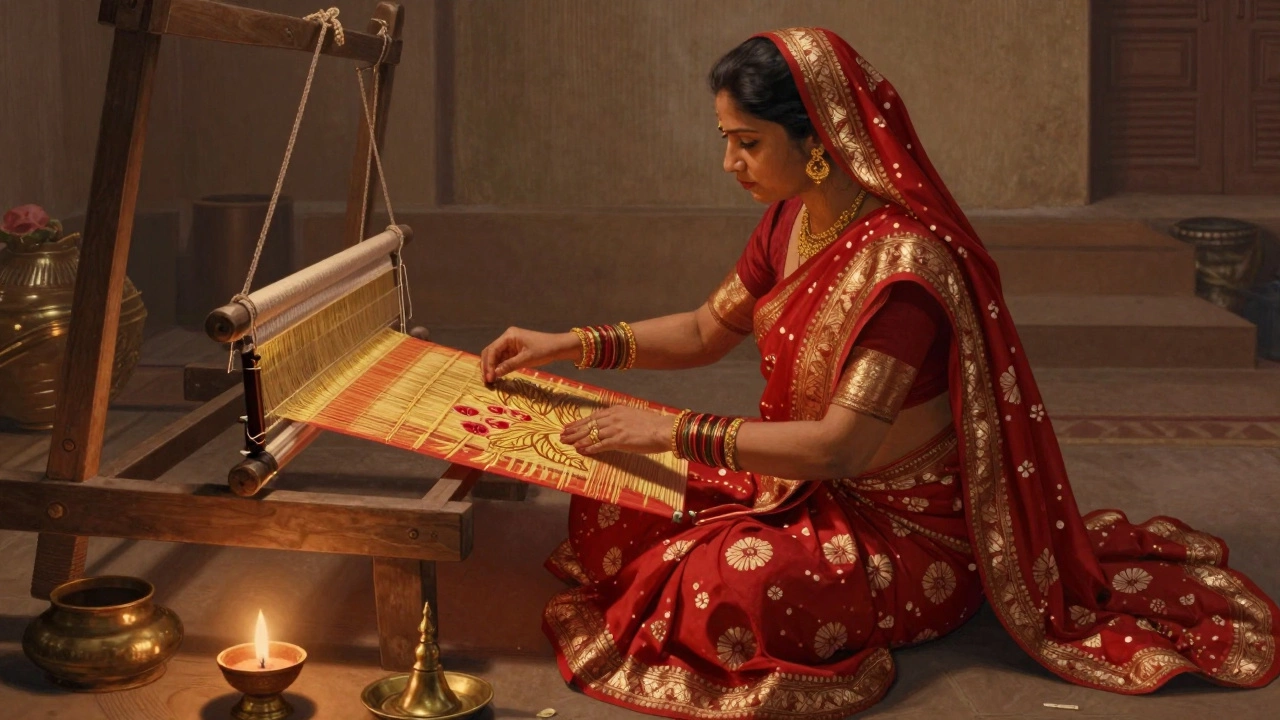
India has over 3 million handloom weavers. That’s more than the population of Denmark. These weavers use wooden looms, not machines. Their cloth is slower to make, but it’s part of a national identity. Mahatma Gandhi pushed khadi-hand-spun, hand-woven cotton-as a symbol of self-reliance during the freedom movement. Today, it’s still worn by politicians, artists, and activists.
Khadi isn’t just cotton. It’s a statement. The government runs the Khadi and Village Industries Commission (KVIC), which sells khadi through over 2,000 outlets nationwide. You can buy khadi shirts, scarves, even bed sheets. Prices range from ₹300 to ₹3,000. The fabric is coarser than mill-made cotton, but it’s durable and breathable. In summer, many urban Indians switch to khadi because it keeps them cooler than synthetic blends.
Why Not Other Fabrics?
You might wonder: why not linen? Or hemp? Or jute? Jute is big in India-but not for clothes. It’s used for sacks, ropes, and packaging. India produces 80% of the world’s jute, but almost none of it ends up in sarees. Linen is rare because it’s expensive to process and hard to grow in India’s climate. Hemp is legal now, but it’s still experimental. A few startups are making hemp-cotton blends, but they’re niche. You won’t find hemp t-shirts in a local market yet.
Rayon and acetate? They’re used in cheap imitation silk saris. But they don’t breathe well. In India’s heat, they feel sticky. People notice. That’s why rayon saris are mostly worn for short events-not daily use.
The Real Story Behind the Numbers
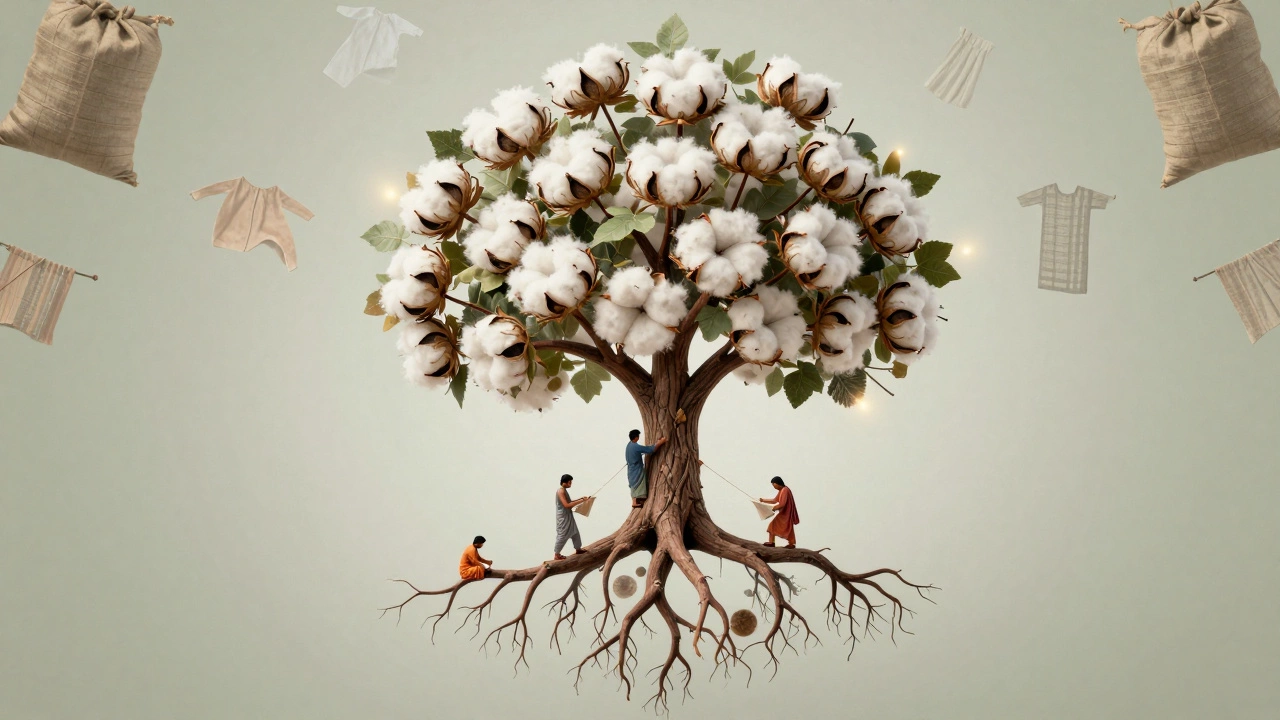
Textile manufacturing in India isn’t just about factories. It’s about 12 million farmers, 4.5 million weavers, 2 million tailors, and 30 million people working in related jobs. That’s nearly 10% of the country’s workforce. Cotton isn’t just a fabric-it’s a livelihood.
Compare that to countries like Bangladesh or Vietnam, where factories churn out cheap garments for export. India’s system is different. Most fabric is made for local people, by local hands. Even mass-produced cotton cloth often starts with a village spinner. The supply chain is messy, but it’s alive.
When you buy a cotton kurta in Jaipur, you’re not just buying fabric. You’re supporting a chain that goes from a farmer in Marathwada to a dyer in Sanganer to a tailor in Chandni Chowk. That’s the real value.
What’s Changing?
Younger Indians are starting to care more about sustainability. They’re asking: Where did this cloth come from? Was it made with chemicals? Did the weaver get paid fairly? This is pushing brands toward organic cotton and natural dyes. Companies like Fabindia, Aranya, and Raw Mango are leading the way. Even big players like Reliance and Tata are investing in eco-friendly mills.
Technology is helping too. Digital looms now let handloom weavers create complex patterns faster. Mobile apps connect weavers directly to buyers in Delhi or London. But the core hasn’t changed. Cotton still dominates. Silk still shines. And the handloom still hums.
If you want to know what fabric is mostly used in India, look at the clothes people wear on a Tuesday morning. Not a festival. Not a wedding. Just Tuesday. You’ll see cotton. Maybe a little silk. Possibly a synthetic blend. But almost always-cotton.
Is cotton the most used fabric in India?
Yes, cotton is the most used fabric in India, making up over 60% of all textile consumption. It’s preferred for its breathability, affordability, and suitability to India’s diverse climates. From rural villages to urban homes, cotton is worn daily in the form of kurtas, sarees, dhotis, and shirts.
Why is silk so common in India despite being expensive?
Silk is deeply tied to Indian culture, especially for weddings, festivals, and religious events. Unlike in Western countries where silk is seen as luxury, in India, even middle-income families own at least one silk sari or dhoti. Government support through schemes like Silk Samagra helps keep prices accessible, and handloom silk from regions like Varanasi and Mysore is made in small batches, keeping production costs manageable.
Do Indians wear synthetic fabrics like polyester?
Yes, especially in cities and for specific uses. Polyester blends are common in school uniforms, office wear, and fast fashion because they’re cheap, wrinkle-resistant, and easy to wash. But they’re rarely worn alone in hot weather. Most people layer synthetics under cotton or use them only for short events. Cotton still dominates daily wear because it’s cooler and more comfortable.
What is khadi, and is it still used today?
Khadi is hand-spun, hand-woven cotton that became a symbol of India’s independence movement under Mahatma Gandhi. Today, it’s still widely used, especially by those who value sustainability and traditional craftsmanship. The Khadi and Village Industries Commission (KVIC) sells khadi clothing through over 2,000 outlets. Many urban professionals, artists, and activists wear khadi shirts and sarees as a statement of cultural pride and eco-consciousness.
Why isn’t linen or hemp used more in India?
Linen requires cool, damp conditions to grow well, which aren’t common in most of India. Hemp is legal now but still in early stages-only a few startups are making hemp-cotton blends. Both are more expensive to process than cotton. Jute is grown heavily in India, but it’s used for sacks and packaging, not clothing, because it’s too coarse for skin contact. Cotton remains the practical, cultural, and economic default.