Electronics Manufacturing Matchmaker
Select your primary business need to see which country leads in that specific area of electronics manufacturing.
China
Scale & Integration
~70% Global OutputSouth Korea
Memory & Displays
~60% Memory ShareUSA
Design & IP
~45% IP ValueJapan
Precision & Materials
~20% ComponentsSelect a priority and click "Find Best Partner" to get recommendations.
You walk into a store and pick up a smartphone. It feels like magic: glass, metal, silicon, and code all working together. But where did that magic happen? If you guess "the country that invented the phone," you are probably wrong. If you guess "the country with the best engineers," you might be closer, but still missing the bigger picture.
There is no single answer to which country is most advanced in electronics because "advanced" means different things to different people. Does it mean who makes the most units? Who designs the chips? Or who builds the factories that can scale up overnight? As of late 2026, the landscape has shifted. While China remains the factory floor of the world, other nations have carved out specific niches that are arguably more critical for the future.
China: The Undisputed King of Scale
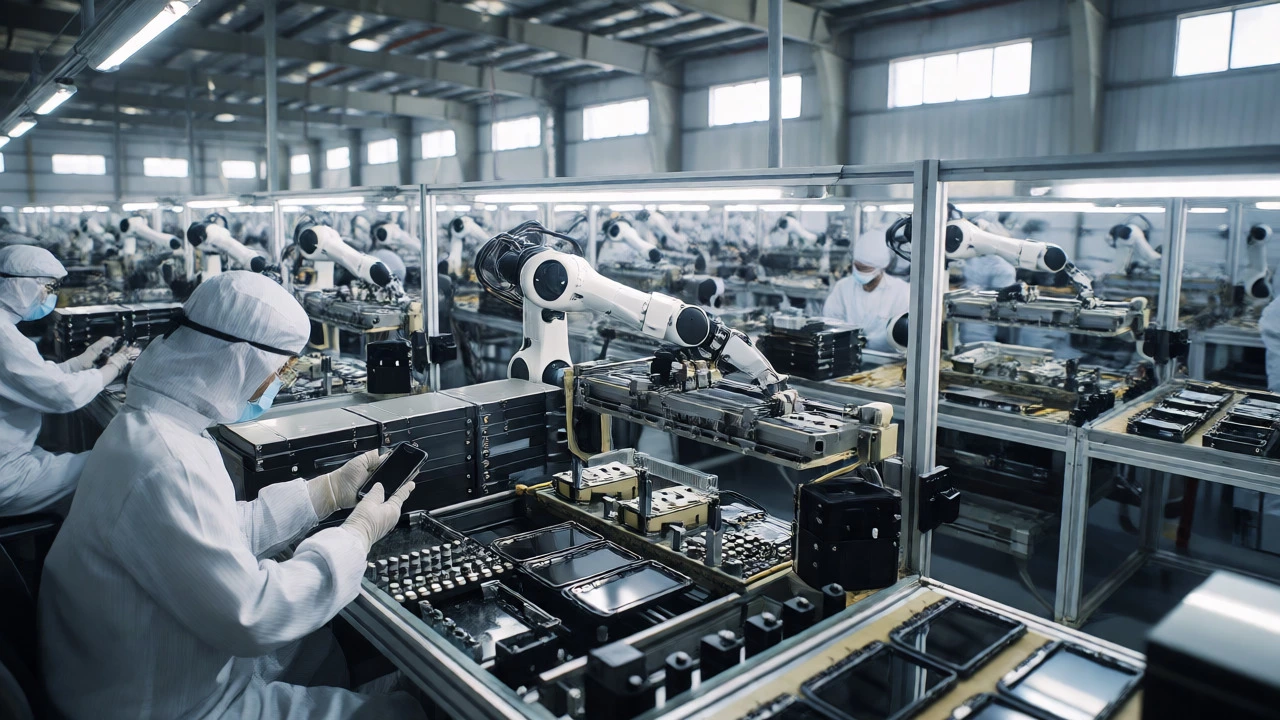
If you define "advanced" by sheer volume and supply chain integration, China is still the heavyweight champion. China holds approximately 70% of global electronics manufacturing capacity, a dominance built over three decades of infrastructure investment and labor specialization.
Why does this matter? Because speed wins in consumer electronics. When Apple needs to produce 100 million iPhones, they don't just need machines; they need a ecosystem. In Shenzhen, often called the hardware capital of the world, you can find every screw, capacitor, and screen protector within a 50-mile radius. This density reduces logistics costs to near zero and cuts product iteration time from months to weeks.
However, China's grip is loosening slightly. Rising labor costs and geopolitical tensions have pushed brands to look elsewhere. Yet, their move into high-value sectors like electric vehicles (EVs) and renewable energy tech shows they aren't just assembling; they are innovating. Companies like BYD and Huawei are proving that Chinese firms can compete on brand value, not just price tags.
South Korea: The Memory Chip Powerhouse
If China is the assembler, South Korea is the brain. South Korea dominates the global memory semiconductor market, controlling over 60% of DRAM and NAND flash production. Without Korean chips, your computer, server, or smartphone simply wouldn't work.
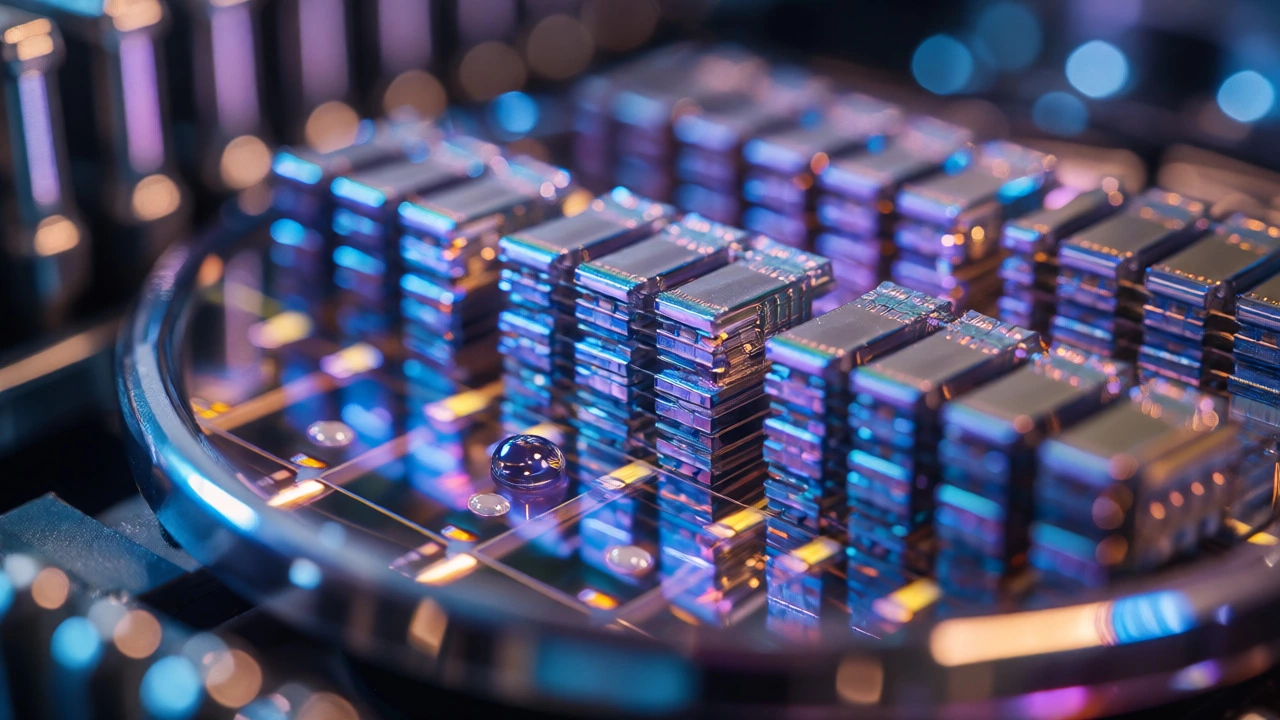
The rivalry between Samsung and SK Hynix drives relentless innovation. They push physical limits of miniaturization, creating layers of transistors stacked vertically in ways that seem impossible. This isn't just about making cheap goods; it's about defining the standards for next-generation data centers and AI accelerators. If you want to know who controls the heartbeat of modern computing, look at Seoul.
Korea's advantage lies in vertical integration. Unlike many countries that rely on imported parts, Korean conglomerates control everything from raw materials to final assembly. This allows them to pivot quickly when market demands change, such as the recent surge in demand for High Bandwidth Memory (HBM) used in AI training clusters.
United States: The Design and IP Leader
The United States doesn't manufacture the most widgets, but it owns the blueprints. The USA leads in electronic design automation (EDA), chip architecture, and intellectual property. Think of it this way: while others build the house, America sells the architectural plans and the smart locks.
Firms like NVIDIA, Intel, and Qualcomm set the pace for what technology looks like before it even exists. The CHIPS Act, passed in 2022, was a direct response to the vulnerability of relying on foreign fabs. By 2026, we are seeing the first results of this massive subsidy program, with new fabrication plants rising in Arizona, Ohio, and Texas. These aren't just any factories; they are cutting-edge facilities capable of producing 3-nanometer and 2-nanometer nodes.
American strength is also in software-hardware synergy. The ability to co-design chips specifically for AI workloads gives US companies a performance edge that pure manufacturers struggle to match. You aren't just buying a processor; you're buying an ecosystem optimized for specific tasks.
Japan: The Master of Precision and Materials
Japan may have lost some consumer brand visibility, but it remains indispensable in the supply chain. Japan excels in precision machinery, optical components, and specialized electronic materials. You cannot build a high-end camera lens or a lithography machine without Japanese expertise.
Companies like Tokyo Electron and Canon provide the tools that make chipmaking possible. ASML in the Netherlands builds the extreme ultraviolet (EUV) lithography machines, but those machines rely heavily on Japanese lenses and chemicals. If Japan stopped exporting these components, global chip production would halt within weeks.
Japanese engineering culture focuses on reliability and perfection. This makes them ideal partners for industries where failure is not an option, such as aerospace, medical devices, and automotive electronics. Their contribution is less about flashy products and more about the invisible infrastructure that keeps the industry running.
India: The Emerging Challenger
For readers interested in growth markets, India is rapidly becoming a key player in electronics manufacturing. Historically known for IT services, India is now aggressively pushing into hardware production through initiatives like the Production Linked Incentive (PLI) scheme.
Apple has shifted significant iPhone production to India, signaling confidence in the country's workforce and infrastructure. But it's not just about assembly. Indian startups are designing semiconductors, and local firms are expanding into display panel manufacturing. The goal is to reduce import dependence and create a self-sufficient ecosystem.
Challenges remain, including power stability and logistics efficiency. However, the demographic dividend-a young, trainable workforce-offers a long-term advantage. For businesses looking to diversify away from China, India is no longer just an option; it is a strategic necessity.

How Do These Countries Compare?
Choosing the "best" depends on your business model. Are you a startup needing quick prototypes? Go to Shenzhen. Are you building an AI server farm? Look to Korea and the US. Are you in aerospace? Partner with Japan. Here is a breakdown of their core strengths.
| Country | Primary Strength | Key Products | Global Market Share (Approx.) |
|---|---|---|---|
| China | Scale & Supply Chain Integration | Smartphones, Laptops, EVs | ~70% |
| South Korea | Memory & Display Tech | DRAM, NAND, OLED Screens | ~60% (Memory) |
| USA | Design & IP | CPU/GPU Architectures, EDA Software | ~45% (IP Value) |
| Japan | Precision Tools & Materials | Lithography Parts, Sensors, Capacitors | ~20% (Components) |
| India | Assembly & Cost Efficiency | Mobile Assembly, Basic Semiconductors | ~5% (Growing) |
What Should You Watch Next?
The trend is moving toward regionalization. Instead of one global factory, we are seeing three major hubs: North America, Europe, and Asia-Pacific. Each hub wants to be self-sufficient in critical technologies like batteries and advanced chips.
For entrepreneurs and manufacturers, this means flexibility is key. Don't bet everything on one country. Build relationships across borders. Source components from Japan, assemble in Vietnam or India, and design in the US. The most advanced electronics company in 2026 won't be defined by its nationality, but by how well it navigates this complex web.
Is China still the leader in electronics manufacturing?
Yes, in terms of total output volume and supply chain completeness, China remains the leader. It produces roughly 70% of the world's electronics. However, its lead is narrowing as other countries invest in domestic production capabilities.
Which country makes the best semiconductors?
This depends on the type of chip. The USA leads in designing high-performance logic chips (like GPUs). South Korea dominates memory chips (DRAM/NAND). Taiwan (often grouped with Asian manufacturing hubs) leads in actual fabrication of advanced nodes. No single country does it all alone.
Why is India becoming important in electronics?
India offers a large, young workforce and government incentives like the PLI scheme. Major brands like Apple are shifting production there to diversify supply chains and tap into a growing domestic market. It is transitioning from a service-based economy to a hardware manufacturer.
Does the US manufacture enough electronics?
The US manufactures less than 10% of global electronics by volume but holds a much larger share of the value due to intellectual property and high-margin designs. Recent laws aim to boost domestic manufacturing, especially for critical chips.
What role does Japan play in electronics?
Japan provides essential upstream components and machinery. From photoresists to precision lenses and capacitors, Japanese firms are critical suppliers. Without Japanese inputs, high-end chip manufacturing and optics would face severe bottlenecks.