
India Chemical Import Dependency Checker
Select a chemical category below to view its domestic production status, major import sources, and strategic importance for India's industrial growth.
India is a global powerhouse in bulk chemicals. We pump out tons of sulfuric acid, caustic soda, and urea every day. But here’s the twist: if you walk into a high-tech semiconductor fab or a specialized pharmaceutical lab in Hyderabad today, you might find that the critical reagents on the shelf were not made in India. They came from Japan, Germany, or the US.
The question "Which chemical is not manufactured in India?" isn’t about one single obscure molecule. It’s about entire categories of Specialty Chemicals where domestic production lags behind demand. While we dominate commodity chemicals, we remain heavily dependent on imports for high-purity, niche materials. This article breaks down exactly what we still buy from abroad, why it happens, and which specific compounds are missing from our factory floors.
The Big Picture: Bulk vs. Specialty
To understand the gaps, you have to split the chemical industry into two buckets. The first is Bulk Chemicals. These are high-volume, low-cost products like ammonia, chlorine, and methanol. India manufactures these at scale. Companies like Tata Chemicals and Gujarat Alkalies run massive plants that supply everything from fertilizers to detergents.
The second bucket is Specialty Chemicals. These are low-volume, high-value products designed for specific functions. Think of the additives that make your phone screen scratch-resistant or the catalysts that speed up drug synthesis. This is where the import dependency bites hard. According to recent data from the Department of Chemicals and Petrochemicals, India imports nearly 60-70% of its requirements for certain high-end specialty intermediates.
Why the gap? Technology barriers. Making bulk chemicals is about engineering large reactors. Making specialty chemicals is about precise molecular control, often requiring proprietary know-how that few companies outside of Europe and East Asia possess.
PTFE and Fluoropolymers: The Plastic We Can't Make Enough Of
If there is one material that screams "imported," it’s Polytetrafluoroethylene (PTFE), commonly known by the brand name Teflon. You use it in non-stick pans, but industry uses it for seals, gaskets, and insulation in aerospace and electronics because it handles extreme heat and corrosion.
India has very limited capacity for fluoropolymerization. The process requires handling highly toxic and reactive fluorine gas under strict conditions. Most of the world’s PTFE comes from China, Belgium, and the USA. When Indian manufacturers need high-grade PTFE films for lithium-ion battery separators, they almost always buy them from overseas suppliers like Daikin (Japan) or Chemours (USA).
This isn’t just a minor inconvenience. As India pushes into electric vehicles (EVs), the demand for battery-grade PTFE binders is skyrocketing. Relying on imports exposes local battery makers to supply chain shocks and currency fluctuations.
Electronic Grade Chemicals: Fueling the Chip Boom
With the government’s push for semiconductor fabrication, a new problem has emerged: Electronic Grade Chemicals. These aren’t just any acids; they are ultra-pure solvents and etchants used to wash silicon wafers. Even a microscopic speck of dust can ruin a chip worth thousands of dollars.
Currently, India lacks the infrastructure to produce these at the required purity levels (often parts per trillion). Major players like Entegris and Merck KGaA dominate this space globally. While some Indian firms are starting pilot projects, the current reality is that a significant portion of the Photoresists and High-Purity Acids needed for chip manufacturing are imported.
This creates a strategic vulnerability. If you’re building a fab in Noida or Bangalore, you can’t afford to wait three weeks for a shipment of hydrofluoric acid to arrive from South Korea. Localizing this production is a top priority for the Ministry of Electronics and Information Technology.
Advanced Catalysts and Intermediates
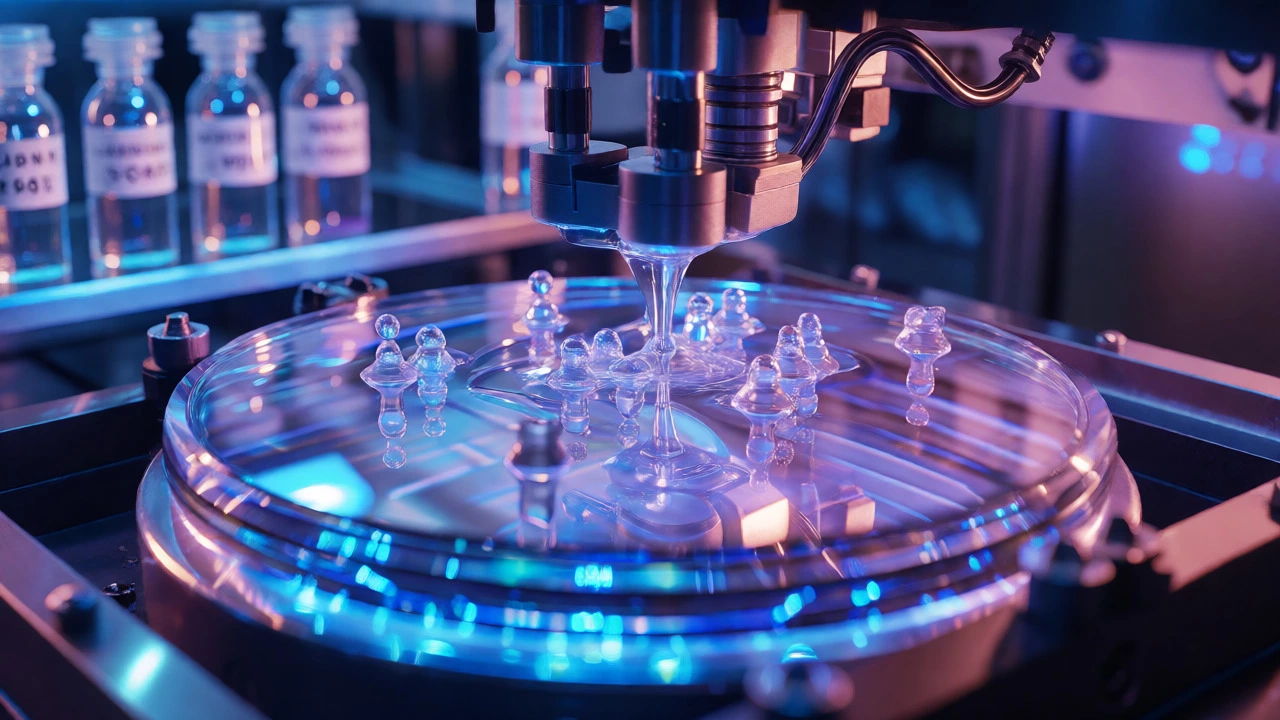
Catalysts are the unsung heroes of the chemical industry. They speed up reactions without being consumed. In pharmaceuticals and petrochemicals, the right catalyst determines efficiency and cost.
India manufactures basic catalysts, such as those used in fertilizer production. However, complex organometallic catalysts, particularly those involving rare earth elements or precious metals like palladium and rhodium, are rarely synthesized domestically. These are critical for hydrogenation reactions in drug manufacturing. For instance, many generic pharma companies in India import specific chiral catalysts from Switzerland and Japan because the synthesis technology is tightly guarded intellectual property.
| Chemical Category | Primary Use Case | Major Source Countries | Domestic Status |
|---|---|---|---|
| PTFE / Fluoropolymers | Batteries, Aerospace Seals | China, Japan, USA | Limited Capacity |
| Electronic Grade Solvents | Semiconductor Cleaning | South Korea, Japan, Germany | Nascent/Import Dependent |
| Complex Organometallics | Pharma Synthesis | Switzerland, UK, USA | Low Domestic Production |
| High-Performance Pigments | Automotive Coatings | Germany, France, China | Moderate Dependency |
Why Don’t We Just Make Them?
You might ask, "If we can build rockets, why can’t we make a simple polymer binder?" The answer lies in three factors: Technology Transfer Barriers, Scale Economics, and Regulatory Hurdles.
- Proprietary Tech: Many specialty chemical processes are trade secrets. Multinational corporations keep their best recipes close to home to maintain margins. Licensing these technologies to Indian firms is expensive and slow.
- Market Size: Some chemicals have tiny global markets. Building a plant for a compound used only in 5% of all smartphones doesn’t make financial sense unless you can export globally. Indian firms often struggle to compete with Chinese manufacturers who operate at massive scales with lower labor costs.
- Environmental Compliance: Handling hazardous precursors requires stringent environmental controls. Setting up compliant facilities takes years of permits and capital expenditure, deterring small and medium enterprises (SMEs) from entering niche segments.
The Shift: Government Initiatives and Future Outlook
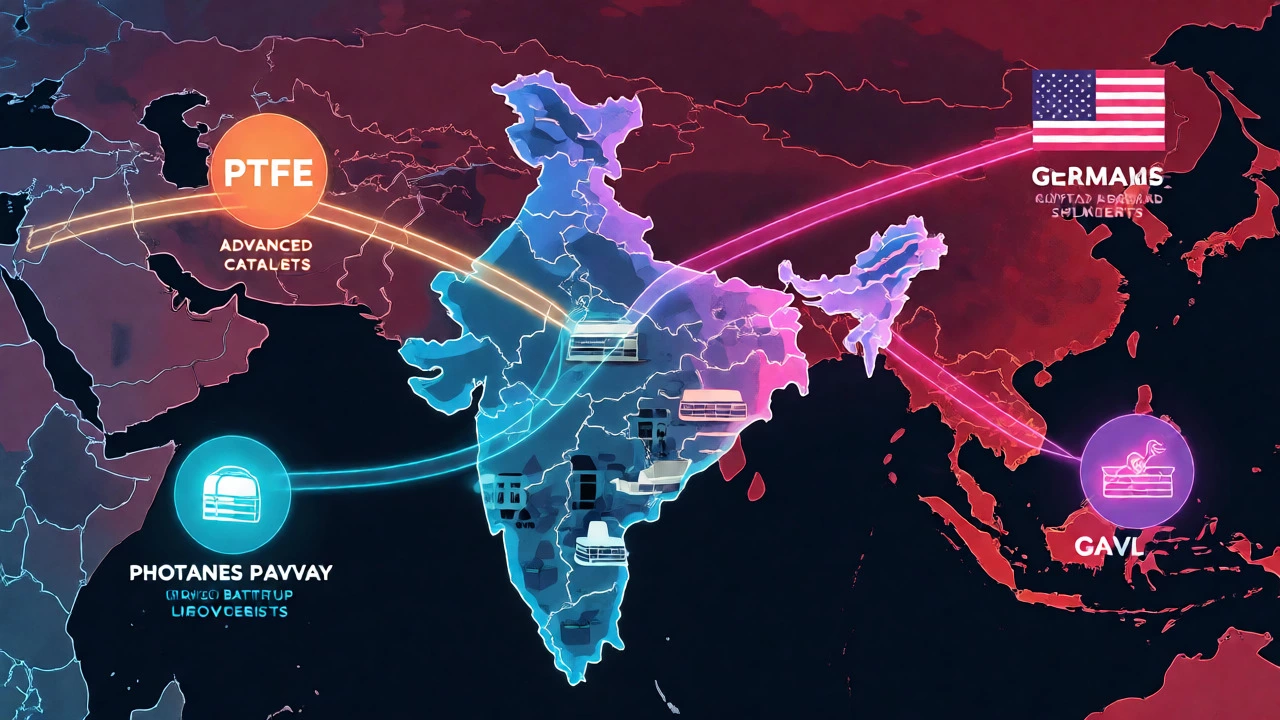
The situation is changing. The Production Linked Incentive (PLI) scheme for Advanced Chemistry Cell (ACC) batteries includes provisions for localizing key components like electrolytes and separators. This directly targets the PTFE and solvent gaps.
Furthermore, the National Mission on Transformative Mobility and Battery Storage aims to create a domestic ecosystem. Companies like SRF Ltd and Deepak Nitrite are expanding into higher value-added specialties, moving away from pure commodity trading. There is also a growing trend of "China Plus One" sourcing, where global brands look to India as an alternative supplier, provided quality standards meet international benchmarks.
For entrepreneurs and investors, the opportunity lies in bridging these gaps. Identifying a niche chemical currently imported entirely from China or Japan, and setting up a small-scale, high-purity production unit, can yield significant returns. The market is hungry for reliability and shorter lead times.
Frequently Asked Questions
Is all Teflon imported into India?
No, not all of it. India has some domestic production capacity for standard grades of Polytetrafluoroethylene (PTFE). However, high-performance grades used in electronics, aerospace, and lithium-ion batteries are predominantly imported due to technical limitations in local processing capabilities.
Why does India import so many specialty chemicals?
The primary reasons are technological barriers, lack of proprietary know-how, and economies of scale. Global leaders in countries like Germany, Japan, and China have decades of accumulated expertise and larger production volumes, allowing them to produce complex molecules more efficiently and cheaply than emerging Indian units.
What is the biggest chemical import category for India?
While organic chemicals constitute a large volume, the highest value and strategic concern lie in electronic grade chemicals, specialty polymers like fluoropolymers, and advanced intermediates for the pharmaceutical sector. These sectors rely heavily on imports from China, South Korea, and Western nations.
Can Indian startups manufacture electronic grade chemicals?
Yes, several Indian startups and established firms are entering this space. With government support through PLI schemes and increasing demand from local semiconductor fabs, domestic production of ultra-high purity solvents and photoresists is becoming viable, though certification by global chipmakers remains a lengthy hurdle.
Does India manufacture enough catalysts for its pharma industry?
India produces basic industrial catalysts adequately. However, for complex synthetic pathways in modern drug discovery, especially those requiring chiral catalysis or noble metal complexes, the industry still relies significantly on imports from Europe and North America due to IP restrictions and technical complexity.