Food Processor Safety Checker
Check Your Food Item
Enter any food item to see if it's safe for your food processor
Please enter a food item
Type something in the field above to check safety
Most people buy a food processor to make life easier-chopping onions in seconds, grinding nuts, kneading dough, even making pesto without a mortar and pestle. But if you’ve ever had your machine sputter, smoke, or worse, stop working mid-recipe, you know: not everything belongs in there. Food processors are powerful, but they’re not magic. Put the wrong things in, and you could damage the motor, ruin the blade, or even create a safety hazard. Here’s exactly what you should never put in a food processor, and why.
Hot Liquids
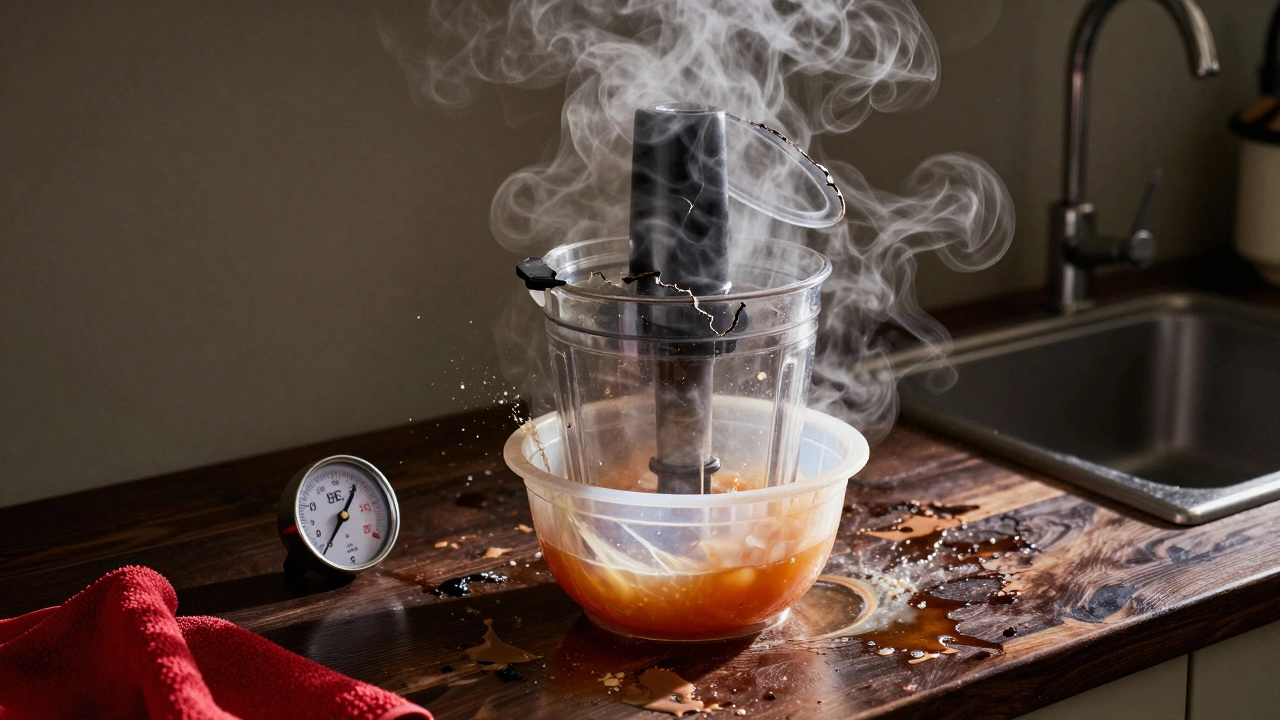
Hot soup, boiling broth, or even warm sauce might seem like a good candidate for blending in the processor. After all, you’ve got a powerful motor and sharp blades. But heat and pressure don’t mix well in a sealed container. When hot liquid goes into the food processor, steam builds up fast. The lid isn’t designed to vent like a blender’s. That pressure can blow the lid off, spraying scalding liquid all over your counter, your hands, or worse-your face. Even if the lid stays on, the heat can warp the plastic bowl or weaken the seal over time. Always let liquids cool to room temperature before blending. If you need to puree hot food, use a handheld immersion blender instead.
Fried or Greasy Foods
Think about leftover fried chicken, crispy bacon bits, or even a bowl of greasy fries. It’s tempting to toss them in to chop them up for a salad or sandwich topping. But oil and fat are the enemy of food processor blades and motors. Grease coats the blades, making them less effective. Over time, it builds up in the motor housing, attracting dust and debris, which can cause overheating. Worse, the fat can turn rancid and leave a stubborn smell that lingers for weeks. You’ll end up scrubbing the bowl with baking soda and vinegar just to get rid of the odor. If you want to chop fried foods, do it by hand or use a sharp knife. Save the processor for dry or moist ingredients.
Whole Spices and Coffee Beans
Whole peppercorns, cinnamon sticks, or coffee beans? They look small, so you might think they’re safe. But hard, dense spices and beans are too tough for most food processor blades. They don’t grind evenly-they smash, chip, and bounce around. The result? A gritty, uneven powder, not the fine grind you want. More importantly, the force can crack or chip the blade’s edge. Over time, this damages the blade’s sharpness, making it useless for even basic chopping. If you need ground spices or fresh coffee, use a dedicated spice grinder or a burr coffee grinder. They’re built for hard, dry materials. A food processor isn’t.
Sticky or Gummy Ingredients
Think nut butter, caramel, honey, or even wet dough. These stick to the sides like glue. They don’t get chopped-they just cling to the bowl and blades, turning into a thick, unmovable paste. The motor strains to turn the blades, and the friction can overheat the motor. In extreme cases, it can trip the thermal cut-off or even burn out the motor windings. You’ll end up with a broken appliance and a bowl full of hardened goo that’s nearly impossible to clean. If you’re making nut butter, use a high-powered blender or a dedicated nut butter machine. For caramel or sticky sauces, a heavy-bottomed pot and wooden spoon are your best friends.

Hard Bones or Frozen Meat
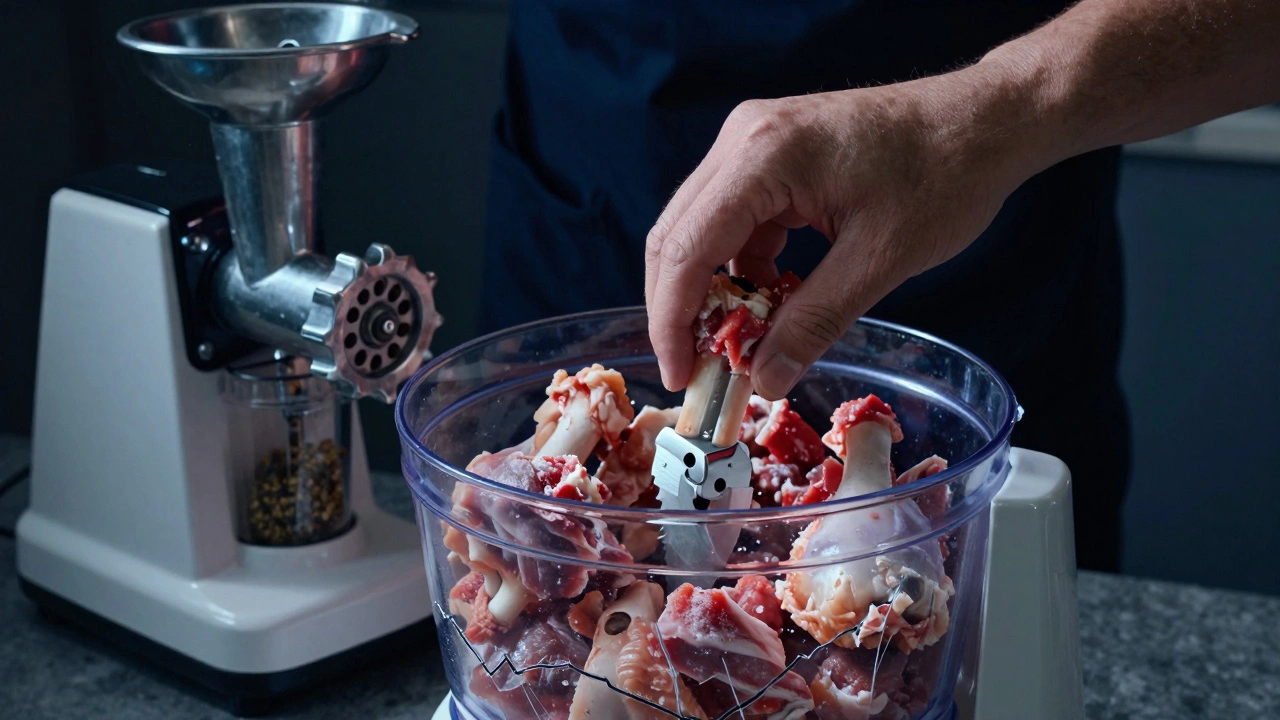
Some people try to grind chicken bones or frozen beef in their food processor to save time. Don’t. Bones-even small ones-are too hard. They can shatter the blade, crack the plastic bowl, or jam the drive shaft. Frozen meat is just as bad-it’s too dense for the blades to cut through without excessive force. The motor will overheat, and the texture will be uneven, with chunks of ice and raw meat still intact. If you need ground meat, buy it pre-ground or use a meat grinder. For bone broth, simmer the bones first, then strain. Your processor wasn’t built for this kind of abuse.
Leafy Greens in Large Batches
Spinach, kale, or lettuce? They seem harmless, but stuffing a whole bunch into the processor at once creates a different problem. The blades can’t cut through all the leaves evenly. Instead of chopping, they get wrapped around the blade like a tangled mess. The motor struggles, the blades stop turning, and you’re left with a mess of unchopped greens stuck to the sides. It’s frustrating, messy, and hard on the motor. The fix? Use a salad spinner or chop greens by hand. If you must use the processor, add greens in small handfuls, pulse gently, and stop before it gets too tangled.
Excessively Large or Hard Ingredients
Whole apples, unpeeled potatoes, or large chunks of cheese? They might fit in the feed tube, but they shouldn’t go in. Large pieces put too much strain on the blades and motor. The processor can’t break them down efficiently, so it either stalls or forces the food through unevenly, creating uneven textures. Hard items like raw carrots or uncooked potatoes can dull the blade over time. Always cut ingredients into pieces no bigger than 1-2 inches before processing. It’s a small step that saves your machine from stress and your food from inconsistency.
Non-Food Items
This one sounds obvious, but people do it. A few years ago, a woman in Melbourne tried to clean her processor by running it with a sponge. Another person in Perth used it to grind up old plastic containers “to recycle.” These aren’t just mistakes-they’re dangerous. Plastic, metal, cloth, or even cleaning brushes can shatter blades, send shards flying, or melt into the motor. Even a stray metal utensil left in the bowl can cause serious damage. Always double-check the bowl before turning it on. If you’re unsure, don’t risk it.
Why This Matters
Food processors are built for speed and convenience, not punishment. The motor, blade, and bowl are designed to handle specific tasks: chopping, slicing, shredding, and blending soft to medium-hard foods. Push them beyond those limits, and you’re not saving time-you’re shortening the life of your appliance. A good food processor can last 10 years or more if treated right. Abuse it, and you might be replacing it in under two. That’s not just a financial loss-it’s wasted effort, wasted food, and wasted time cleaning up the mess.
What You Should Use Instead
- For hot liquids: immersion blender or countertop blender with vented lid
- For grinding spices or coffee: dedicated spice grinder or burr grinder
- For nut butter: high-powered blender or nut butter machine
- For meat grinding: manual or electric meat grinder
- For sticky mixtures: stand mixer with dough hook
- For leafy greens: knife and cutting board
Each of these tools exists because they do one job better than a food processor ever could. Using the right tool doesn’t make you lazy-it makes you smarter.
Quick Check: What Not to Put in Your Food Processor
- Hot liquids (soup, broth, sauce)
- Fried or greasy foods (bacon, fried chicken, fries)
- Whole spices (peppercorns, cinnamon sticks)
- Coffee beans
- Sticky substances (caramel, honey, nut butter)
- Bones or frozen meat
- Large chunks of hard vegetables
- Leafy greens in large batches
- Non-food items (plastic, metal, cloth)
If you’re ever unsure, ask yourself: does this item look like it belongs in a blender or grinder? If yes, then it probably doesn’t belong in your food processor.
Can I put ice in a food processor?
Yes, but only in small amounts and only if your model is rated for it. Most food processors can crush ice for cocktails or slushies, but overloading the bowl or running it too long can strain the motor. Use the pulse function, not continuous blending. If your processor gets hot or sounds strained, stop immediately. For regular ice crushing, a dedicated blender with a heavy-duty blade is more reliable.
Why does my food processor smell like burnt plastic?
That smell usually means the motor is overheating. It happens when you overload the machine, process sticky or hard items for too long, or run it continuously without breaks. The plastic components inside the motor housing can start to soften or melt. Turn off the unit, let it cool for at least 30 minutes, and avoid using it again until you’ve checked what caused the strain. If the smell returns, the motor may be damaged and need replacement.
Can I use a food processor to make dough?
Yes, but only for certain types. Food processors are great for pie crusts, biscuit dough, or shortbread because they cut butter into flour quickly. But they’re not ideal for yeast breads that need kneading. The blades can overwork the gluten, making bread tough. For yeast dough, a stand mixer with a dough hook is better. If you use a processor for dough, pulse in short bursts and stop as soon as the dough forms a ball.
How often should I replace the blade?
Most blades last 3-5 years with normal use. Signs you need a new one: food isn’t chopping evenly, the blade looks dull or chipped, or it takes longer than usual to process ingredients. If you’ve been processing hard items like spices, bones, or frozen foods, the blade may wear out faster. Always clean the blade after each use and store it safely to avoid nicks.
Is it safe to wash the food processor in the dishwasher?
Only if the manufacturer says it’s safe. Most bowls and lids are dishwasher-safe, but blades and motors are not. Never put the motor base in the dishwasher. Even if the blade is labeled dishwasher-safe, hand-washing it preserves the sharpness and prevents corrosion from harsh detergents. Always dry the blade thoroughly before storing to avoid rust.