PET Recycling & Safety Quiz
Think you know what that little triangle with the '1' means? Take this quick quiz to verify your understanding of Polyethylene Terephthalate (PET) bottles.
Loading question...
Quiz Complete!
You scored 0 out of 0.
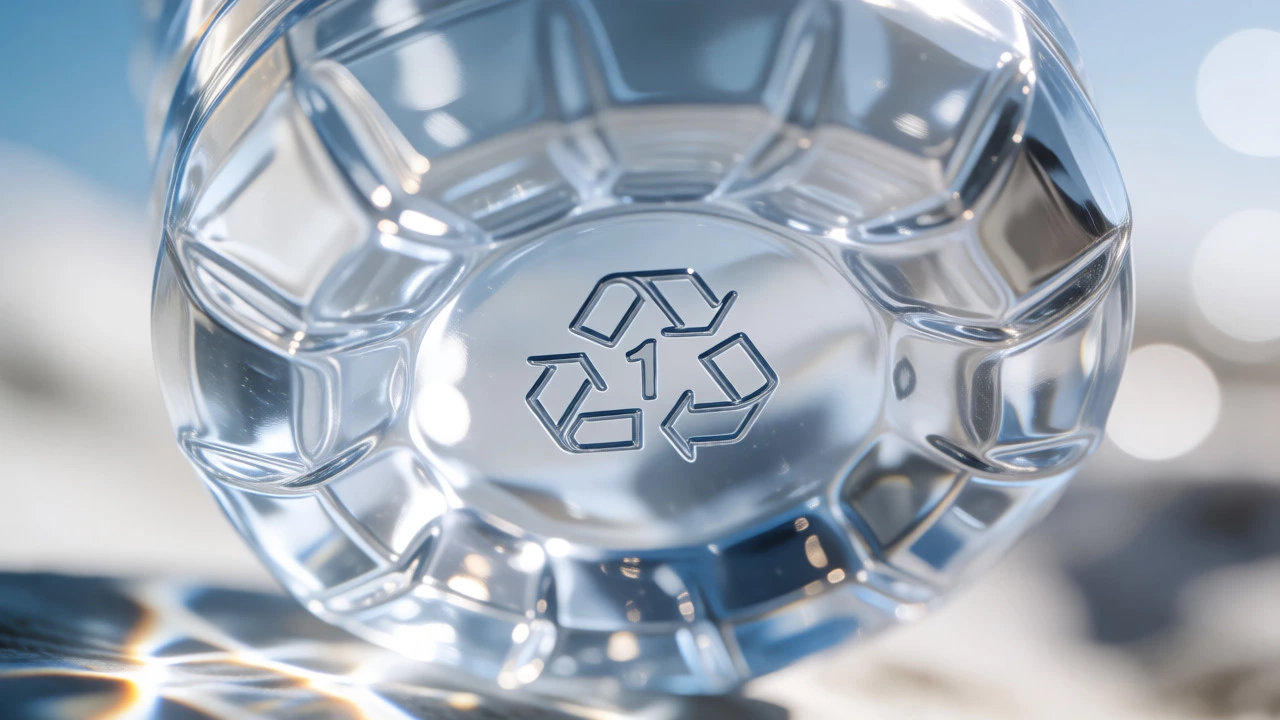
You grab a water bottle from the fridge, twist off the cap, and glance at the bottom. There it is: a small triangle with the number 1 inside. Most people ignore it, assuming it’s just random packaging noise. But that tiny digit is actually a secret code that tells you exactly what the bottle is made of, how safe it is for your health, and whether your local council will even take it for recycling.
If you’ve ever wondered why some plastics melt in the dishwasher while others survive boiling water, or why one bottle is rigid and another feels waxy, the answer lies in those numbers. Specifically, number 1 refers to Polyethylene Terephthalate, commonly known as PET or PETE. It is the most widely used plastic for single-use beverage containers globally. Understanding what this means helps you make smarter choices about reuse, disposal, and environmental impact.
Decoding the Resin Identification Code
The number 1 isn’t just a label; it’s part of a system called the Resin Identification Code, which was developed by the Society of the Plastics Industry (SPI) in 1988. The goal was simple: help sorting facilities separate different types of plastics so they could be recycled effectively. Before this system, mixed plastic waste often ended up in landfills because recyclers couldn’t distinguish between materials that behaved differently when melted.
When you see the number 1, it specifically identifies Polyethylene Terephthalate. This is a thermoplastic polymer resin belonging to the polyester family. In plain English, it’s a type of plastic that becomes soft when heated and hardens when cooled, allowing it to be molded into shapes like bottles, jars, and synthetic fibers. Unlike other plastics, PET has a unique chemical structure that makes it lightweight yet strong enough to hold carbonated drinks without bursting under pressure.
Why does this matter? Because not all plastics are created equal. If you throw a number 1 bottle into a bin meant for number 5 (Polypropylene), you contaminate the entire batch. Recyclers have to discard the whole load if the mix is wrong. So, that little number is actually a critical instruction manual for waste management workers and automated sorting machines.
Is Number 1 Plastic Safe for Your Health?
This is the big question everyone asks after seeing news headlines about microplastics. Is drinking from a PET bottle dangerous? For the vast majority of cases, no. PET is approved for food contact by major regulatory bodies, including the U.S. Food and Drug Administration (FDA) and the European Food Safety Authority (EFSA). These agencies require strict testing to ensure that chemicals don’t leach out of the plastic into your drink in harmful quantities.
However, there are nuances. PET is generally considered safe for single use. It doesn’t contain Bisphenol A (BPA), a hormone disruptor found in some harder plastics like polycarbonate (number 7). But heat changes things. If you leave a PET bottle in a hot car in Sydney summer, temperatures can exceed 60°C. At these levels, the plastic may release antimony, a catalyst used in its production. While the amounts are typically within safe limits, repeated exposure to high heat can accelerate degradation.
| Factor | Status for PET (Number 1) | Recommendation |
|---|---|---|
| BPA Content | BPA-Free | Safe alternative to Polycarbonate |
| Heat Resistance | Low (deforms above 70°C) | Do not microwave or dishwasher wash |
| Chemical Leaching | Minimal under normal conditions | Avoid storing acidic liquids long-term |
| Reuse Potential | Single-use designed | Rinse well if reusing briefly; discard if scratched |
Another concern is bacterial growth. PET bottles are porous on a microscopic level. Once you start using them, especially if you drop them or scratch the interior, bacteria can hide in those tiny grooves. That’s why manufacturers design them for one-time use. Reusing a crumpled, scratched number 1 bottle for weeks increases the risk of hygiene issues more than chemical toxicity.
Environmental Impact and Recycling Reality
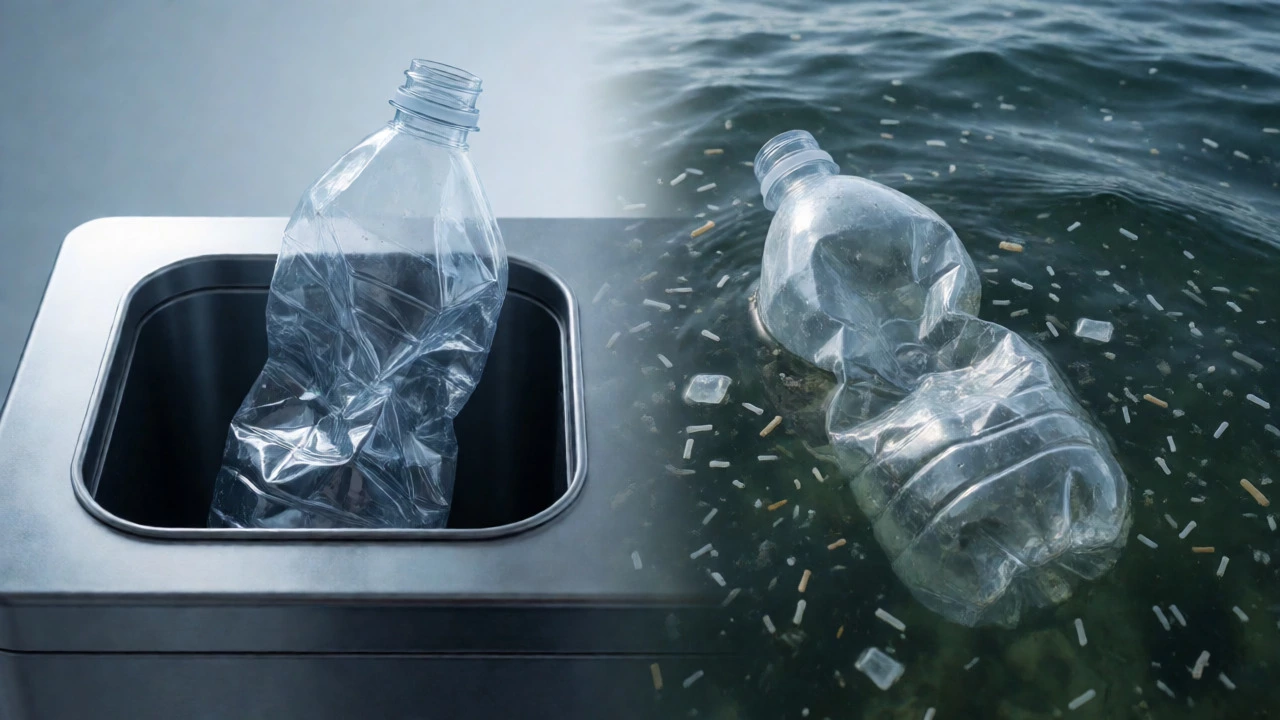
Here’s where the story gets complicated. Number 1 plastic is technically one of the easiest plastics to recycle. It has high market value because recycled PET (rPET) can be turned back into new bottles, clothing fibers, or carpeting. In fact, rPET requires 50% less energy to produce than virgin PET. Sounds great, right?
But the reality is stark. Globally, only about 30% of PET bottles are actually collected for recycling. The rest end up in landfills or oceans. Why such a gap? Contamination. If your bottle still has milk residue, or if you remove the label incorrectly, it might get rejected. Also, many regions lack the infrastructure to handle complex multi-layer packaging, though standard water bottles are usually straightforward.
In Australia, where I live, the situation varies by state. New South Wales and Victoria have robust kerbside recycling programs that accept clean number 1 bottles. However, container deposit schemes (like "Cuntainers for Change" in NSW) offer immediate financial incentives, leading to higher return rates. If you’re serious about reducing waste, participating in these schemes is far more effective than hoping your council truck picks it up correctly.
Common Misconceptions About Number 1
Let’s clear up some myths that circulate online. First, "number 1 means toxic." False. As mentioned, it’s FDA-approved for food. Second, "you can never reuse number 1." Not entirely true. You can refill it once or twice for cold water if it remains intact. Just don’t expect it to last forever. Third, "all clear plastic is number 1." Nope. Clear plastic could also be number 7 (Polycarbonate) or number 5 (Polypropylene), depending on the manufacturer. Always check the stamp.
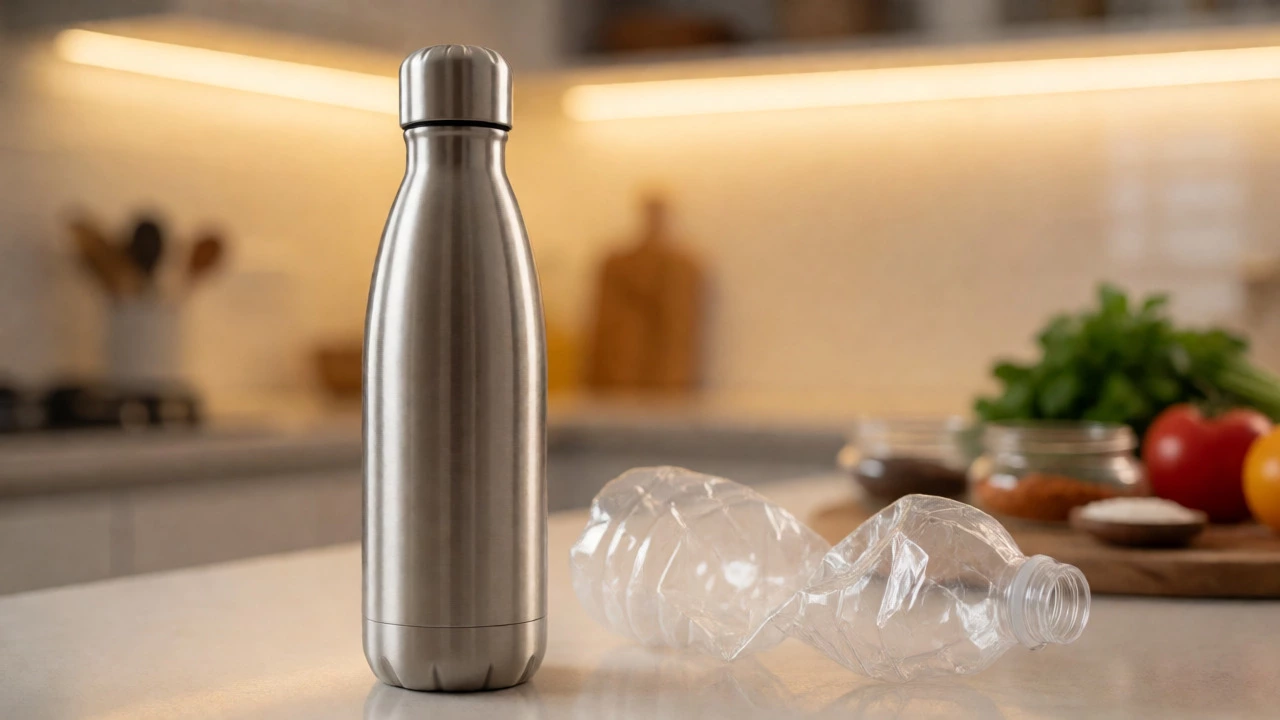
Another myth is that recycling always saves the planet. While better than landfilling, recycling PET still involves transport, washing, shredding, and melting-all energy-intensive steps. Reducing consumption is superior to recycling. Buying a reusable stainless steel or glass bottle eliminates the need for number 1 plastic altogether.
How to Properly Dispose of Number 1 Bottles
If you must use single-use PET bottles, here’s how to maximize their chance of being recycled:
- Empty and Rinse: Leftover liquid adds weight and causes contamination. A quick rinse suffices.
- Keep the Cap On: Modern recycling facilities prefer caps attached. They are often made of number 5 (PP), which is compatible with PET during the washing process. Loose caps can fall through machinery and become litter.
- Cross-Cut Labels: Some labels have adhesives that gum up shredders. If easy, peel them off, but don’t stress if they stay on-modern wash lines handle most paper/plastic labels.
- Check Local Rules: In some areas, you need to crush bottles to save space. In others, keeping them open helps sensors identify them. Check your local council’s website.
Remember, a dirty bottle is worse than no bottle. If you can’t clean it, put it in the general waste. Contaminating an entire bale of recyclables costs taxpayers money and sends good material to landfill.
Alternatives to Single-Use PET
If you’re looking to break the habit of buying bottled water, consider these swaps:
- Reusable Hard Plastic (Number 5 or 7): Look for Tritan or HDPE bottles. They withstand dishwashers and last years.
- Glass: Heavy but inert. No leaching, infinite recyclability.
- Stainless Steel: Durable, keeps drinks cold/hot, zero plastic contact.
- Aluminum: Highly recyclable, lightweight, but check for BPA-free linings.
Each option has trade-offs. Glass breaks; steel dents; aluminum heats up. But none contribute to the single-use plastic crisis quite like number 1 PET.
Can I microwave a number 1 plastic bottle?
No, you should not microwave number 1 plastic. PET has a low melting point and can deform or release chemicals when exposed to direct microwave radiation. Use glass or ceramic containers for heating food instead.
Is number 1 plastic BPA free?
Yes, number 1 plastic (PET/PETE) is inherently BPA-free. It does not contain Bisphenol A, which is typically found in polycarbonate plastics (number 7). This makes it a safer choice for beverages compared to older hard plastics.
How many times can I reuse a number 1 bottle?
Manufacturers design number 1 bottles for single use. You can safely reuse them once or twice for cold water if they remain clean and undamaged. Avoid reusing them if they become cloudy, scratched, or dented, as bacteria can accumulate in the imperfections.
Why is my number 1 bottle sticky after washing?
Stickiness often comes from adhesive residue left behind by the label. To remove it, soak the bottle in warm soapy water or use a mild oil-based cleaner. Ensure the bottle is completely dry before refilling to prevent mold growth.
Does number 1 plastic cause cancer?
Current scientific evidence does not support the claim that number 1 plastic causes cancer under normal usage conditions. Regulatory agencies monitor leaching levels, and PET meets safety standards for food contact. Avoid excessive heat exposure to maintain this safety profile.