Manufacturing Unit Economics Estimator
Product Scalability Calculator
Quick Takeaways
- The plastic bottle is the global leader in sheer volume of production.
- High-volume items usually share three traits: low cost, high necessity, and rapid turnover.
- Scaling a product requires a deep understanding of "Unit Economics" and supply chain efficiency.
- Modern manufacturing is shifting from disposable plastics to sustainable alternatives.
The Reign of the Plastic Bottle
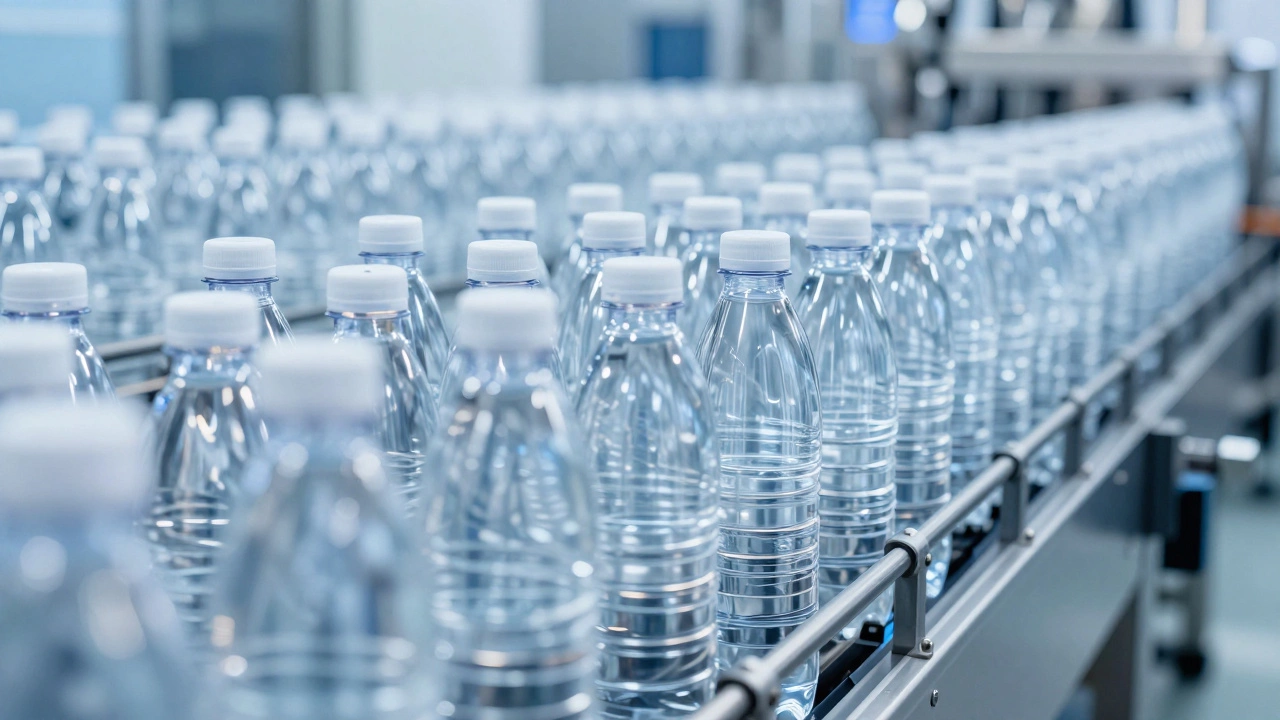
To understand why the PET Bottle takes the crown, we have to look at the numbers. Every year, the world produces over 500 billion plastic bottles. That's not just a lot; it's an industrial phenomenon. These items aren't complex. They are created through a process called injection stretch blow molding, where a small piece of plastic is heated and blown into a mold.
Why this specific item? It solves a massive problem: transporting liquid safely, cheaply, and hygienically. When you combine a cheap raw material like Polyethylene Terephthalatea thermoplastic polymer resin of the polyester family used primarily for beverage bottles with a production cycle that takes only seconds per unit, you get a product that can be scaled to the entire global population. If you are planning a startup, this is the ultimate example of "high volume, low margin." You don't make much money on one bottle, but when you sell a trillion of them, you build an empire.
Other Heavy Hitters in Mass Production
While bottles lead the pack, a few other entities compete in the realm of sheer quantity. Consider the Integrated Circuita set of electronic circuits on a small flat piece of semiconductor material, typically silicon. In terms of individual components, we produce trillions of transistors. However, as a finished "item" that a consumer buys, the chip is usually part of something else.
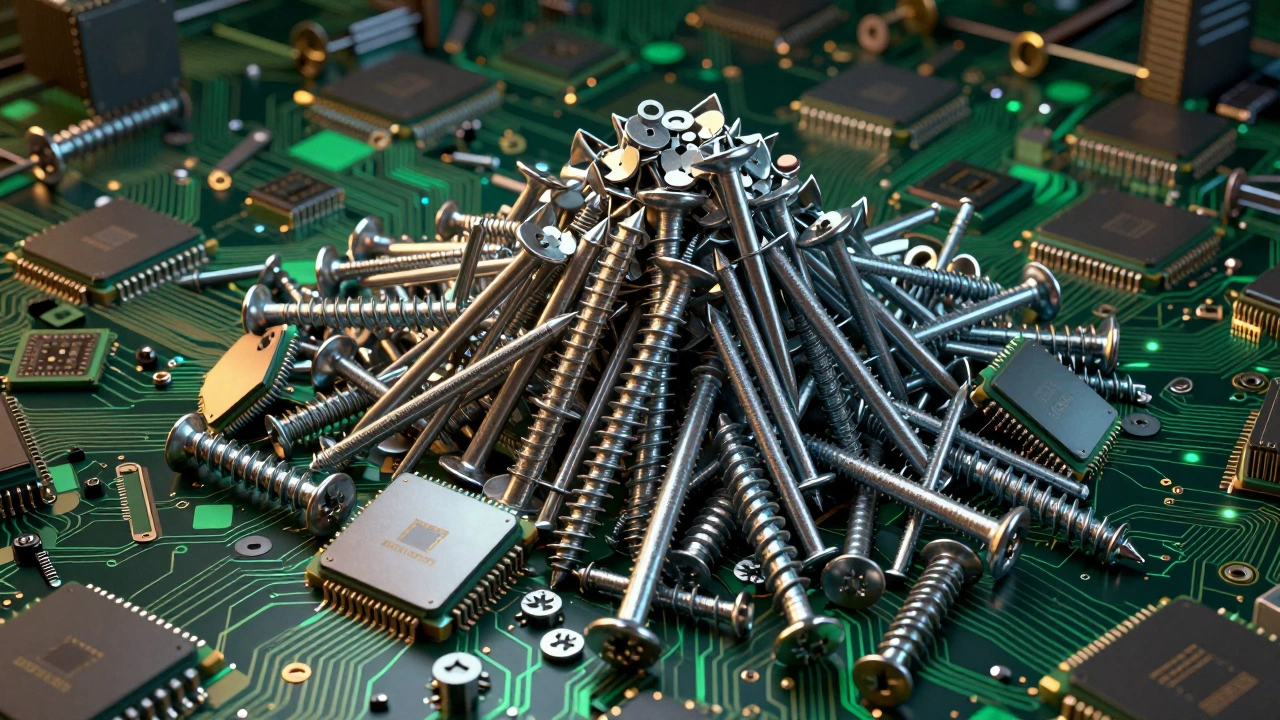
Then there are the nails and screws. For centuries, the Fastenerhardware devices that mechanically join two or more objects together, such as screws, bolts, and nails has been the backbone of construction. While we don't have a single "count" for every nail ever made, the volume is staggering because every single building, bridge, and piece of furniture requires them. The lesson here for a founder is that "invisible" products-the ones people don't notice-often have the most stable demand.
| Product | Primary Material | Production Speed | Market Driver |
|---|---|---|---|
| Plastic Bottle | PET Plastic | Ultra-Fast | Convenience/Hydration |
| Fasteners (Nails) | Steel | Fast | Infrastructure/Build |
| Smartphone | Silicon/Glass/Cobalt | Medium | Digital Connectivity |
| Paper Clip | Galvanized Steel | Fast | Office Organization |
What Makes a Product "Mass Producible"?
If you're hunting for a product to manufacture, you can't just pick something people like. You need to look for specific attributes. First, there is the Unit Cost. The cheaper it is to make one unit, the easier it is to flood the market. If your raw materials cost a fortune, you can't compete on volume.
Second, look at the replacement cycle. A house lasts 50 years, but a water bottle lasts 15 minutes. The most produced items are almost always "consumables." They are used up and replaced. This creates a recurring revenue stream that doesn't require you to find new customers every day; you just need to keep the existing ones thirsty or hungry.
Third, consider the Supply Chain. Can you get the raw materials in bulk without a massive headache? The success of the plastic bottle is tied to the massive scale of the petrochemical industry. If your product relies on a rare mineral found only in one cave in the Andes, you aren't building a mass-production powerhouse; you're building a niche luxury brand.
The Shift: From Quantity to Sustainability
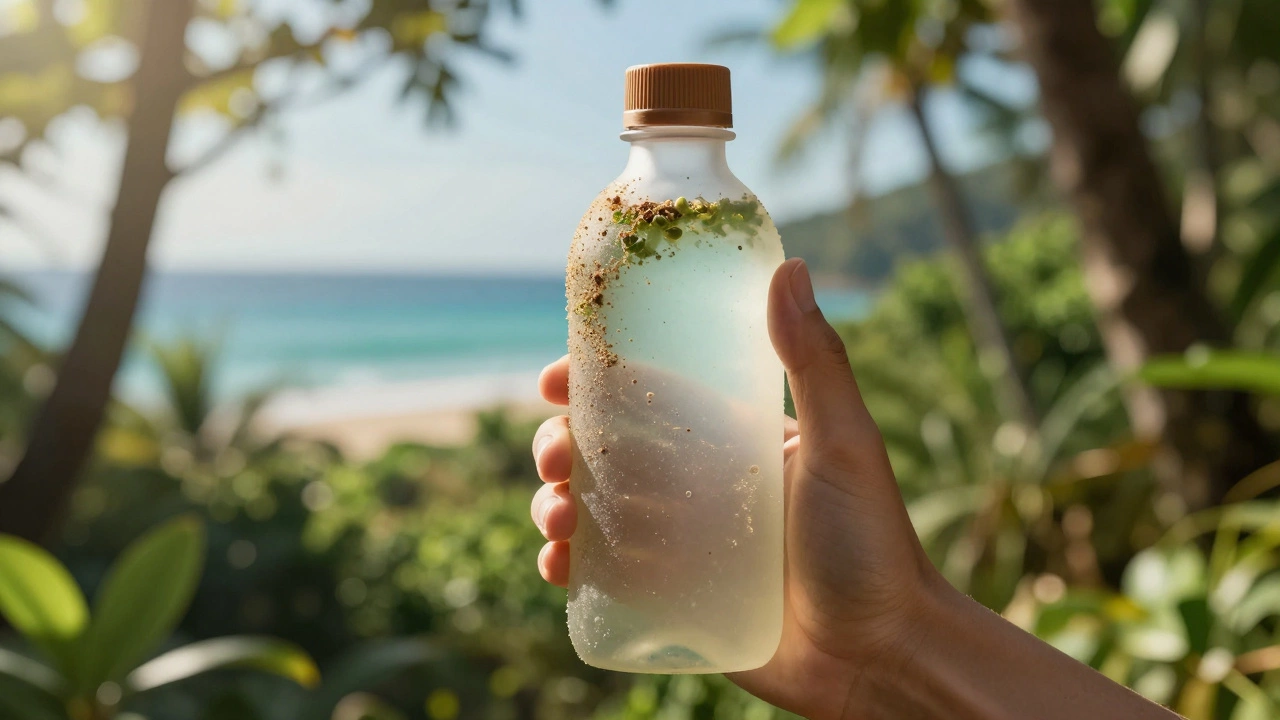
Here is where the opportunity lies for new startups. The world is hitting a wall with plastic. We've produced too many bottles, and now they are filling our oceans. The next "most produced item" won't be a plastic bottle; it will be the thing that replaces it. We are seeing a massive pivot toward Biodegradable Polymerspolymers that decompose naturally through the action of microorganisms and compostable packaging.
If you start a company making a biodegradable version of a high-volume item, you are entering a market with proven demand but outdated technology. That is the sweet spot for innovation. You aren't guessing if people want a bottle; you know they do. You're just changing the "how" and the "what" of the material. This is how you disrupt an industry that has been stagnant for decades.
Avoiding the "Volume Trap"
While mass production sounds like the path to riches, it's a dangerous game for a small startup. Many new entrepreneurs fall into the "volume trap," where they try to compete with giants like Coca-Cola or Unilever on price. You cannot out-scale a company that has spent 100 years optimizing its shipping routes.
Instead, use a "Micro-Mass" strategy. Find a specific niche where a high-volume item is needed but the quality is poor. For example, instead of making generic plastic bottles, make specialized, high-durability containers for the medical industry. You still get the benefits of a repeatable manufacturing process, but you can charge a premium because you're solving a specific problem rather than just filling a void in a vending machine.
Practical Steps for Your Manufacturing Journey
Ready to move from theory to a factory floor? Don't start by buying a million-dollar machine. Start with a prototype. Use Additive Manufacturingthe process of joining materials to make objects from 3D printed layers (3D printing) to test your design. Once you know the product sells, move to Injection Moldinga manufacturing process for producing parts by injecting molten material into a mold for your first medium-scale run.
Keep a close eye on your cycle time. In the world of the most produced items, a difference of two seconds per unit can be the difference between a profit and a loss when you're producing millions. Map out your workflow to eliminate every unnecessary movement. The goal is to turn your production line into a machine where the only thing that changes is the raw material going in and the finished product coming out.
Is the plastic bottle really the most produced item?
In terms of finished, discrete consumer goods sold globally, yes. While individual components like transistors are more numerous, the PET bottle is the most ubiquitous standalone manufactured product due to the global beverage industry's scale.
Can a startup actually compete in high-volume manufacturing?
It is very difficult to compete on price alone. The best strategy for a startup is to target "specialized volume"-products that are produced in high numbers but serve a specific, high-value niche, or to innovate the material (e.g., switching from plastic to mushroom-based packaging).
What is a "Unit Economic" in manufacturing?
Unit economics is the direct revenue and cost associated with a single unit of your product. If it costs $0.10 to make a bottle and you sell it for $0.15, your unit economic is a $0.05 profit. Understanding this is critical before scaling production.
What are the best materials for a new manufacturing startup?
Current trends suggest moving away from traditional plastics toward bio-polymers, recycled ocean plastics, or high-strength composites. The goal is to find a material that is cheap enough for volume but sustainable enough to meet new government regulations.
How does the replacement cycle affect product choice?
The shorter the replacement cycle, the higher the production volume needs to be. Items like batteries or disposable wipes have high turnover, meaning customers buy them repeatedly, which drives the need for massive, constant production.
Next Steps for Aspiring Manufacturers
If you're feeling inspired, start by auditing your own trash and your own pantry. Look for the items you replace most often. Ask yourself: "Is there a way to make this more sustainably, more efficiently, or for a specific group of people?"
If you're in the early stages, look for a local co-packer or a shared manufacturing space to avoid the massive upfront cost of equipment. Once you've proven that there is a market for your version of a "mass-produced item," you can look into scaling your own facility. Remember, the goal isn't just to make a lot of stuff-it's to make the stuff that the world can't stop using.