
Global Digitization Explorer
Select a country to view its specific digital strengths, key initiatives, and industrial focus based on the article analysis.
Denmark
#1 GlobalSouth Korea
Connectivity LeaderSingapore
Smart City HubIndia
Scale & HardwareSelect a Country
Primary Strength
Click any card above to see detailed insights regarding their digital ecosystem.
Key Initiative
--
Industrial Focus & Context
Explore how different nations define digitization through government efficiency, connectivity speed, or hardware manufacturing.
You might assume that the answer to what is the most digitized country in the world is always the same. For years, South Korea has held the crown for internet speed and smartphone penetration. But "digitization" isn't just about how fast your Netflix streams. It’s about how governments run services, how factories make products, and how citizens access healthcare without leaving home.
In 2024 and heading into 2026, the landscape has shifted. While nations like Denmark and Singapore lead in government efficiency, emerging economies are rewriting the rules through massive infrastructure projects. Specifically, if you look at the intersection of digital policy and industrial output, a new player is making waves: India. As we explore who tops the global charts, we also need to understand why countries with lower overall digital scores are becoming critical hubs for the hardware that powers our digital lives.
The Official Champions: Who Tops the UN Rankings?
When experts talk about national digitization, they usually refer to the United Nations E-Government Survey (UNEGS). This report measures countries based on Online Service Index (OSI), Telecommunication Infrastructure Index (TII), and Human Capital Index (HCI).
For the last decade, Denmark has consistently ranked as the world's most digitized nation in terms of public service delivery. In Denmark, nearly 100% of public services are available online. You can register a business, pay taxes, and even vote in some local elections digitally. The country uses a single digital ID system called MitID, which connects citizens to banks, hospitals, and government offices seamlessly.
However, other contenders challenge this title depending on the metric:
- South Korea leads in broadband infrastructure and 5G adoption rates globally: They have the fastest average internet speeds and highest smartphone usage per capita.
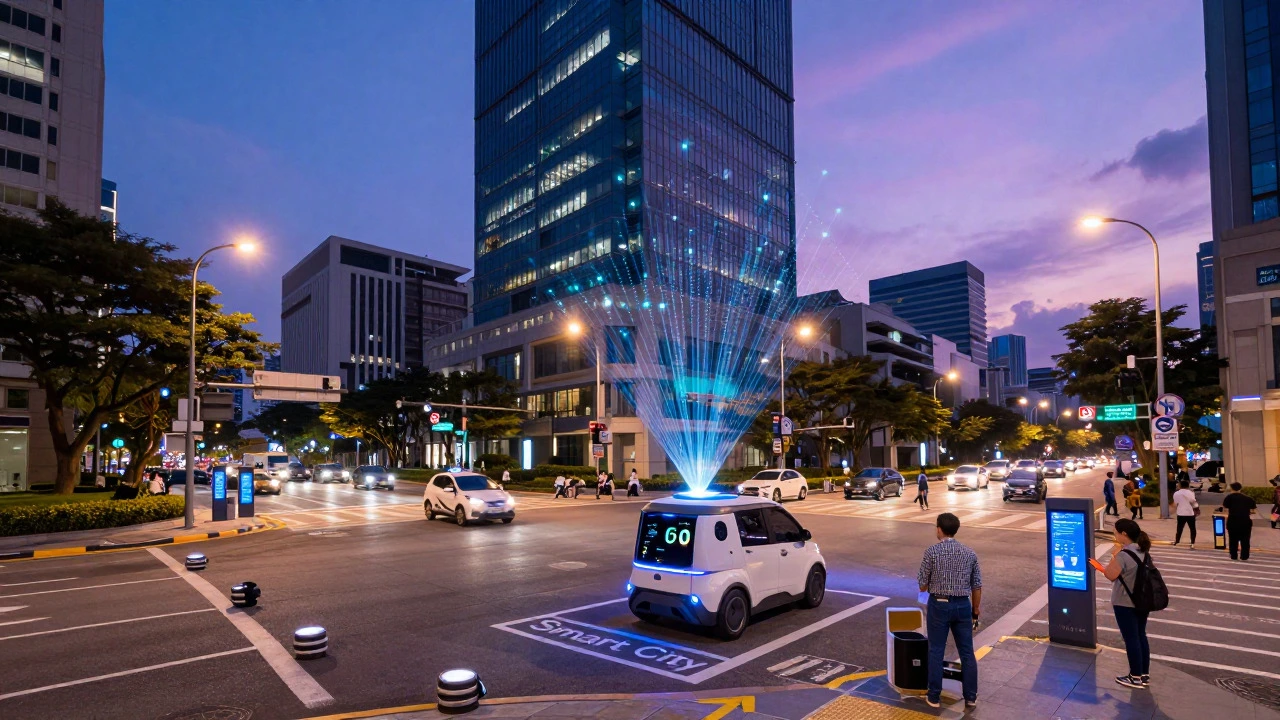
- Singapore is a leader in smart city integration and digital governance frameworks: Their "Smart Nation" initiative integrates sensors across the city for traffic management, waste collection, and health monitoring.
- Estonia pioneered e-residency and digital voting systems decades ago: Often called the first digital society, where 99% of legal documents are signed electronically.
If your definition of "most digitized" relies on ease of doing business online and government transparency, Denmark remains the gold standard. If you care about raw connectivity speed, it’s South Korea. But there is a third dimension: industrial digitization.
The Industrial Shift: Why Hardware Matters
Digital services run on physical chips. A country can have excellent e-government portals, but if it imports every microprocessor it uses, its digital sovereignty is limited. This is where the conversation shifts from software to hardware, specifically looking at electronics manufacturing the production of semiconductors, circuit boards, and consumer devices.
Historically, China dominated this space. However, geopolitical tensions and supply chain risks have triggered a global reshuffle. Companies are adopting a "China Plus One" strategy, diversifying their manufacturing bases. This trend has accelerated digital infrastructure investment in countries that were previously seen only as labor markets.
This brings us to an interesting paradox: Some of the fastest-growing digital ecosystems are not the ones topping the UN e-government charts. Instead, they are nations rapidly building the physical backbone of the digital economy. Among these, India stands out as a case study in rapid, state-driven digital industrialization.
India’s Digital Leap: From Services to Manufacturing
India may not rank #1 in the UN E-Government Survey yet, but its trajectory is unique. Over the past five years, India has implemented one of the largest digital public infrastructure (DPI) projects in history. The core of this system is Aadhaar India's biometric identity system covering over 1.3 billion residents. Aadhaar allows for instant digital verification, enabling cashless transactions via UPI (Unified Payments Interface).
UPI processes billions of transactions monthly, often surpassing credit card volumes in the US or Europe. This level of financial digitization is rare for a developing economy. But the real story in 2025-2026 is what happens next: manufacturing.
The Indian government launched the Production Linked Incentive (PLI) scheme to boost domestic electronics production. The goal? To reduce import dependency and create a self-sustaining tech ecosystem. Major global players like Apple have shifted significant iPhone assembly operations to India. Samsung already manufactures a large portion of its phones in Noida.
This shift means India is no longer just consuming digital services; it is producing the devices that enable them. Factories in Tamil Nadu and Karnataka are now equipped with automated robotics, AI-driven quality control, and IoT-connected supply chains. This is "industrial digitization" in action.
Comparing Digital Leaders: A Snapshot
| Country | Primary Strength | Key Initiative | Industrial Focus |
|---|---|---|---|
| Denmark | E-Government & Transparency | MitID Digital Identity | Green Tech & Software |
| South Korea | Connectivity Speed (5G/6G) | K-Digital New Deal | Semiconductors & Displays |
| Singapore | Smart City Integration | Smart Nation Sensor Platform | Fintech & Biotech |
| India | Scale & Financial Inclusion | Digital Public Infrastructure (DPI) | Electronics Assembly & Chips |
Notice the difference in focus. Western and East Asian leaders excel in efficiency and speed. India excels in scale and inclusion. When you add the recent push into electronics manufacturing, India is bridging the gap between being a digital user and a digital producer.
The Role of Government Policy in Digitization
Digitization doesn’t happen by accident. It requires aggressive policy intervention. In India, the Ministry of Electronics and Information Technology (MeitY) has been central to this transformation. Policies like the Data Protection Act and the push for open-source standards have created a framework for trust.
Compare this to the European Union’s approach with the GDPR (General Data Protection Regulation). The EU focuses heavily on privacy and data rights. While this makes Europe a safe place for digital interaction, it can sometimes slow down innovation due to compliance complexity. India’s approach has been more pragmatic: prioritize access and utility first, then refine regulations. This "move fast" mentality has allowed platforms like UPI to scale exponentially before strict regulatory hurdles could stifle growth.
For electronics manufacturing specifically, tax breaks, land allocation, and power subsidies have made India attractive for foreign direct investment (FDI). Companies see that while labor costs are lower than in China, the digital literacy of the workforce is rising rapidly. Young engineers in Bangalore and Hyderabad are fluent in both coding and hardware design, creating a talent pool that supports advanced manufacturing.

Challenges Remain: The Digital Divide
No country is perfectly digitized. Even Denmark faces challenges with elderly populations adapting to fully digital services. In larger nations like India, the "digital divide" is a persistent issue. Urban centers like Mumbai and Delhi enjoy fiber-optic speeds and smart city amenities, while rural areas still struggle with basic connectivity.
Infrastructure gaps remain. Power outages in remote regions can disrupt server farms and factory lines. Cybersecurity is another growing concern. As more government services move online, the attack surface for hackers expands. India has established CERT-In (Indian Computer Emergency Response Team) to handle threats, but keeping pace with sophisticated cyberattacks requires continuous investment.
Furthermore, reliance on imported components for high-end semiconductors limits true independence. While India is assembling phones and laptops, the actual chip fabrication (semiconductor fabs) is still concentrated in Taiwan, South Korea, and the US. Recent announcements of fab plants in Gujarat aim to change this, but these projects take years to become operational.
Future Outlook: What Defines the Next Decade?
By 2030, the definition of the "most digitized country" will likely include metrics around AI integration and sustainability. Countries that use AI to optimize energy grids, manage water resources, and personalize education will gain an edge.
We are also seeing the rise of "Digital Twins"-virtual replicas of physical cities used for simulation and planning. Singapore is already using this extensively. India is beginning to adopt similar technologies for urban planning in new smart cities like Amaravati and Navi Mumbai.
The convergence of software and hardware is key. A country that can write the code AND build the chip is truly sovereign. Currently, few nations achieve this balance. The US leads in software and chip design. China leads in manufacturing scale. India is attempting to bridge this gap by leveraging its software talent to drive hardware manufacturing.
If you are evaluating digital maturity for business decisions, look beyond the rankings. Consider where the value is being created. Is it in the app interface, or in the factory floor? The most resilient digital economies will be those that master both.
Which country is number 1 in digitalization according to the UN?
Denmark is consistently ranked number 1 in the United Nations E-Government Survey for its comprehensive online public services and high telecommunication infrastructure index.
Is India considered a highly digitized country?
Yes, particularly in financial inclusion and digital identity. India ranks highly for the scale of its digital public infrastructure, such as UPI payments and Aadhaar, though it trails developed nations in overall e-government service breadth.
How does electronics manufacturing impact a country's digital status?
Manufacturing creates the physical hardware required for digital services. Countries investing in electronics manufacturing, like India and Vietnam, are strengthening their digital sovereignty and reducing reliance on imports, which boosts long-term digital resilience.
What is the difference between e-government and smart cities?
E-government refers to delivering public services online (like tax filing). Smart cities involve integrating IoT sensors and data analytics into urban infrastructure (like traffic lights and waste management) to improve quality of life.
Why is South Korea often cited as the most connected country?
South Korea has the highest density of 5G networks and fastest average broadband speeds globally, along with near-universal smartphone adoption, making it the leader in pure connectivity metrics.