Manufacturing System Cost & Efficiency Calculator
Production Parameters
-
-
-
Mass Production $0.00/unit
-
Batch Production $0.00/unit
-
Job Shop Production $0.00/unit
Enter parameters to calculate
Adjust volume and complexity to see which manufacturing system offers the best cost-efficiency ratio.
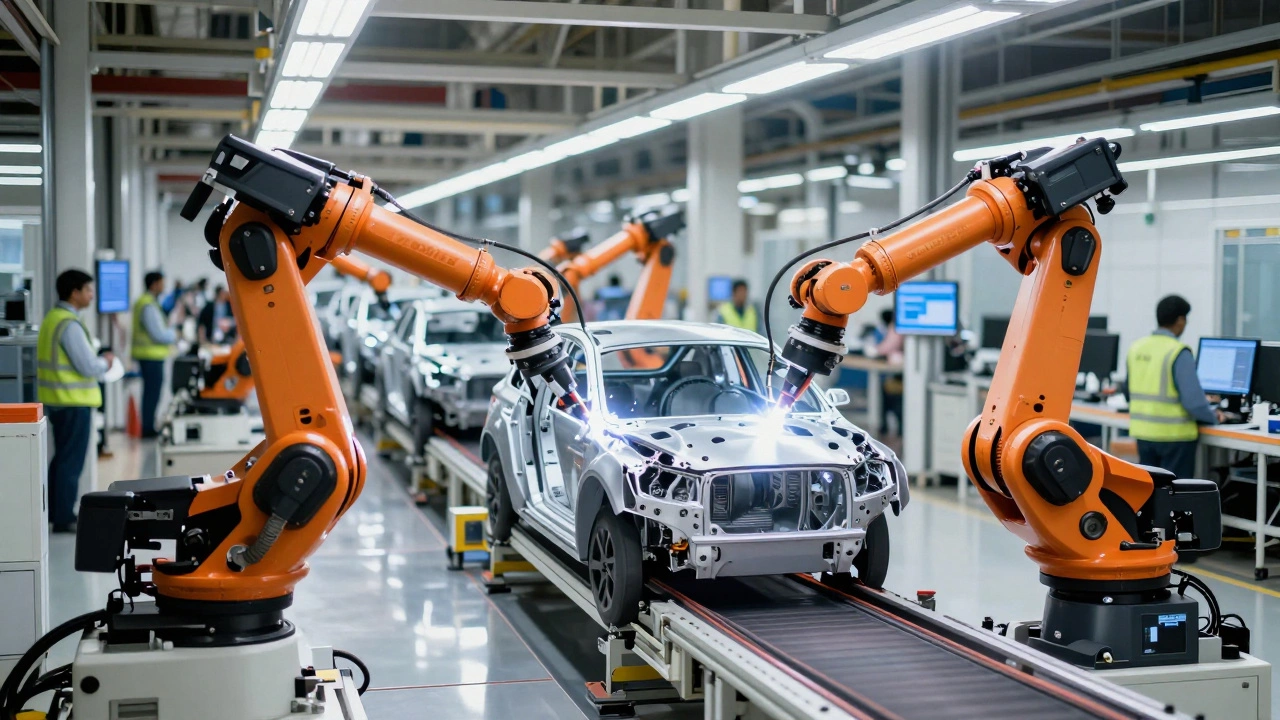
Walk into any supermarket, look at the toothpaste, the cereal boxes, or the batteries on the shelf, and you are looking at the result of one specific way of making things. You might assume that high-tech robotics or custom craftsmanship is the norm in modern industry, but the truth is far simpler. The most common manufacturing system used globally today is mass production, often referred to as flow production or continuous manufacturing.
While terms like "Industry 4.0" and "smart factories" dominate tech headlines, the underlying logic of mass production-making huge volumes of identical items efficiently-remains the backbone of the global economy. It is the method that put cars on every driveway and smartphones in every pocket. But why does this model persist? How does it work compared to other methods, and what role do government incentives play in keeping these massive operations running?
The Dominance of Mass Production
To understand why mass production is the king of manufacturing, we have to look at its core promise: low cost per unit through high volume. This system relies on standardized processes where products move sequentially from one workstation to another. Each worker or machine performs a single, repetitive task. This division of labor, famously popularized by Henry Ford in the early 20th century, drastically reduced the time and skill required to build complex items.
Today, mass production isn't just about assembly lines; it has evolved into highly automated continuous flow systems. In industries like chemicals, pharmaceuticals, and food processing, materials flow continuously through pipes and conveyors without stopping. This eliminates the setup time between batches, maximizing efficiency. For example, a bottling plant for soda doesn't stop to reconfigure machines for every different flavor; it runs in long, uninterrupted cycles.
The appeal is economic. When you spread the fixed costs of expensive machinery and factory space over millions of units, the price drops significantly. This economies-of-scale effect allows companies to sell goods at prices that consumers can afford while maintaining healthy profit margins. Without mass production, the average cost of a smartphone would likely be several thousand dollars rather than hundreds.
How Mass Production Differs From Other Systems
Manufacturing isn't a one-size-fits-all scenario. While mass production is the most common, it sits on a spectrum alongside other systems designed for different needs. Understanding these differences helps explain why mass production wins out in general commerce but loses ground in specialized sectors.
| System Type | Volume | Variety | Cost Per Unit | Best For |
|---|---|---|---|---|
| Mass Production | Very High | Low (Standardized) | Lowest | Consumer goods, automotive, electronics |
| Job Shop Production | Low | High (Custom) | Highest | Aerospace, prototypes, bespoke furniture |
| Batch Production | Medium | Medium | Moderate | Bakery, clothing, pharmaceuticals |
| Lean Manufacturing | Variable | Variable | Low (Waste-reduced) | Automotive, electronics, mixed-use |
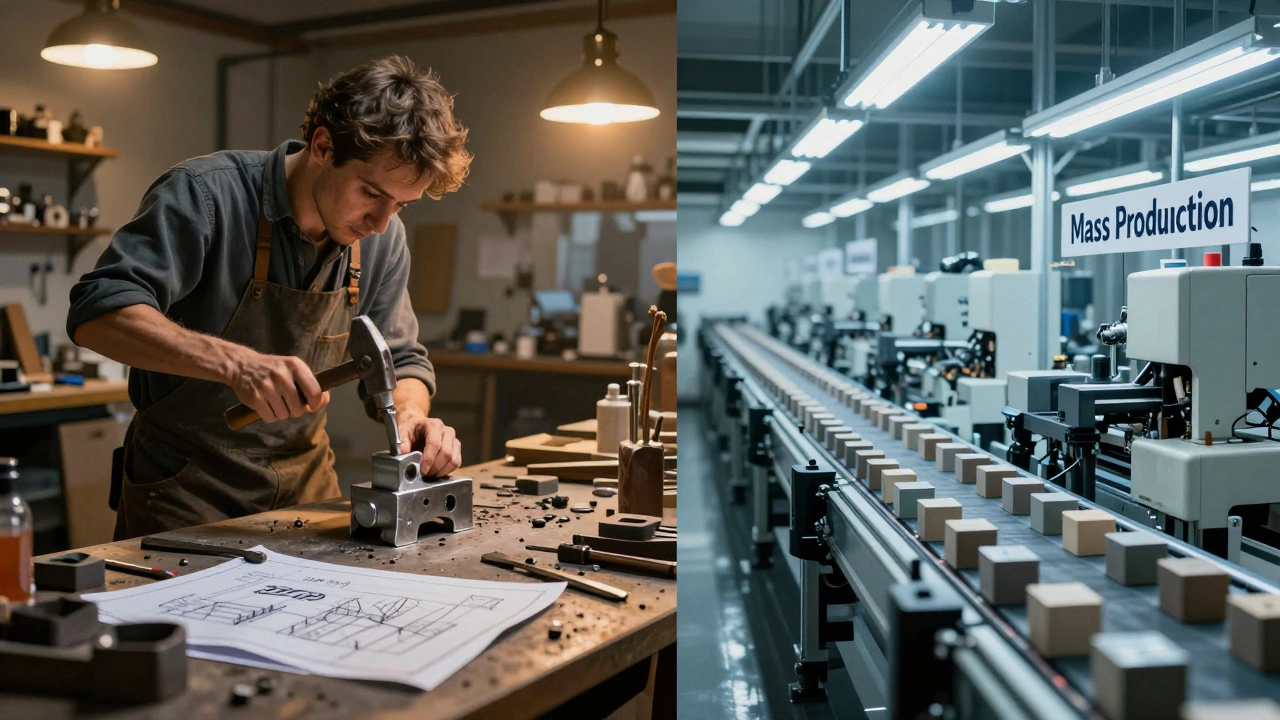
Job shop production is the opposite of mass production. Here, unique items are made one at a time using general-purpose equipment and skilled labor. Think of a custom yacht builder or a specialist engineering firm creating a unique part for a power plant. It’s flexible but incredibly expensive per unit. Batch production sits in the middle, producing groups of items before switching to another product. Bakeries use this method, baking fifty loaves of sourdough, then cleaning the ovens to bake fifty baguettes.
However, even within mass production, there is a shift toward flexibility. Modern factories use modular assembly lines that can switch between slightly different models with minimal downtime. This hybrid approach allows companies to maintain the low costs of mass production while offering more variety to customers.
The Role of Lean Manufacturing in Modern Factories
If mass production is the engine, lean manufacturing is the fuel efficiency upgrade. Originating from the Toyota Production System in Japan, lean principles focus on eliminating waste-anything that does not add value to the final product. Waste includes excess inventory, unnecessary movement, defects, and waiting time.
Most modern mass production facilities now integrate lean techniques. They don't just crank out products; they optimize every second of the process. For instance, instead of storing thousands of spare parts in a warehouse (inventory waste), a lean factory uses Just-In-Time (JIT) delivery, where parts arrive exactly when they are needed on the line. This reduces storage costs and minimizes the risk of parts becoming obsolete.
This integration is crucial because pure mass production can be rigid. If demand drops or a defect is found, traditional mass production can lead to massive surpluses of unsellable goods. Lean manufacturing adds a layer of responsiveness, allowing large-scale producers to adapt quickly to market changes without sacrificing their volume advantages.
Government Schemes Supporting Manufacturing Growth
Running a mass production facility requires significant capital investment. Governments around the world recognize that a strong manufacturing sector creates jobs, boosts exports, and stabilizes the economy. As a result, many countries offer specific schemes and incentives to support manufacturers, particularly those adopting advanced technologies or expanding capacity.
In India, for example, the Production Linked Incentive (PLI) scheme provides financial rewards to companies based on their incremental sales. This encourages firms to set up large-scale manufacturing units for electronics, automobiles, and pharmaceuticals. Similarly, in the United States, the CHIPS and Science Act offers billions in subsidies for semiconductor manufacturing, aiming to bring chip production back to domestic shores.
For small and medium-sized enterprises (SMEs) transitioning to more efficient systems, governments often provide grants for automation upgrades or training programs. These schemes lower the barrier to entry for adopting mass production techniques. A small furniture maker, for instance, might receive funding to purchase CNC machines that allow them to produce standardized components at scale, moving from a job shop model to a batch or mass production model.
Tax holidays, reduced import duties on raw materials, and infrastructure development in industrial zones are also common tools. These policies make it financially viable for companies to invest in the heavy machinery and supply chains necessary for mass production. Without such support, the initial costs might deter many businesses from scaling up.
Challenges Facing Mass Production Today
Despite its dominance, mass production faces growing challenges. Consumer preferences are shifting toward customization and sustainability. People want products that fit their specific needs and are made with environmentally friendly practices. Traditional mass production struggles with both. Producing millions of identical items generates significant waste if demand fluctuates, and the carbon footprint of large-scale logistics is substantial.
Additionally, supply chain disruptions, as seen during recent global events, have exposed the fragility of highly optimized, just-in-time mass production systems. When one link breaks, the entire line stops. This has led some companies to reconsider their reliance on pure mass production, opting for nearshoring or regionalizing their supply chains to increase resilience.
Another challenge is the human element. Automation reduces the need for manual labor, leading to concerns about job displacement. While new technical roles are created, they require different skills. Governments and educational institutions must work together to reskill workers, ensuring that the workforce can operate and maintain the sophisticated machinery driving modern mass production.
The Future: Smart Mass Production
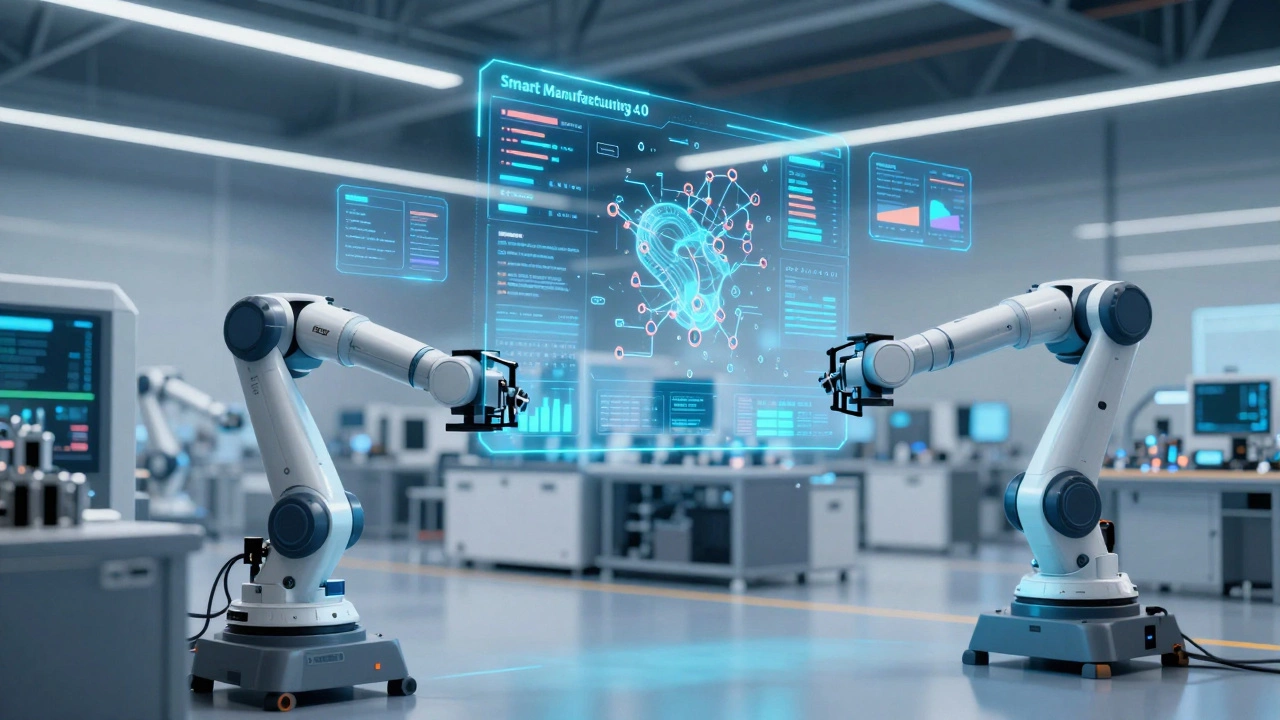
The future of mass production lies in its convergence with digital technology, often called Industry 4.0. Sensors, artificial intelligence, and the Internet of Things (IoT) are being integrated into assembly lines. Machines now communicate with each other, predicting maintenance needs before breakdowns occur and adjusting production speeds in real-time based on demand data.
This smart manufacturing enhances the flexibility of mass production. Imagine a car factory that can produce three different models on the same line simultaneously, with robots automatically swapping tools and configurations. This level of customization at scale was previously impossible. It blurs the line between mass production and job shop production, offering the best of both worlds: low costs and high variety.
As technology advances, we will likely see more decentralized manufacturing hubs. Instead of one giant factory serving the whole world, smaller, highly automated facilities located closer to consumers could become common. This would reduce shipping times and emissions while maintaining the efficiency benefits of mass production techniques.
Is mass production still relevant in the age of customization?
Yes, mass production remains highly relevant. However, it is evolving. Modern mass production incorporates flexible manufacturing systems and digital technologies that allow for greater variety. Companies use modular designs and automated lines to produce customized options at scale, satisfying consumer demand for personalization without losing the cost advantages of high-volume output.
What are the main disadvantages of mass production?
The primary disadvantages include high initial setup costs, lack of flexibility in traditional models, and potential for large waste if demand forecasts are incorrect. Additionally, repetitive tasks can lead to worker monotony, and the system is vulnerable to supply chain disruptions since it relies on continuous flow of materials.
How do government schemes help manufacturers?
Government schemes provide financial incentives such as tax breaks, subsidies for equipment, and grants for research and development. Programs like the PLI scheme in India or the CHIPS Act in the US directly reduce the cost of setting up and operating large-scale manufacturing facilities, encouraging domestic production and technological adoption.
What is the difference between batch and mass production?
Batch production involves making a group of identical items before switching to another product, requiring changeover time between batches. Mass production runs continuously, producing large volumes of standardized items with minimal interruption. Mass production is generally cheaper per unit but less flexible than batch production.
Can small businesses use mass production techniques?
Small businesses typically start with job shop or batch production due to lower capital requirements. However, as they grow, they can adopt elements of mass production, such as standardizing components and using semi-automated machinery. Government grants and leasing options for equipment can help SMEs transition to more efficient, higher-volume production methods.