Small-Batch Manufacturing Profit Calculator
Use this tool to determine if your product idea is financially viable before you buy equipment. Enter your estimated costs and prices below.
Enter values and click Calculate to see results.
You have a garage, some savings, and a burning desire to start a business. But when you look at the market, everything seems complicated. You see factories with million-dollar machines, complex supply chains, and regulatory nightmares. So, what is the easiest thing to sell? The answer isn't one single magic item, but rather a category of products that share three specific traits: low barrier to entry, high repeat purchase rate, and minimal technical complexity.
Most beginners fail because they try to build something "cool" instead of something "needed." They design a new type of drone or a smart water bottle, only to realize that engineering, certification, and inventory costs eat their entire budget before they sell unit number one. If you want to start selling quickly, you need to pivot your thinking. You are not looking for innovation; you are looking for friction reduction. You want products that people buy without thinking twice, that don't break easily, and that you can make in your spare room.
The Criteria for "Easy" Products
Before we list items, let's define what makes a product "easy" to sell from a manufacturing perspective. This isn't just about marketing ease; it's about operational simplicity. If you choose wrong here, you'll spend more time fixing defects than selling goods.
First, consider material availability. Can you buy raw materials locally? Shipping heavy or fragile materials kills margins for small manufacturers. Second, look at equipment requirements. Do you need a CNC machine, an injection molding press, or just scissors and a sewing machine? Third, check regulatory burden. Selling candles requires different safety labels than selling food. The easiest things to sell usually fall into the "non-regulated consumer goods" bucket.
Finally, think about perishability. If you make fresh bread, you must sell it today. If you make ceramic mugs, you can sell them next month. For a beginner, non-perishable goods offer breathing room. You can learn on the job without losing money every day.
Top Category: Home Decor and Small Furniture
Home decor is arguably the sweet spot for small-scale manufacturing. Why? Because customers pay for aesthetics, not just function. A plain wooden shelf might be worth $10 in material, but if you stain it nicely and add a unique shape, it sells for $60. People love customizing their living spaces, and they are willing to wait for handmade quality.
| Product | Raw Material Cost | Equipment Needed | Skill Level | Market Demand |
|---|---|---|---|---|
| Wooden Cutting Boards | Low ($5-$10) | Saw, Sander, Drill | Beginner | High (Gifts/Kitchen) |
| Macramé Plant Hangers | Very Low ($2-$4) | Hands, Hooks | Beginner | Trending |
| Ceramic Mugs/Vases | Medium ($3-$8) | Kiln, Wheel/Hand-build | Intermediate | Steady |
| Resin Coasters | Low ($1-$3) | Molds, UV Light/Curing | Beginner | High (Impulse Buy) |
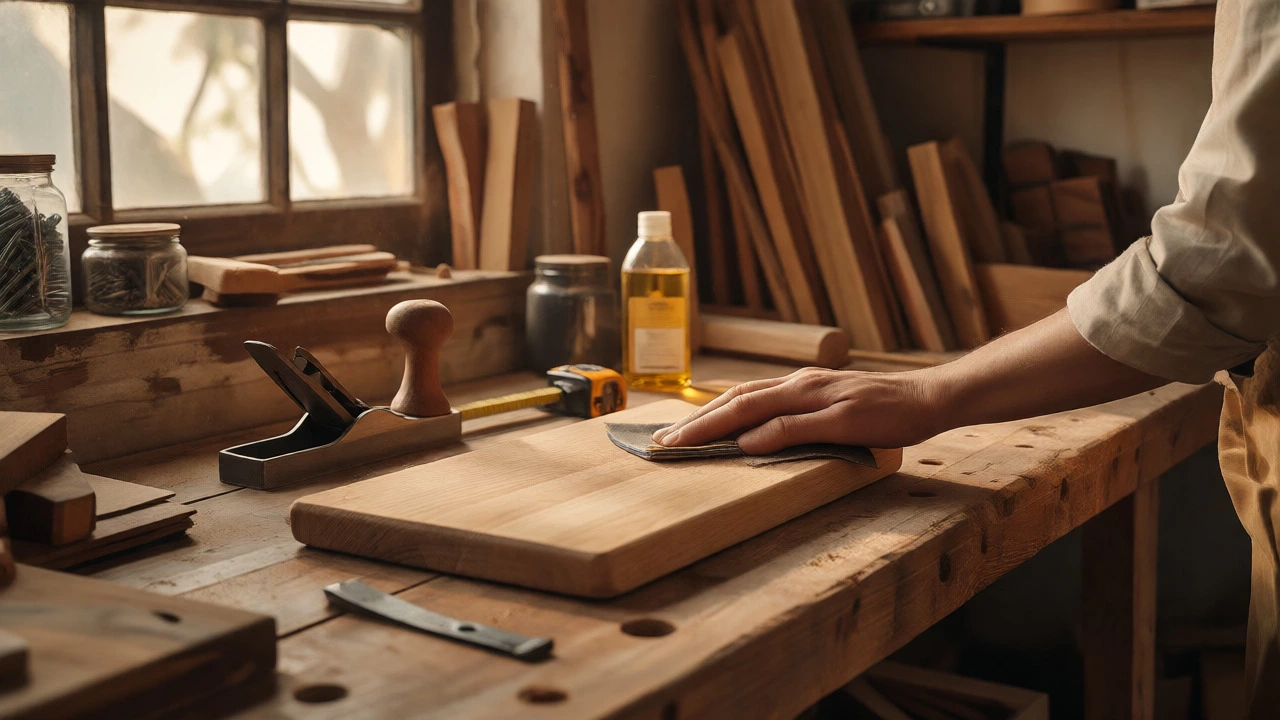
Woodworking is particularly forgiving. Mistakes can often be sanded out. Unlike electronics, where a bad solder joint ruins the product, a scratch on wood adds character if done intentionally. Start with cutting boards. They are simple rectangles. You buy hardwood scraps from local lumber yards (often cheaper than full planks), cut them to size, sand them smooth, and apply food-safe oil. The profit margin is substantial because labor is your main cost, and you control that.
Another winner is Macramé. This involves knotting cord to create decorative items like plant hangers, wall hangings, and keychains. The startup cost is under $50. You don't need power tools. You can make these while watching TV. The market is driven by social media trends, specifically Instagram and Pinterest, where visual appeal drives sales. If you master a few basic knots, you can produce dozens of units per evening.
Top Category: Personalized Accessories
Personalization turns a commodity into a gift. When someone buys a generic leather wallet, it's a utility. When they buy a wallet with their initials stamped on it, it's a keepsake. This shift allows you to charge a premium for minimal extra effort.
Leather Goods are excellent for this. You don't need industrial sewing machines initially. Hand-stitching leather using a saddle stitch is durable, looks artisanal, and requires no electricity. You can make wallets, cardholders, and key fobs. The raw material-vegetable-tanned leather-is available in sheets. You cut patterns, punch holes, and stitch. It’s quiet work, clean, and highly scalable once you get fast.
Similarly, Jewelry Making has evolved beyond bead stringing. Modern techniques involve wire wrapping, resin casting, or metal stamping. Wire-wrapped gemstone pendants require nothing more than pliers and wire. You can source semi-precious stones wholesale. The markup is often 300% to 500%. Customers perceive handmade jewelry as unique art pieces, which justifies higher price points compared to mass-produced items.

Top Category: Consumables and Kitchenware
If you prefer faster turnover, look at consumables. These are items people use up and replace regularly. However, this category comes with stricter hygiene regulations. Always check local cottage food laws before starting.
Soy Candles dominate the small-batch manufacturing scene for a reason. Soy wax burns cleaner than paraffin, appeals to eco-conscious buyers, and holds scent well. You need melting pots, wicks, jars, and fragrance oils. The process is simple: melt, mix, pour, cool. There is very little waste. If a batch fails, you re-melt it. This forgiveness makes it ideal for learning temperature control and scent blending.
Another low-tech option is Bath Bombs. Made from baking soda, citric acid, oils, and essential oils, these fizz in the bathtub. The chemistry is straightforward. No heating required. You mix dry ingredients, add wet ingredients carefully to avoid premature fizzing, pack into molds, and let dry. They cure in 24-48 hours. Packaging is part of the product appeal here, so invest in nice boxes or tins.
Why "Easiest" Doesn't Mean "Least Competitive"
Here is the hard truth: if it's easy to make, many people will try to make it. The market for soy candles is saturated. So how do you win? You differentiate through branding and niche targeting.
Don't just sell "a candle." Sell "a candle for remote workers who need focus." Use scents like rosemary and lemon, known for concentration. Package it in a matte black jar with minimalist typography. Now you're not competing with every other candle maker; you're solving a specific problem for a specific person.
This applies to all categories. Don't sell "wooden cutting boards." Sell "monogrammed oak boards for newlyweds." Don't sell "macramé hangers." Sell "boho-chic bohemian plant stands for small apartments." The product remains easy to manufacture, but the value proposition becomes sharp.
Practical Steps to Start Today
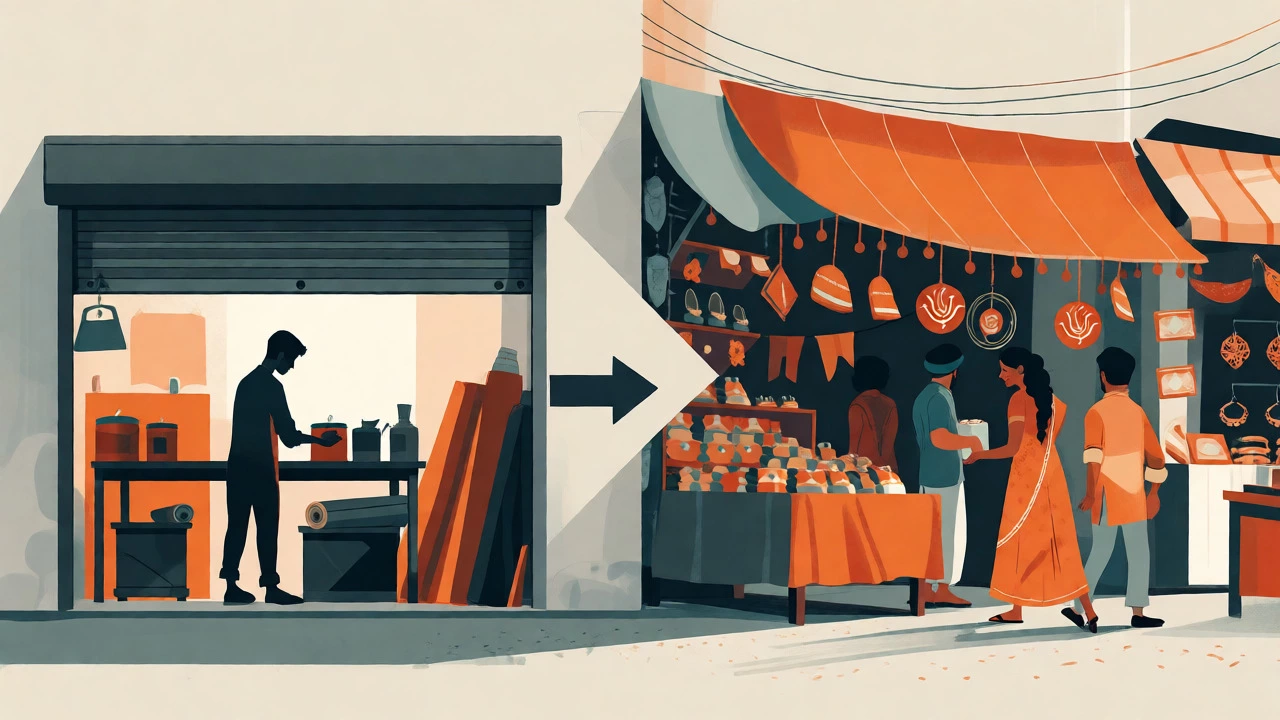
You don't need a business plan document yet. You need a prototype and a customer. Follow this path:
- Pick one product from the lists above. Resist the urge to diversify immediately.
- Source materials locally for the first batch. Visit craft stores or lumber yards. Avoid bulk online orders until you validate demand.
- Make five prototypes. Give them to friends and family. Ask for honest feedback on durability and appearance, not just politeness.
- Set a price based on cost + labor. Formula: (Material Cost x 2) + (Hourly Wage x Hours Worked). Do not guess.
- Launch on a micro-platform. Use Etsy, local farmers markets, or Instagram. Do not rent a storefront yet.
Track your time meticulously. If a product takes you two hours to make and sells for $20, but materials cost $5, you earn $7.50/hour after overhead. That's below minimum wage in many places. Your goal is to reduce production time through practice or process improvement, not just raise prices indefinitely.
Common Pitfalls for New Manufacturers
The biggest mistake is over-investing in equipment. Buying a $2,000 laser cutter before selling ten units is a trap. Start with hand tools. Upgrade only when manual production bottlenecks prevent you from meeting demand.
Another pitfall is ignoring packaging costs. A $10 product needs a $2 box and $1 label to feel premium. If you skip this, customers perceive lower value. Budget 15-20% of your retail price for packaging.
Finally, don't underestimate shipping logistics. Fragile items like ceramics or glass need double-boxing and bubble wrap. Calculate shipping costs accurately. Undercharging for shipping eats your profit margin silently.
Frequently Asked Questions
Is it cheaper to manufacture or resell?
It depends on volume. Reselling offers immediate cash flow with zero production risk but lower margins (typically 20-40%). Manufacturing requires upfront time and skill investment but yields higher margins (50-70%) and brand control. For beginners, manufacturing small batches of high-margin items like jewelry or decor often beats reselling low-margin commodities.
Do I need a factory license to start?
Usually no. Most countries have "cottage industry" or "home-based business" exemptions for small-scale manufacturing. You may need a general business license and sales tax permit, but specialized manufacturing licenses typically kick in only when you hire employees or exceed certain revenue thresholds. Check your local municipal regulations.
Which product has the highest profit margin?
Jewelry and personalized accessories generally have the highest margins due to low material costs and high perceived value. A necklace costing $2 in materials can sell for $30+. Candles follow closely, with margins around 60-70% if sold directly to consumers. Woodworking has moderate margins due to material costs and heavier shipping fees.
How much space do I need to start?
For most recommended items (candles, jewelry, macramé, small leather goods), a corner of a bedroom or a small desk is sufficient. You need storage for materials and a workspace for assembly. Woodworking requires a garage or shed for dust management and tool storage. Plan for vertical storage to maximize small footprints.
Can I automate my small manufacturing business?
Yes, but incrementally. Start with manual processes. As you identify bottlenecks (e.g., cutting shapes repeatedly), introduce affordable automation like die-cutters for paper/leather or electric mixers for soap/candle bases. Full automation (CNC, injection molding) is viable only after consistent daily sales justify the capital expenditure.