Small Scale Industry Calculator
Determine Small Scale Industry Status
Based on standard criteria: Capital investment under $1 million AUD, fewer than 50 employees, and modest production volume. (Note: Country-specific criteria may vary.)
When you hear the term small scale industry, you might picture a tiny workshop, a family-run workshop, or a local factory with just a handful of workers. But it’s more than that. Small scale industry refers to businesses that operate with limited capital, fewer employees, and modest production capacity-yet they form the backbone of economies in both developing and developed countries. In places like India, Brazil, or even right here in Australia, these businesses aren’t just footnotes-they’re engines of employment, innovation, and community resilience.
What Defines a Small Scale Industry?
There’s no single global definition, but most governments and institutions use three main criteria to classify a business as small scale:
- Investment in plant and machinery - Typically under $1 million AUD (this varies by country; in India, it’s ₹10 crore, or about $180,000 AUD).
- Number of employees - Usually fewer than 50 people, sometimes as low as 10.
- Production output - Limited volume, often customized or locally focused, not mass-produced for global markets.
For example, a bakery that makes 200 loaves a day using two ovens and three staff members qualifies. So does a metal fabrication shop that builds custom brackets for local farmers. These aren’t factories like Toyota or Apple-they’re lean, nimble, and deeply connected to their communities.
Small Scale vs. Large Scale Manufacturing
It helps to contrast small scale with what most people think of as "real manufacturing."
| Feature | Small Scale Industry | Large Scale Industry |
|---|---|---|
| Capital Investment | Under $1 million AUD | Over $10 million AUD |
| Employees | 5-50 | 500-10,000+ |
| Technology Used | Basic machinery, manual processes | Automated lines, robotics, AI integration |
| Market Reach | Local or regional | National or global |
| Production Volume | Low to moderate | High, standardized output |
| Flexibility | High - can change designs quickly | Low - slow to adapt due to scale |
Small scale manufacturers don’t compete on volume. They compete on speed, customization, and personal service. A large company might churn out 10,000 identical phone cases a day. A small scale producer might make 50 unique, hand-painted cases for local artists each week. One isn’t better-it’s just different.
Common Types of Small Scale Industries
You’ll find small scale manufacturing in almost every sector. Here are some of the most common:
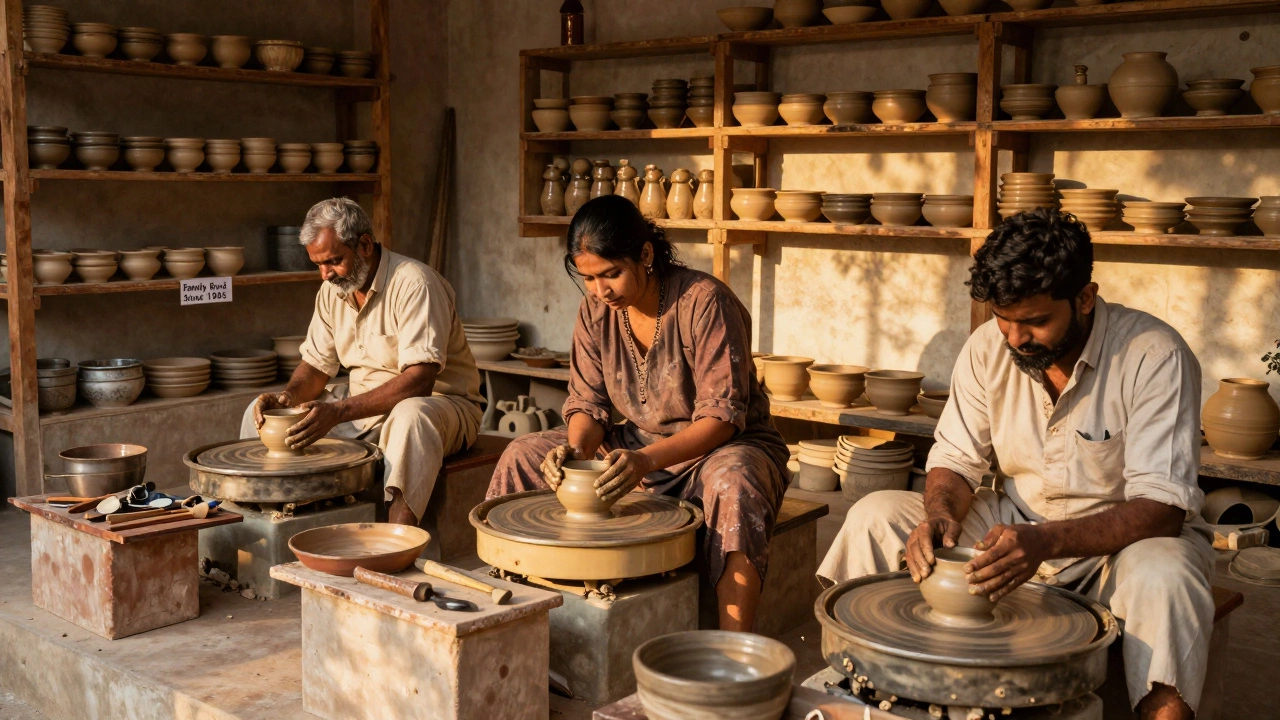
- Cottage industries - Handmade textiles, pottery, or jewelry made in homes or small workshops. Think Australian Aboriginal art crafts or hand-knitted wool scarves in Tasmania.
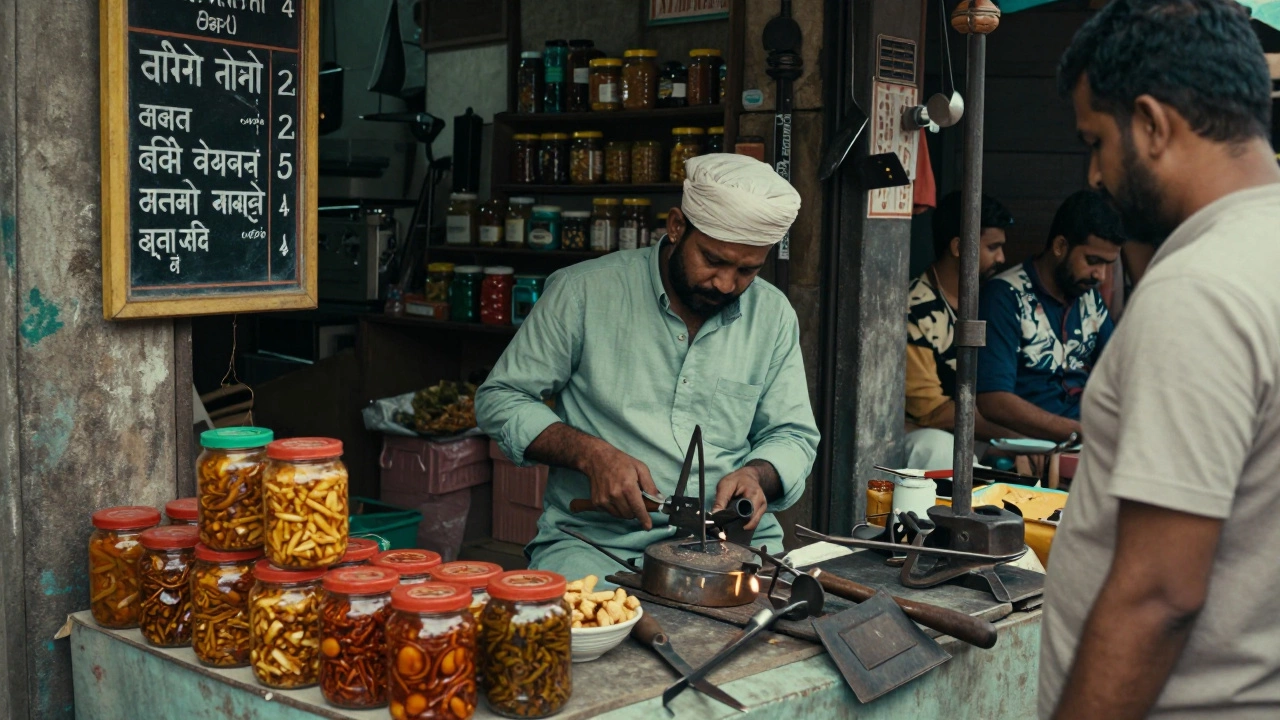
- Food processing units - Small-batch jams, pickles, or gluten-free snacks made in licensed home kitchens. In Sydney, you’ll find these at farmers markets under brands like "Brewer’s Jam" or "Coastal Crunch."
- Metal and wood workshops - Fabricating custom gates, furniture, or tools for local builders. Many of these operate out of sheds or rented industrial units.
- Electronics repair and assembly - Fixing smartphones, rebuilding solar chargers, or assembling low-volume IoT devices. These often serve rural or underserved areas.
- Recycling and upcycling units - Turning plastic waste into garden pots or old tires into footwear. These businesses are growing fast in response to sustainability demands.
What ties them together? They all start with a person, a skill, and a need in their community. No venture capitalist. No IPO. Just someone solving a local problem with their hands.
Why Small Scale Industries Matter
People often overlook small scale industries because they’re quiet. But their impact is loud.
In India, over 90% of manufacturing units are small scale. In the U.S., small manufacturers account for 40% of all industrial innovation. Here in Australia, small scale manufacturers employ nearly 15% of the manufacturing workforce-around 200,000 people.
They’re also more resilient. During the pandemic, large factories shut down when supply chains broke. But small workshops? They switched to making face shields, hand sanitizer, or local food boxes. They adapted because they didn’t need corporate approval.
They’re also incubators for innovation. Many startups begin as small scale operations. A tech founder might prototype a new device in a garage. A designer might test a new fabric blend on a single sewing machine. These experiments often become the next big thing.
Challenges Small Scale Industries Face
It’s not all smooth sailing. These businesses struggle with:
- Access to finance - Banks rarely lend to businesses without collateral or long track records.
- Regulatory burden - Same safety, environmental, and tax rules as big companies, even if they’re running on a $20,000 budget.
- Market access - Getting shelf space in supermarkets or online platforms is hard without marketing budgets.
- Technology gaps - Can’t afford automation, so they’re stuck with manual work.
- Skill shortages - Fewer apprenticeships, fewer training programs tailored to small shops.
Some governments offer grants or tax breaks, but many owners don’t even know they exist. A 2025 survey in New South Wales found that only 28% of small manufacturers were aware of available state support programs.
How Small Scale Industries Are Evolving
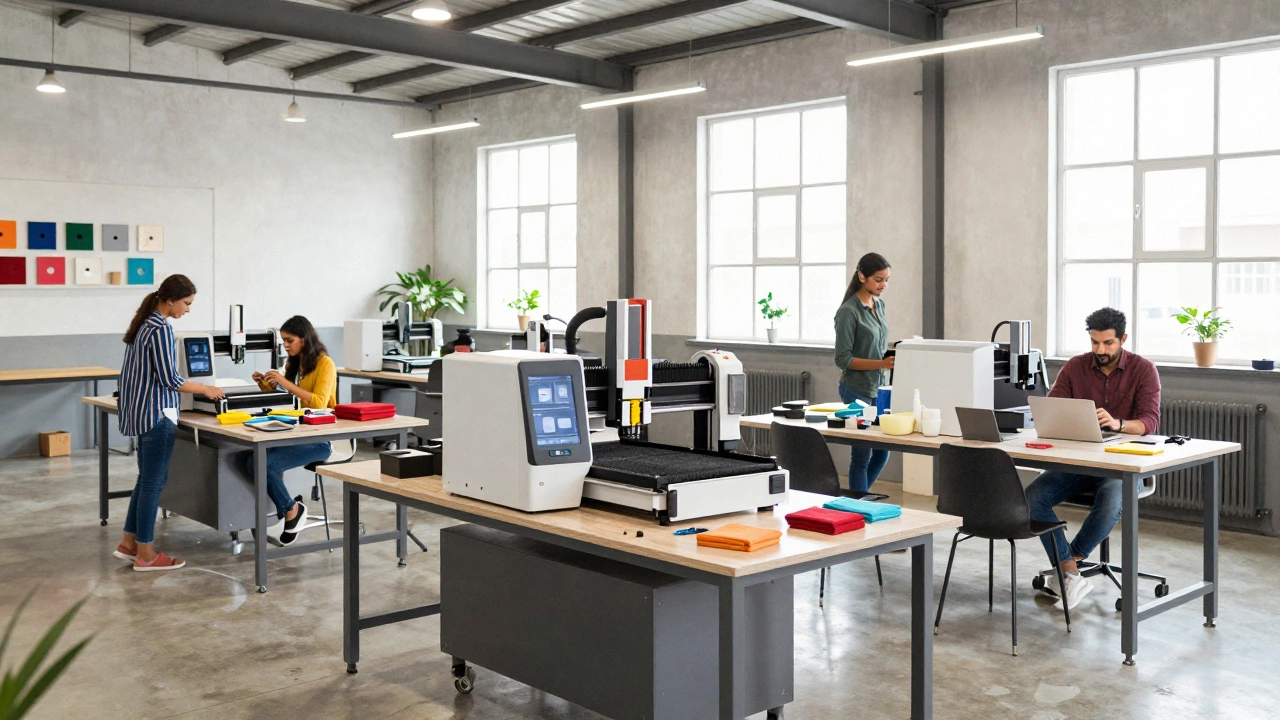
Technology is changing the game. A single person can now run a small manufacturing unit using:
- 3D printing - Making prototypes or custom parts for under $50.
- Online marketplaces - Selling directly on Etsy, Amazon Handmade, or local Facebook groups.
- Cloud-based accounting - Tools like Xero or QuickBooks help manage finances without an accountant.
- Co-working manufacturing spaces - Shared workshops with CNC machines, laser cutters, and kilns rented by the hour.
In Melbourne, a group of five small manufacturers now share a 2,000-square-foot facility. They split the cost of a $40,000 laser cutter. Each uses it for their own products. Together, they’ve increased output by 200% and cut costs by 60%.
How to Start a Small Scale Industry
If you’re thinking about starting one, here’s the realistic path:
- Start with a skill or product you already make - Your grandma’s recipe? Your custom wooden toys? That’s your starting point.
- Test demand locally - Sell at markets, to neighbors, or on Instagram. Don’t invest in equipment until you have 10 confirmed buyers.
- Register as a microbusiness - In Australia, this means getting an ABN and checking local council rules for home-based operations.
- Use low-cost tools - Start with manual tools. Upgrade only when sales justify it.
- Network with other small makers - Join local manufacturing groups. Share resources. Learn together.
One woman in regional Victoria started making soap from native botanicals in her kitchen. Two years later, she’s exporting to five countries. She still makes every bar by hand. No robots. No investors. Just consistency and storytelling.
Final Thought: It’s Not About Size
Small scale industry isn’t about being "small"-it’s about being human. It’s about a person using their hands, their knowledge, and their local network to create something real. It’s not glamorous. It doesn’t make headlines. But it keeps towns alive. It gives people dignity. It turns a hobby into a livelihood.
Next time you buy a handmade product, ask: Who made this? Where? How? You’re not just buying a thing. You’re supporting a small scale industry-and that’s worth more than you think.
What is the difference between small scale industry and cottage industry?
Cottage industry is a subset of small scale industry. All cottage industries are small scale, but not all small scale industries are cottage. Cottage industries are typically home-based, use manual labor, and focus on traditional crafts-like weaving, pottery, or hand-stitched garments. Small scale industries can include workshops, rented factories, or even tech-enabled production units. So while a woman making candles in her kitchen runs a cottage industry, a man running a small metal workshop with a CNC machine still falls under small scale industry.
Can a small scale industry grow into a large one?
Yes, but it’s rare-and often changes the business fundamentally. Most small scale manufacturers choose to stay small because they value flexibility, personal control, and community ties. When they do grow, they usually split off into separate entities. For example, a small bakery might open a second location, but legally, it becomes two separate businesses. True growth into large scale usually means adopting automation, hiring managers, and shifting from local to national distribution-something many owners avoid because it changes the culture of the business.
Do small scale industries need government approval?
Yes, but the requirements vary. In Australia, you need an ABN, and if you’re producing food, you must register with your local council. If you’re using hazardous materials or emitting noise or fumes, you may need environmental permits. Most small scale manufacturers don’t need federal approval unless they’re exporting. The key is checking local rules-each council has different standards for home-based or small workshops.
Are small scale industries profitable?
Many are, especially when they focus on niche markets. Profit margins are often higher than big manufacturers because they avoid overhead costs like corporate offices, HR departments, or national advertising. A small batch of handmade soap might cost $2 to make and sell for $15. That’s a 650% markup. But volume is low. Success depends on consistent sales, loyal customers, and smart pricing-not mass production.
How do small scale industries compete with big brands?
They don’t compete on price or volume. They compete on uniqueness, authenticity, and connection. People buy from small makers because they want something no one else has-like a hand-carved wooden spoon, a custom-fit tool, or a snack made with native Australian ingredients. Big brands can’t replicate that. Small scale industries win by telling their story, engaging directly with customers, and offering personal service.