Manufacturing State Selector
Find the best state for your manufacturing business
Based on the article, we've identified key factors that determine which state is best for your manufacturing needs. Select your industry focus and priorities to see which state is the best match.
Your Best Match
Why this state is ideal for you:
When you think about manufacturing in the U.S., you might picture rust-belt factories in Ohio or Michigan. But the real action today isn’t where it used to be. The manufacturing revival isn’t a national trend-it’s a state-by-state race. And right now, a handful of states are pulling away from the pack with explosive growth in jobs, investment, and new factories.
Why Some States Are Pulling Ahead
Manufacturing isn’t just about assembling parts anymore. It’s about automation, supply chain reshoring, and government incentives. Companies aren’t just moving back to the U.S. from overseas-they’re picking specific states based on tax breaks, skilled labor access, and infrastructure. In 2025, the states leading this shift aren’t the ones with the oldest factories. They’re the ones with the newest policies and the clearest path to profit.Texas, for example, added over 42,000 manufacturing jobs in the last two years alone. That’s more than California, New York, and Illinois combined. Why? Lower taxes, no state income tax, and a strong push for semiconductor and battery production. It’s not luck. It’s strategy.
Texas: The Unstoppable Leader
Texas leads the pack. Not because it has the biggest population, but because it’s the most business-friendly. The state offered over $18 billion in incentives between 2020 and 2025 to attract manufacturing giants. Samsung built its largest chip plant in Austin. Tesla’s Gigafactory in Austin is now the second-largest in the world. And over 300 battery-related suppliers have set up shop in the Dallas-Fort Worth area.What’s more, Texas has invested $1.2 billion in workforce training programs focused on robotics, CNC machining, and advanced welding. Community colleges now offer 12-week manufacturing bootcamps that place graduates directly into jobs paying $22-$30 an hour. The state doesn’t just attract companies-it builds the workforce to run them.
Georgia: The Logistics Powerhouse
Georgia isn’t just about Atlanta’s skyline. It’s the top state for logistics-driven manufacturing. With the Port of Savannah handling over 5 million containers a year, companies are setting up factories right next to the docks to cut shipping time and cost. In 2024, Georgia attracted $14.7 billion in manufacturing investments-up 41% from the year before.Companies like Rivian (electric trucks), Nestlé (food processing), and Honeywell (aerospace components) are expanding here because they can move goods from factory to ship in under 48 hours. The state also offers a 20% tax credit for capital investments over $5 million. That’s a real deal for startups scaling up.
North Carolina: The Tech-Driven Turnaround
North Carolina used to be known for textiles and furniture. Now, it’s a hub for advanced manufacturing. The Research Triangle-home to Duke, UNC, and NC State-has become a magnet for medical device makers, biotech equipment manufacturers, and precision tooling firms.In 2023, the state launched the Advanced Manufacturing Workforce Initiative, partnering with 22 community colleges to train 10,000 workers in additive manufacturing, AI-driven quality control, and automated assembly. Since then, over 180 new manufacturing facilities have opened, mostly in Raleigh, Greensboro, and Charlotte. Medtronic, Siemens Healthineers, and 3M all doubled their North Carolina teams in the last 18 months.
Tennessee: The Auto and Battery Belt
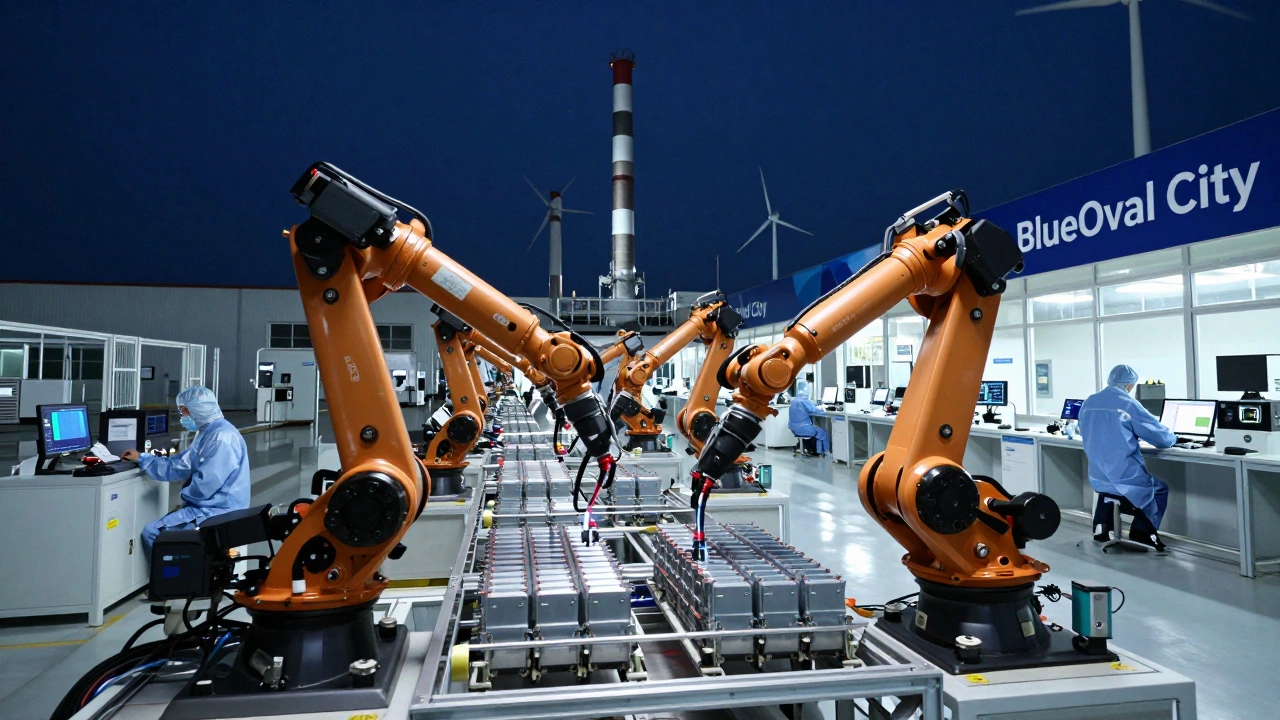
Tennessee’s manufacturing boom is tied to electric vehicles. The state has the highest concentration of EV battery plants in the U.S. LG Energy Solution’s $2.8 billion plant in Springfield is the largest in the Southeast. Ford’s BlueOval City in Stanton is a $5.6 billion complex that will produce batteries and trucks.What’s unique about Tennessee is how it’s supporting small suppliers. The state created a $100 million loan fund for Tier 2 and Tier 3 suppliers-companies that make wiring harnesses, sensors, and battery casings. Over 80 small manufacturers have received funding, and most are now supplying directly to Ford or LG. This isn’t just big companies moving in-it’s a whole ecosystem being built from the ground up.
Arizona: The Semiconductor Star
Arizona’s rise is all about chips. Intel’s $30 billion investment in Phoenix is the largest in U.S. history. TSMC is building its second U.S. plant here. Micron is expanding its memory chip production. Together, these three alone will add over 20,000 direct manufacturing jobs by 2027.But it’s not just the giants. Arizona’s workforce development program, Arizona Works, trains high school students in semiconductor fabrication basics. Graduates earn industry certifications before they even graduate. The state also offers a 10-year tax exemption for new manufacturing facilities. That’s rare-and it’s working. In 2024, Arizona saw a 38% increase in manufacturing permits compared to 2023.
Why Other States Are Falling Behind
States like Pennsylvania and Ohio still have big factories, but they’re not growing. Why? Outdated infrastructure, higher energy costs, and slower permitting processes. Ohio’s permitting for new industrial projects takes an average of 11 months. In Texas, it’s 45 days. That’s not just bureaucracy-it’s lost investment.California, despite its tech reputation, has become one of the hardest places to build a factory. High labor costs, strict environmental rules, and long approval timelines have pushed manufacturers out. In 2024, California lost over 12,000 manufacturing jobs-the largest drop in a decade.
What This Means for Manufacturing Startups
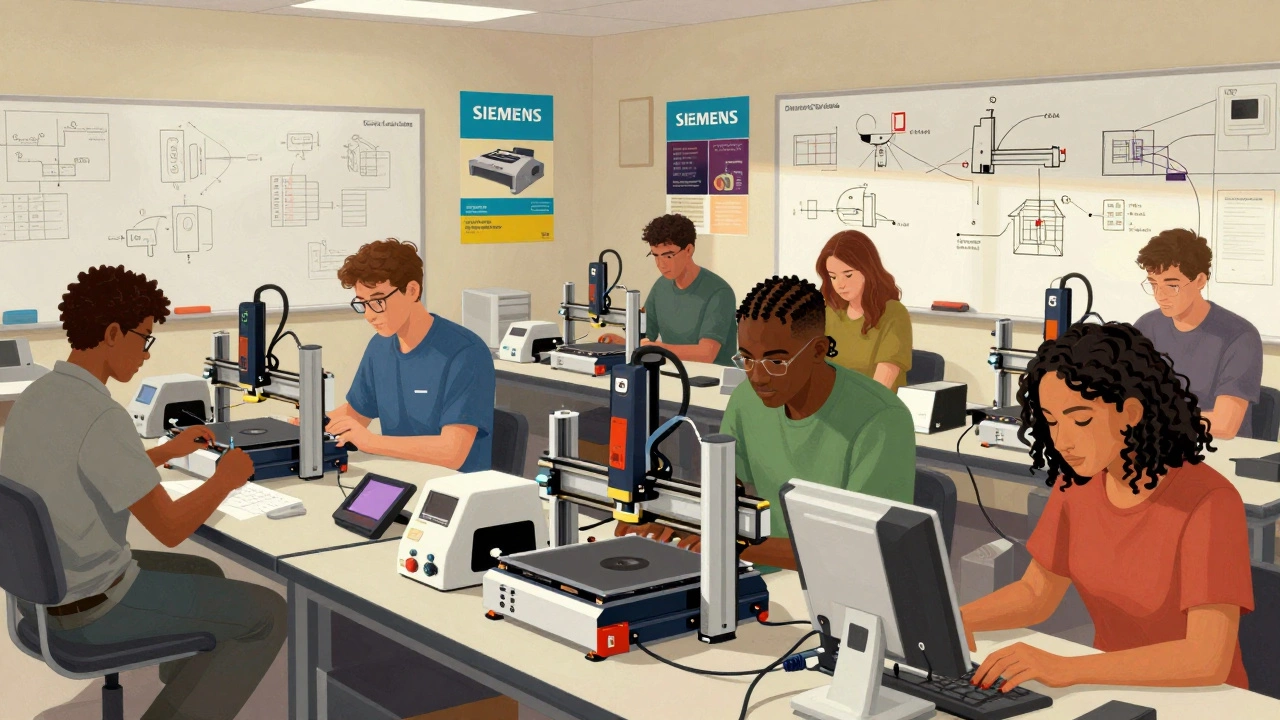
If you’re thinking of starting a manufacturing business in 2025, location isn’t just a detail-it’s your biggest strategic decision. The cheapest land doesn’t matter if you can’t get skilled workers or fast permits. The best place to start isn’t where you’re from. It’s where the incentives, talent, and supply chains are already gathering.Look at the pattern: states winning are the ones that treat manufacturing like a tech industry. They invest in training, speed up approvals, and build partnerships between schools and factories. They don’t just wait for companies to show up-they go out and find them.
For a small manufacturer or startup, that means you can get help. In Georgia, you can apply for a $50,000 grant to buy your first CNC machine. In Tennessee, you can get a free supply chain consultant to connect you with Ford’s suppliers. In Arizona, you can get free access to semiconductor cleanroom training. These aren’t myths-they’re real programs with real applications open right now.
How to Choose the Right State for Your Factory
Not every state is right for every business. Here’s how to pick:- Match your product to the state’s focus. If you make batteries, go to Tennessee or Texas. If you make medical devices, North Carolina is your best bet.
- Check the permitting timeline. Ask the state’s economic development office: “How long does it take to get a building permit for a 20,000 sq ft facility?” If they say “6 months or more,” walk away.
- Visit the local community college. Do they offer training in your specific field? Can you hire a trained worker in 90 days? If not, you’ll be stuck paying for training yourself.
- Ask about supplier networks. Can you buy the parts you need within 100 miles? If you have to ship everything from out of state, your margins will bleed out.
The best manufacturing startups in 2025 aren’t the ones with the most capital. They’re the ones that picked the right state-and used its tools before anyone else did.
What’s Next for Manufacturing in 2026?
The next wave will be in states like Indiana, Missouri, and Alabama. They’re copying what Texas and Arizona did-lower taxes, faster permits, workforce training. But they’re still behind. If you’re starting now, you’re not just picking a location. You’re picking your first competitive advantage.The U.S. manufacturing revival isn’t over. It’s just getting started. And the winners aren’t the ones with the biggest history. They’re the ones with the smartest location choices today.
Which state has the most manufacturing jobs in 2025?
Texas leads in new job growth, adding over 42,000 manufacturing positions in the last two years. However, California still has the highest total number of manufacturing jobs due to its large base, even though it’s losing ground. For growth, Texas is unmatched.
Why is Texas growing so fast in manufacturing?
Texas has no state income tax, fast permitting (under 60 days), major investments in workforce training, and strong incentives for semiconductors, EVs, and batteries. Companies like Tesla, Samsung, and LG have built massive facilities here because the rules favor growth.
Are manufacturing jobs coming back to the U.S.?
Yes-but only in specific states. Between 2020 and 2025, over 1.2 million manufacturing jobs returned to the U.S., mostly in Texas, Georgia, Tennessee, Arizona, and North Carolina. The rest of the country is either flat or declining.
What kind of manufacturing is growing the fastest?
Battery production, semiconductor fabrication, medical devices, and automated machinery are growing fastest. These sectors benefit from government funding, skilled labor programs, and supply chain reshoring efforts.
Can a small business start a factory in these growing states?
Yes. Georgia offers $50,000 grants for small manufacturers to buy equipment. Tennessee has a $100 million loan fund for suppliers. Arizona provides free cleanroom training. These aren’t just for big corporations-they’re designed for startups and small factories to get started.