Surat Fabric City: India’s Textile Powerhouse and What Makes It Unique
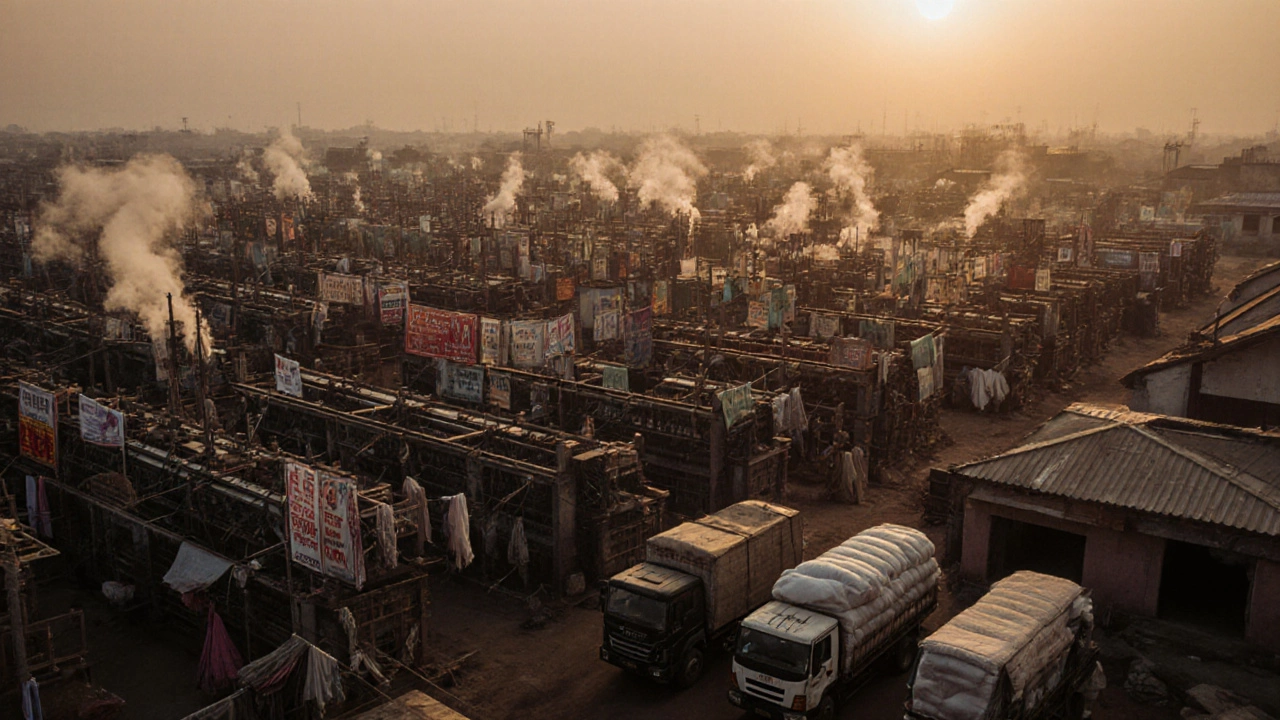
When you think of Surat Fabric City, India’s largest concentrated textile manufacturing zone, centered in Surat, Gujarat, known for its synthetic and blended fabric production at massive scale. Also known as Textile City of India, it’s not just a city—it’s a production engine that supplies fabric to over 80 countries. This isn’t a small cluster of looms. It’s a network of over 10,000 textile units, from tiny family-run shops to automated mills, churning out 180 million meters of fabric every month. That’s enough to wrap around the Earth more than 45 times. And most of it? Polyester, nylon, and blended fabrics—the kind you find in fast fashion, home textiles, and export garments.
Surat doesn’t just make fabric—it controls the whole chain. From raw polyester chips imported from the Middle East to finished bolts shipped to Bangladesh, Turkey, and the U.S., everything happens within a 20-km radius. You’ll find dyeing units next to weaving mills, printing plants beside packaging warehouses. This tight integration cuts costs and speeds up delivery. Unlike traditional handloom regions like Banarasi or Kanchipuram, Surat’s strength is speed, volume, and consistency. It’s where global brands go when they need 50,000 meters of fabric in 10 days, not 500 meters of handwoven silk in six weeks.
Surat’s rise didn’t happen by accident. It grew because of smart infrastructure, low labor costs, and decades of family expertise passed down through generations. Many of these businesses started as small workshops in the 1970s and scaled up with government support and access to ports. The city now has its own textile exchange, dedicated freight corridors, and even a fabric testing lab that meets international standards. It’s not just about making fabric—it’s about making fabric that meets global quality expectations.
And while Surat dominates synthetic fabrics, it doesn’t ignore natural fibers. You’ll find cotton blends, viscose, and even silk blends being processed here, often mixed with synthetic fibers to improve durability and reduce cost. This flexibility lets Surat serve both budget retailers and mid-tier brands looking for affordable, reliable supply. It’s the reason Indian textiles, despite being overshadowed by China in volume, still hold their ground in quality-sensitive markets.
What makes Surat Fabric City different from other textile hubs in India? It’s the scale, the speed, and the sheer density of expertise. While Mirzapur builds wooden furniture and Tamil Nadu weaves silk, Surat turns oil into thread and thread into yards of fabric—faster than anywhere else on the planet. If you’re in the garment, home textile, or retail business, understanding Surat means understanding how India’s manufacturing engine actually works.
Below, you’ll find real insights into how Surat fits into India’s broader textile story—how it compares to other fabric-producing states, what makes its fabrics so widely used, and why global brands keep coming back. No fluff. Just facts from the floor.
Tamil Nadu is India's textile hub, producing 30% of the nation's textile output with massive exports in knitwear, denim, and cotton fabrics. Coimbatore and Tirupur drive the industry with advanced manufacturing and sustainability.