Machinery Exports: India’s Growing Role in Global Heavy Equipment Markets
When we talk about machinery exports, the sale of industrial equipment like construction gear, textile machines, and manufacturing tools from one country to another. Also known as industrial equipment exports, it’s no longer just about selling machines—it’s about selling reliability, cost-efficiency, and local engineering expertise. India has quietly become one of the fastest-growing sources of these exports, thanks to better quality control, government support under Make in India, and a growing pool of skilled engineers who build machines that compete with global giants.
One of the biggest success stories is Bharat Earth Movers Limited (BEML), Asia’s largest manufacturer of earth-moving equipment. BEML doesn’t just supply India’s infrastructure projects—it ships excavators, dump trucks, and mining machines to Africa, Southeast Asia, and the Middle East. Then there’s the textile machinery sector, where companies in Tamil Nadu and Gujarat export spinning frames and looms that rival German and Japanese models in precision—and beat them in price. Even in heavy construction gear, Indian brands are gaining ground against Caterpillar and Komatsu by offering simpler, tougher machines built for rough terrain and limited maintenance access.
What makes Indian machinery exports different isn’t just the price. It’s the design. Many machines are built for Indian conditions—dust, heat, uneven power supply—and that makes them perfect for similar markets abroad. A tractor manufacturer in Punjab might not sell to Germany, but it thrives in Nigeria or Vietnam because its parts are easy to replace and its engine doesn’t overheat in 45°C weather. This kind of practical innovation is what global buyers are starting to look for. And it’s not just big factories. Small-scale manufacturers in Ludhiana, Coimbatore, and Pune are now exporting CNC parts, packaging machines, and food processing units to over 80 countries.
Behind every export is a story of supply chains, policy changes, and skilled labor. The government’s production-linked incentive schemes have pushed factories to upgrade, while logistics improvements have cut shipping times. The result? Machinery exports from India grew by over 15% last year alone. What you’ll find in the posts below are real examples of who’s winning in this space, what machines are in demand, and how Indian companies are beating expectations—even in markets dominated by China and Germany.
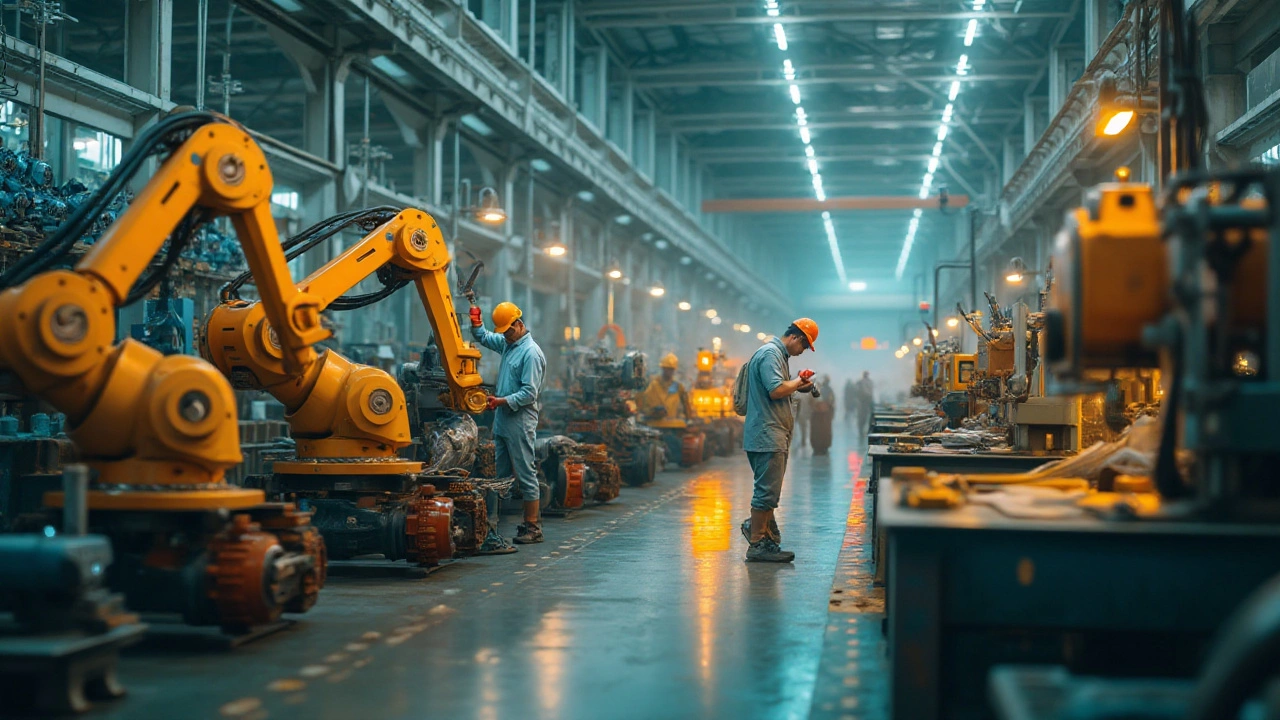
The global machinery manufacturing sector showcases remarkable innovations and production capabilities, with several countries standing out. India, with its rapidly advancing technology and competitive pricing, has established itself as a significant player. This article delves into which countries lead the industry and the reasons behind their success. We explore India’s rise within this domain and what sets its manufacturers apart. Readers will gain insights into the driving forces of market leaders in machinery production.