Kitchen Tools: What Works in Indian Homes and Why
When you think of kitchen tools, physical objects used for preparing, cooking, or serving food. Also known as cooking utensils, it in India, it’s not about fancy gadgets. It’s about what survives daily use, heat, humidity, and decades of family meals. A tawa, a flat, heavy griddle used for making roti, paratha, and dosa isn’t just a pan—it’s the heart of the kitchen. A mortar and pestle, a traditional grinding tool used for spices, pastes, and chutneys still beats electric grinders for flavor. These aren’t trends. They’re traditions built on function, not fashion.
Indian kitchens don’t need 20 types of knives. They need one sharp chopper, a heavy-bladed knife used for cutting vegetables, meat, and coconut that can handle tough squash and bone-in chicken. The pressure cooker, a sealed pot that cooks food faster under steam pressure isn’t optional—it’s the reason dinner gets on the table before sunset. These tools are made for Indian cooking rhythms: slow simmering, high heat, spice grinding, and large batches. Local manufacturers in places like Moradabad and Tiruppur churn out millions of these tools every year, using materials like cast iron, stainless steel, and aluminum that handle India’s hard water and rough handling. You won’t find these in IKEA catalogs. They’re made right here, by people who know what happens when you cook dal for six hours straight.
What’s missing from global kitchen brands is the understanding that Indian cooking isn’t about speed—it’s about texture, aroma, and patience. A silicone spatula won’t scrape a tawa clean. A food processor can’t crush cumin seeds the way a stone mortar can. That’s why the best kitchen tools in India aren’t imported. They’re made locally, passed down, and repaired. You’ll find them in small workshops near Coimbatore, in family-run factories in Gujarat, and in markets where the same tool is sold for ₹150 today and ₹180 in 2030 because no one’s replaced it yet.
Below, you’ll find real insights into what’s made in India, what’s sold where, and why some tools never go out of style. No fluff. Just what works.
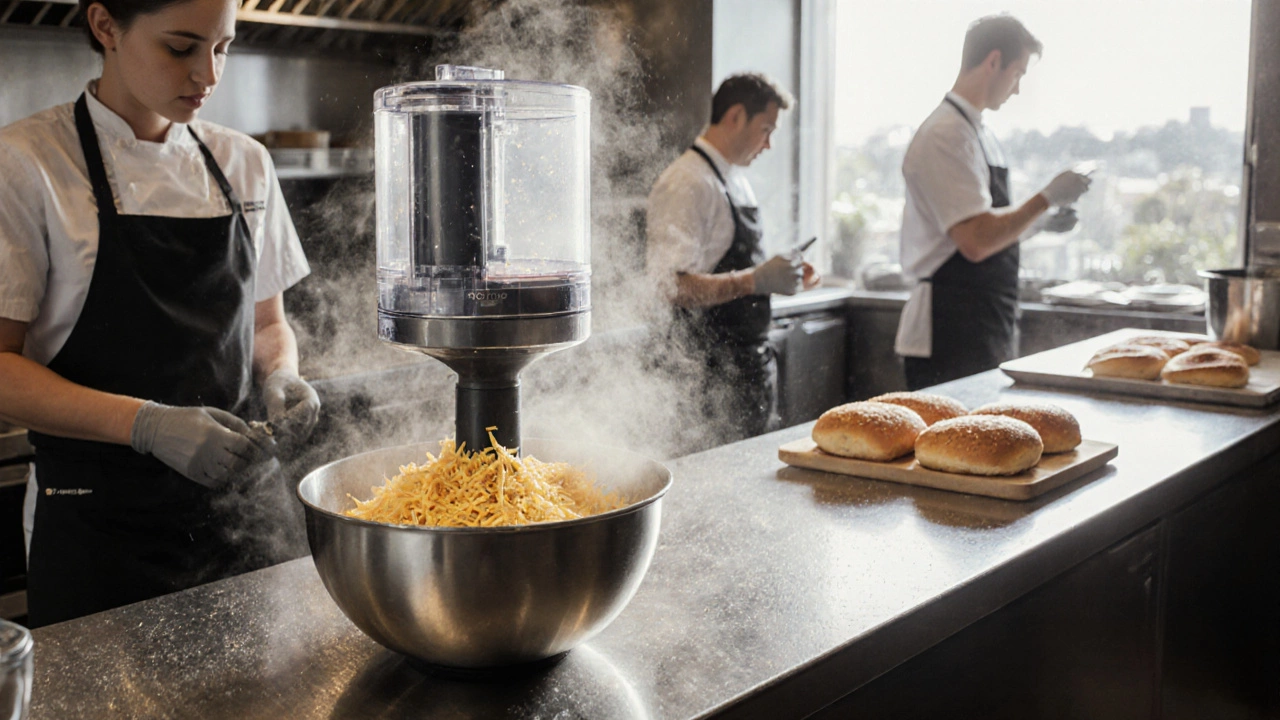
Restaurants use food processors to save time, ensure consistency, and reduce labor costs. From shredding cheese to blending sauces, commercial models are essential in high-volume kitchens-though some chefs still prefer hand-prepped ingredients.