Industrial Policy in India: How Government Rules Shape Manufacturing Growth
When you hear industrial policy, a set of government rules designed to guide how industries grow, compete, and create jobs. It's not just paperwork—it’s the invisible hand that decides where factories open, who gets tax breaks, and which products get exported. In India, this policy isn’t theoretical. It’s the reason your phone is made in Tamil Nadu, your steel comes from Jharkhand, and your furniture is carved in Mirzapur. The industrial policy doesn’t just support manufacturing—it creates the conditions for it to thrive.
One of the biggest shifts came with Make in India, a national campaign launched to turn India into a global manufacturing hub by attracting investment and boosting local production. It didn’t just ask companies to come—it gave them real reasons to: lower tariffs on machinery, faster approvals, and special zones with power and water already in place. That’s why electronics production jumped ninefold in ten years, and why companies like IKEA picked India over other markets. It’s also why Bharat Earth Movers Limited (BEML), India’s largest maker of earth-moving equipment, now dominates Asia’s market—not because it’s the biggest globally, but because the policy protected its growth while giving it access to infrastructure projects.
But industrial policy isn’t just about big factories. It’s also why small businesses survive. From soap makers in Kerala to metal planters in Bengaluru, government schemes offer subsidies, training, and easier loans for small-scale manufacturing. Without these, most wouldn’t survive the cost of machines, raw materials, or compliance. The policy also shapes what materials get used—like why sodium hydroxide is everywhere, from soap to textiles, because it’s cheap, locally produced, and supported by chemical industry incentives. Even fabric hubs like Coimbatore and Banaras owe their scale to policies that protected handloom weavers and funded export promotion.
What you’ll find below isn’t a list of laws. It’s the real-world impact of those laws. You’ll see how industrial policy turned Tamil Nadu into a textile giant, why Chinese steel still undercuts Indian prices, and how small businesses win with the right government push. These aren’t random stories—they’re direct results of policy decisions. Whether you’re starting a factory, buying furniture, or just wondering why your phone was made here, the answers lie in the rules that shaped it.
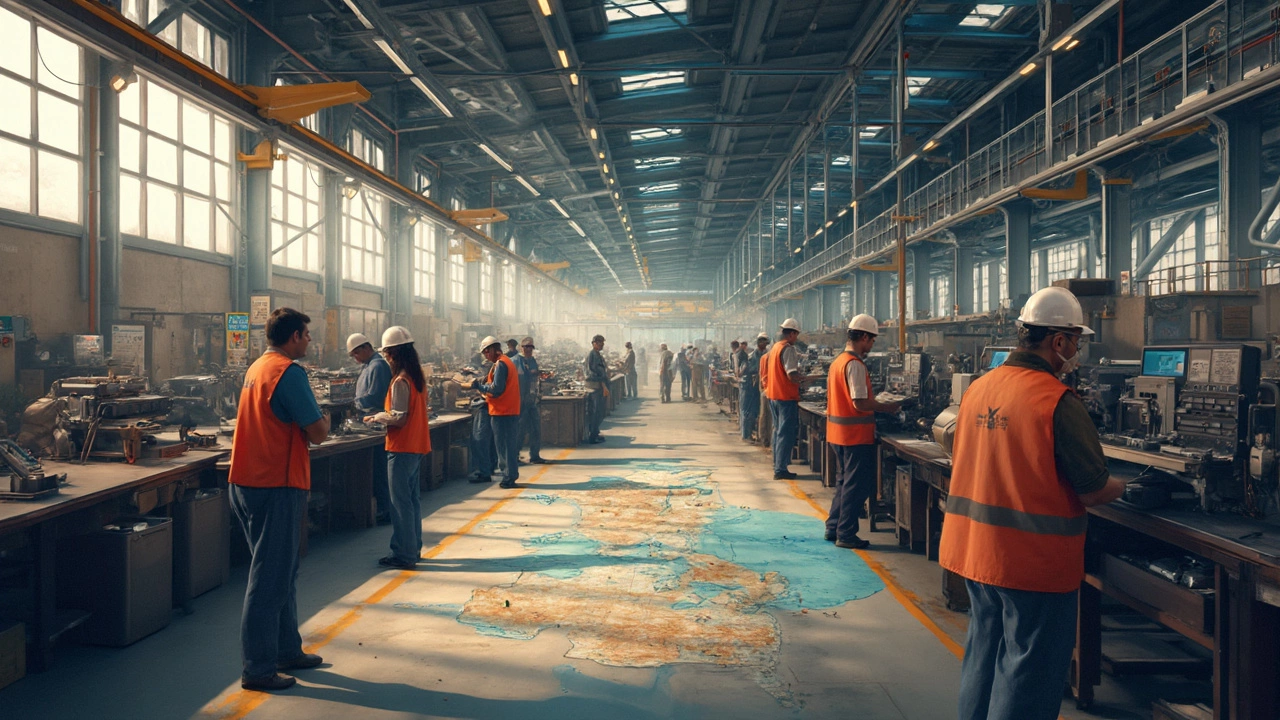
Discover the current state of manufacturing in the U.S. and how government schemes are influencing its growth. This article explores various initiatives aimed at fostering industrial development and evaluates their effectiveness. Learn about the challenges faced by the industry and the future outlook of U.S. manufacturing. Gain insights into the strategies employed to maintain competitive advantage in the global market.