Father of Steel Industry: Who Really Started It and How It Changed India
When people talk about the father of the steel industry, the title usually goes to Henry Bessemer, the British inventor who revolutionized steel production with his converter process in the 1850s. Also known as Bessemer’s pioneer, he made steel affordable, strong, and mass-producible—turning it from a luxury material into the backbone of modern industry. But while Bessemer sparked the global revolution, India’s own steel story was built by men who didn’t just import technology—they adapted it, improved it, and made it work for local needs.
The Tata Steel, founded by Jamsetji Tata in 1907 in Jamshedpur, became India’s first integrated steel plant and one of Asia’s earliest. Also known as Tata Iron and Steel Company (TISCO), it didn’t just produce steel—it built an entire city, trained workers, and set new standards for labor rights and sustainability in manufacturing. This wasn’t just business; it was nation-building. The steel industry in India, now producing over 120 million tons annually, owes its scale and resilience to that early vision. Today, Indian steel is exported worldwide, competing with China and Japan, thanks to innovations in quality control, energy efficiency, and automation—many of which trace back to those early decades.
What made Tata Steel different? It didn’t rely on cheap labor alone. It invested in R&D, local iron ore, and coal from Jharkhand, and hired engineers who studied global methods but refused to copy blindly. That mindset—local roots, global ambition—is still what drives India’s manufacturing today. You’ll find that same spirit in posts about steel manufacturing India, how BEML builds earth-moving machines with locally sourced steel, or why Indian steel is now trusted for bridges, railways, and even space programs.
So while Bessemer gave the world the tool, it was Jamsetji Tata and generations of Indian engineers who turned steel into a national strength. The posts below explore who else shaped this industry—from the chemists perfecting alloy formulas to the factories now leading in green steel. You’ll see how small-scale steel workshops in Gujarat compete with giants, how state policies boosted production, and why Indian steel is no longer just a commodity—it’s a statement of industrial pride.
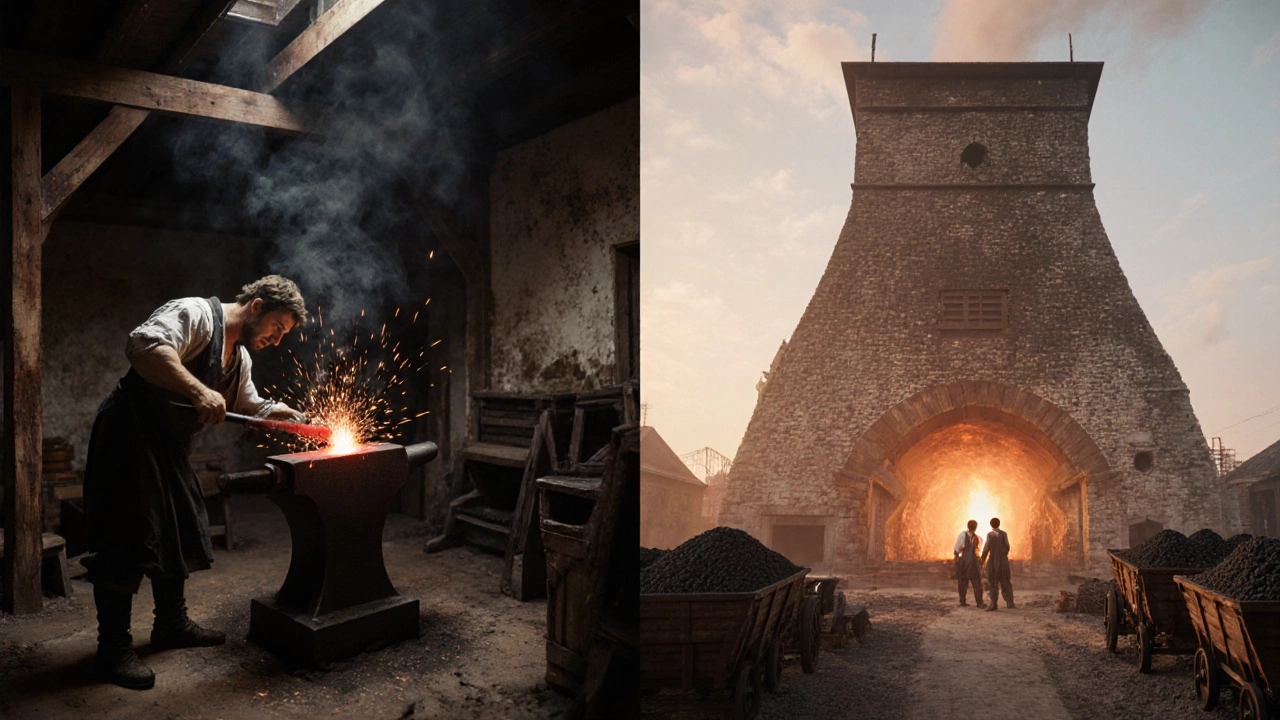
Discover why Henry Bessemer and Andrew Carnegie each claim the title "father of the steel industry," their key contributions, and how they shaped modern steelmaking.