Commercial Food Processors: What They Are, Who Uses Them, and Why India’s Manufacturing Scene Matters
When you think of commercial food processors, heavy-duty machines designed to chop, slice, mix, and puree large volumes of food for restaurants, factories, and catering businesses. Also known as industrial food processors, these are not your kitchen countertop gadgets—they’re the backbone of every serious food operation, from street food stalls to large-scale snack producers. Unlike home models, they run for hours, handle tough ingredients like frozen meat or hard cheeses, and are built to survive daily abuse. In India, where the food processing industry grew over 12% last year, these machines aren’t just convenient—they’re essential.
They’re used everywhere: in dairies making paneer at scale, in snack factories churning out chips and biscuits, in hotel kitchens prepping 500 meals a day. The food manufacturing India, the growing sector that turns raw agricultural products into packaged goods using machinery like commercial food processors is booming, thanks to rising demand for ready-to-eat meals and government pushes under schemes like PMKSY. But here’s the catch: most of these machines used to come from China or Europe. Now, Indian manufacturers are stepping up—building tougher, cheaper, and better-suited models for local conditions like power fluctuations and high humidity.
What makes a good commercial food processor? It’s not just power. It’s durability, ease of cleaning, safety features, and how well it handles Indian ingredients—think turmeric-stained blades, coconut fiber, or sticky jaggery. The best ones are designed with local maintenance in mind: parts that don’t need imported replacements, motors that won’t burn out during voltage drops, and stainless steel that resists corrosion from salt-heavy environments. That’s why Indian-made units are starting to outsell imports in Tier 2 and 3 cities.
Behind every successful food business using these machines is a supply chain—raw materials, packaging, logistics, and skilled operators. And that’s where India’s strength shows. From Tamil Nadu’s textile hubs to Mirzapur’s woodworkers, we know how to build things that last. Now, that same craftsmanship is moving into food processing equipment. You’ll find small workshops in Ludhiana and Coimbatore making stainless steel tubs, gears, and blades that match global specs but cost half as much.
What you’ll find in the posts below are real stories about who’s using these machines, what’s working, what’s failing, and how Indian manufacturers are making them better. Whether you run a small eatery, manage a snack brand, or just want to understand how your favorite packaged food gets made—this collection gives you the facts without the fluff. No theory. No hype. Just what’s actually happening on the factory floor and in the kitchen.
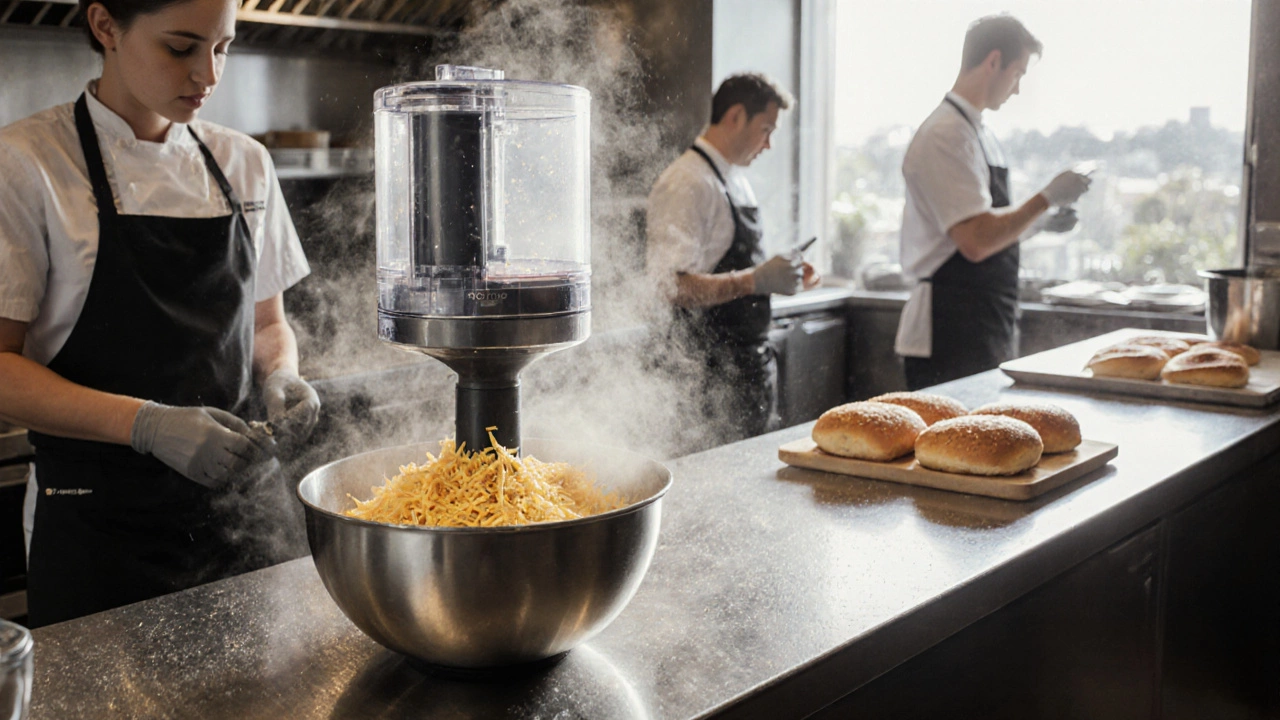
Restaurants use food processors to save time, ensure consistency, and reduce labor costs. From shredding cheese to blending sauces, commercial models are essential in high-volume kitchens-though some chefs still prefer hand-prepped ingredients.