Caterpillar vs Komatsu: Who Leads in Earth Moving Equipment?
When it comes to Caterpillar, a U.S.-based manufacturer of heavy machinery known for durability and global service networks and Komatsu, Japan’s top maker of construction and mining equipment with a reputation for fuel efficiency and precision engineering, the choice isn’t just about brand loyalty—it’s about what your job site actually needs. These two giants don’t just compete; they define the standard for machines that dig, push, lift, and haul across India’s biggest infrastructure projects. Whether you’re building a highway in Gujarat or mining iron ore in Odisha, your equipment choice impacts downtime, fuel bills, and safety. Earth moving equipment, machines like excavators, bulldozers, and wheel loaders used to shape land for construction and mining is the backbone of modern development, and Caterpillar and Komatsu are the two names that show up most often on job sites from Mumbai to Manesar.
Here’s the real difference: Caterpillar builds machines for brute force and long-term reliability. If you’re working in rough terrain with limited service centers, a Caterpillar machine might be your safest bet—it’s built to survive harsh conditions and has parts available almost everywhere in India. Komatsu, on the other hand, focuses on smart engineering. Their machines use less fuel, have better hydraulic control, and often come with telematics that track usage and predict maintenance. For contractors running tight margins and high-hour operations, that efficiency adds up fast. Both brands offer similar machines—excavators, loaders, graders—but how they deliver performance varies. Caterpillar leans on legacy and service reach; Komatsu leans on tech and cost-per-hour savings. And in India, where government projects demand quick turnaround and private contractors care about fuel costs, both have strong followings. You’ll find Caterpillars in large public works because they’re trusted. Komatsus are common in private mining and urban development because they’re economical.
It’s not about which is "better." It’s about which fits your operation. If you need a machine that can run for years without major repairs and you want support within hours, Caterpillar wins. If you’re running multiple machines and want to cut fuel and maintenance costs, Komatsu gives you the edge. Both companies have local assembly and parts networks in India, so warranty and service aren’t dealbreakers. What matters is your workload, budget, and how much you value tech features like auto-dig or fuel monitoring. The posts below break down real-world comparisons—from fuel consumption tests on Indian soil to service cost breakdowns and operator feedback from sites across the country. You’ll see which model actually outperforms the other in monsoon conditions, which has cheaper spare parts, and why some Indian contractors stick with one brand for decades.
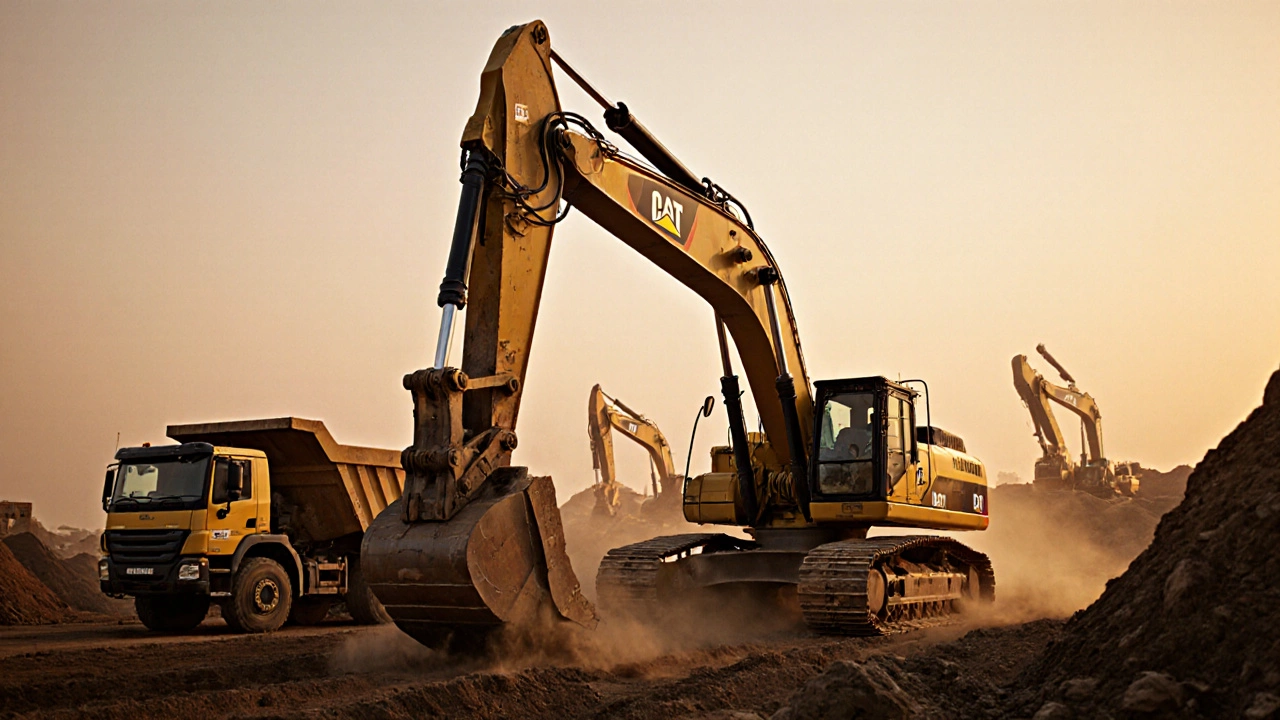
Caterpillar generates nearly $20 billion more in revenue than Komatsu and dominates global market share. Learn how size, service networks, and product range make Caterpillar the bigger player in heavy machinery.