Bessemer Process: How It Changed Steel and Shaped Indian Manufacturing
When you think of steel, you might picture skyscrapers, bridges, or trains—but none of that would exist without the Bessemer process, a method of mass-producing steel by blowing air through molten iron to remove impurities. Also known as air-blown steelmaking, it was the first inexpensive industrial process for large-scale steel production, and it turned steel from a luxury material into the backbone of modern industry.
The Bessemer process didn’t just change how steel was made—it changed the world. Before 1856, steel was slow and expensive to produce, used mostly for tools and weapons. Then Henry Bessemer cracked the code: blow air through molten pig iron, burn off carbon and impurities, and get high-quality steel in minutes. Factories could now churn out tons of steel a day. This directly fueled railroads, ships, and construction across Europe and North America. In India, this method laid the groundwork for later steel plants in Jamshedpur and Bhilai. Even today, while most steel is made with electric arc furnaces or basic oxygen furnaces, the core idea—removing impurities from iron to make strong, clean steel—still traces back to Bessemer’s breakthrough.
What makes the Bessemer process relevant now? Because it proved that mass production and quality could go hand-in-hand. India’s steel industry, now the second-largest in the world, still relies on the same fundamental principle: pure iron, controlled oxygen, and precise temperature. You’ll see echoes of this in posts about why Chinese steel is cheaper, how Indian textile mills use steel machinery, or why BEML builds heavy equipment with locally produced steel. The Bessemer process didn’t just make steel affordable—it made manufacturing scalable. And that’s exactly what India is doing today: turning raw materials into high-value products at scale.
Below, you’ll find real examples of how steel shapes industries in India—from furniture makers using steel frames to manufacturers choosing between imported and local steel. You’ll also see how small businesses and big factories alike depend on the same basic science that Bessemer unlocked over 160 years ago.
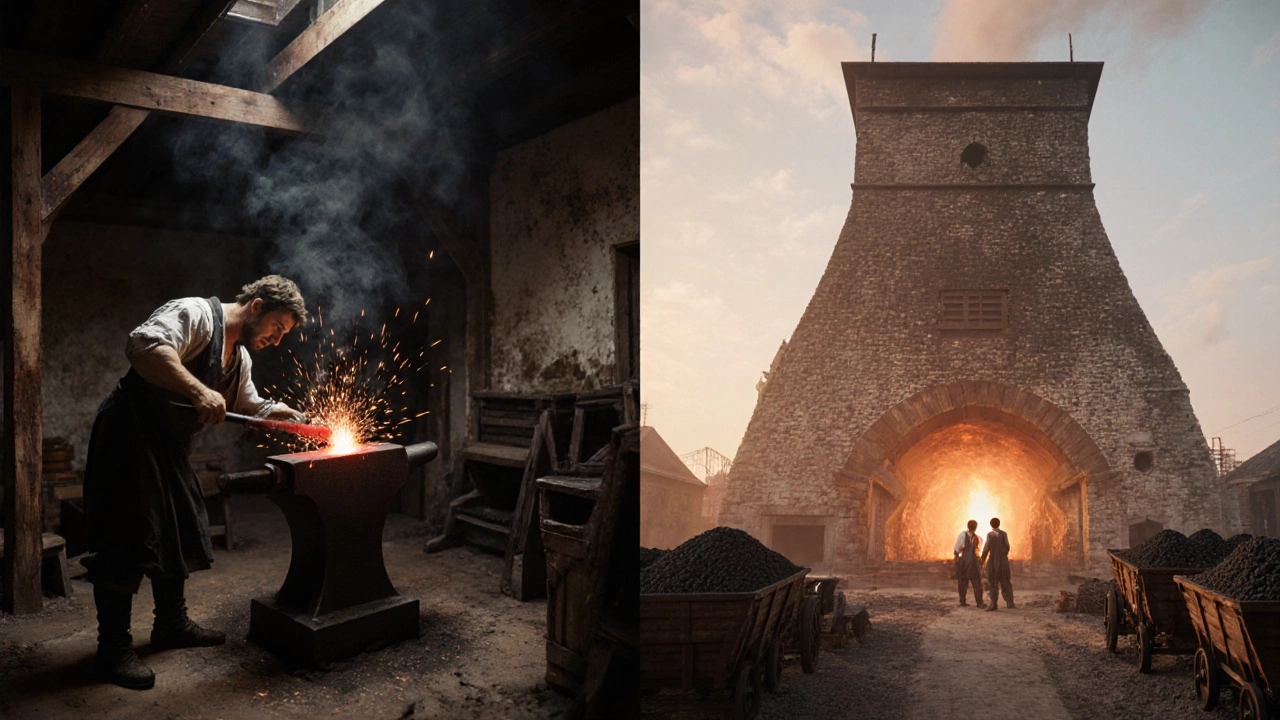
Discover why Henry Bessemer and Andrew Carnegie each claim the title "father of the steel industry," their key contributions, and how they shaped modern steelmaking.