Andrew Carnegie: Industrial Giant Who Shaped Modern Manufacturing
When you think about how factories became powerful engines of progress, one name stands out: Andrew Carnegie, a Scottish-American industrialist who turned raw iron into global wealth through sheer scale, innovation, and ruthless efficiency. Also known as the Steel King, he didn’t just build mills—he rewrote the rules of mass production. Before Carnegie, steel was expensive, slow to make, and limited to railroads and bridges. He changed that by adopting the Bessemer process at scale, cutting costs, and controlling every step from coal mines to rail lines. His company, Carnegie Steel, became the most efficient steel producer on Earth—and it wasn’t luck. It was strategy.
His success wasn’t just about machines. Vertical integration, the practice of owning every part of the supply chain—from raw materials to distribution. Also known as full control manufacturing, it’s what let him undercut competitors and dominate the market. He owned the iron ore mines in Minnesota, the coal fields in Pennsylvania, the railroads to move materials, and even the ships to ship steel overseas. No middlemen. No delays. No price hikes. That’s how he made steel cheaper than ever before, and why his factories became the model for modern manufacturing.
His influence reaches far beyond the 19th century. Today’s global supply chains, lean production systems, and even the way companies think about cost control trace back to Carnegie’s playbook. He didn’t just make steel—he made a system. And that system is still alive in places like India’s growing steel hubs in Jamshedpur and Bhilai, where scale, efficiency, and vertical control are now key to competing globally. He also believed in giving back, donating over 90% of his fortune to libraries, universities, and peace efforts. But his legacy in manufacturing? That’s what built the modern world.
Below, you’ll find real stories from today’s manufacturing landscape—how companies compete, what makes a business profitable, and which materials, methods, and markets are shaping the future. Some of these posts talk about the same forces Carnegie mastered: cost control, scale, supply chains, and local advantage. Whether it’s India’s electronics boom, the rise of BEML in heavy machinery, or why sodium hydroxide powers so many industries, the same principles still apply. You’re not just reading about today’s factories. You’re seeing the echoes of Carnegie’s revolution.
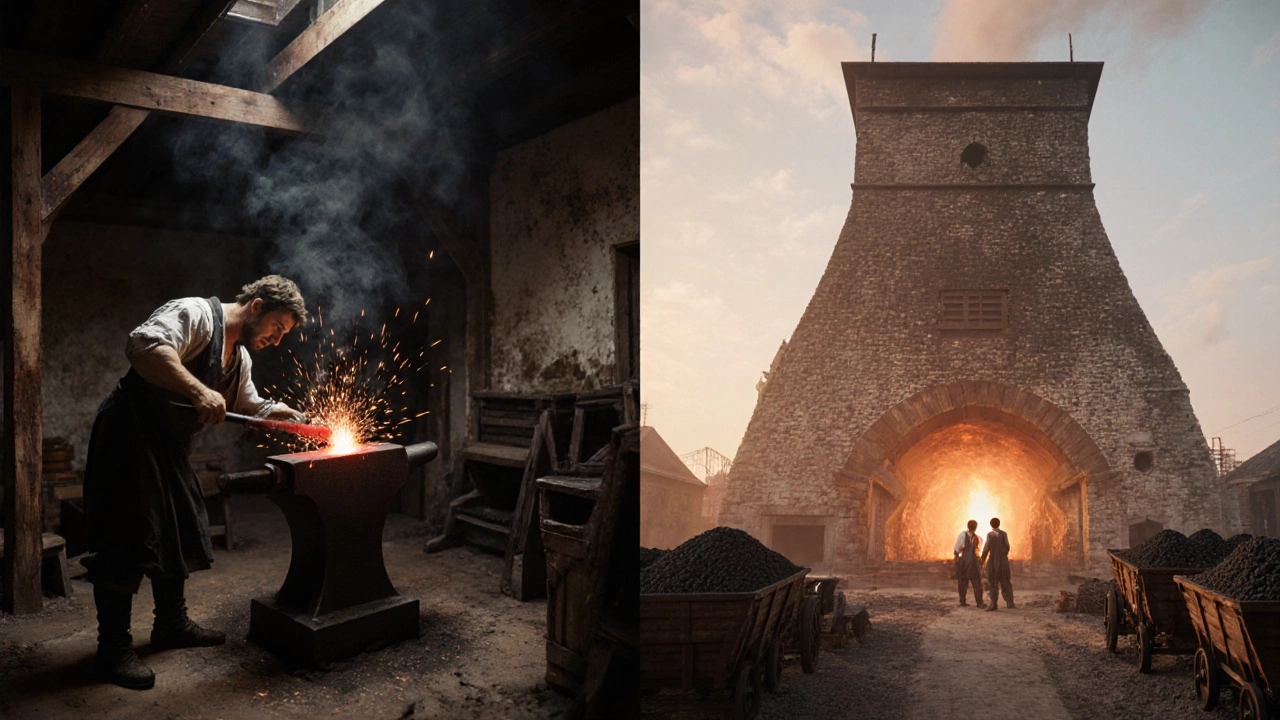
Discover why Henry Bessemer and Andrew Carnegie each claim the title "father of the steel industry," their key contributions, and how they shaped modern steelmaking.