
Pharmacy Profitability Calculator
Profitability Analysis
Key Insights
Running a pharmacy in India isn’t just about handing out pills. It’s a high-volume, low-margin business with hidden costs, strict rules, and fierce competition. But for the right person-with the right location and the right supplier network-it can still be one of the most reliable small businesses in the country. Let’s cut through the noise and look at what actually makes a pharmacy profitable today.
How much does it cost to open a pharmacy in India?
The starting cost for a small retail pharmacy in a Tier-2 city like Lucknow or Coimbatore is between ₹8 lakh and ₹15 lakh. That includes rent (₹20,000-₹50,000/month), interior setup, shelves, a refrigerator for medicines, a computer with pharmacy software, and initial stock. You’ll also need to pay for a pharmacist’s license (₹5,000-₹10,000) and register with the state drug controller. In metro cities like Mumbai or Delhi, rent alone can eat up ₹80,000-₹1.5 lakh per month, pushing total setup costs past ₹25 lakh.
Most new owners underestimate how long it takes to build inventory. You can’t just walk into a warehouse and buy 200 medicines. You need to work with distributors who are tied to specific pharma manufacturers India. A typical pharmacy stocks 300-500 SKUs, and the average cost per medicine is ₹20-₹150. You need ₹3-₹5 lakh just to stock the shelves before you open.
What’s the real profit margin?
The government caps the maximum retail price (MRP) of most medicines under the National Pharmaceutical Pricing Authority (NPPA). For over 800 essential drugs, margins are fixed at 16%-20%. That means if a medicine costs ₹100 to buy from a distributor, you can sell it for ₹116-₹120. No more, no less.
But here’s the catch: those capped medicines make up only 20-30% of your sales. The rest? Over-the-counter (OTC) products-vitamins, pain relievers, cough syrups, baby care, and diabetic supplies. These aren’t price-controlled. For these, margins range from 25% to 40%. That’s where the real money is.
Take a ₹200 bottle of vitamin D3. You buy it for ₹120 from a distributor linked to a manufacturer like Cipla or Sun Pharma. You sell it for ₹200. That’s a 66% margin. Do that 15 times a day, and you’re making ₹1,200 in profit just from one product. Multiply that by 50 OTC items, and you’re talking ₹50,000-₹80,000 in monthly profit from non-capped goods alone.
Who are the biggest suppliers?
Your profitability depends on who you buy from. India has thousands of pharma manufacturers India, but only a handful dominate distribution. Companies like Cipla, Sun Pharma, Dr. Reddy’s, and Lupin supply 70% of the retail market. They offer better credit terms (30-45 days), consistent stock, and promotional discounts.
Smaller manufacturers might give you a 5% higher margin, but they often delay shipments, have inconsistent quality, or disappear after a few months. One pharmacy owner in Indore lost ₹3 lakh in stock when his supplier went bankrupt. He had no contract, no invoice trail, and no recourse.
Stick with distributors who are authorized agents of top-tier manufacturers. They’ll give you access to new products, training materials, and even free branding like wall posters and discount coupons.
What’s the monthly revenue and profit?
A typical pharmacy in a mid-sized city does ₹4-₹6 lakh in monthly sales. If 30% of that comes from capped medicines (16% margin), that’s ₹1.2 lakh in sales → ₹19,200 profit. The other 70% from OTC and specialty items (30% average margin) is ₹3.5 lakh in sales → ₹1.05 lakh profit. Total monthly profit? Around ₹1.25 lakh.
After rent (₹40,000), pharmacist salary (₹25,000), electricity and internet (₹5,000), staff wages (₹20,000), and taxes (₹10,000), you’re left with ₹45,000-₹60,000 net profit. That’s a 12-15% net margin. Not glamorous, but steady.
Pharmacies in high-footfall areas-near hospitals, colleges, or railway stations-can hit ₹8-₹10 lakh in monthly sales. With better OTC sales mix, their net profit can cross ₹1 lakh per month. But those locations cost more, and competition is brutal.
What kills most pharmacy businesses?
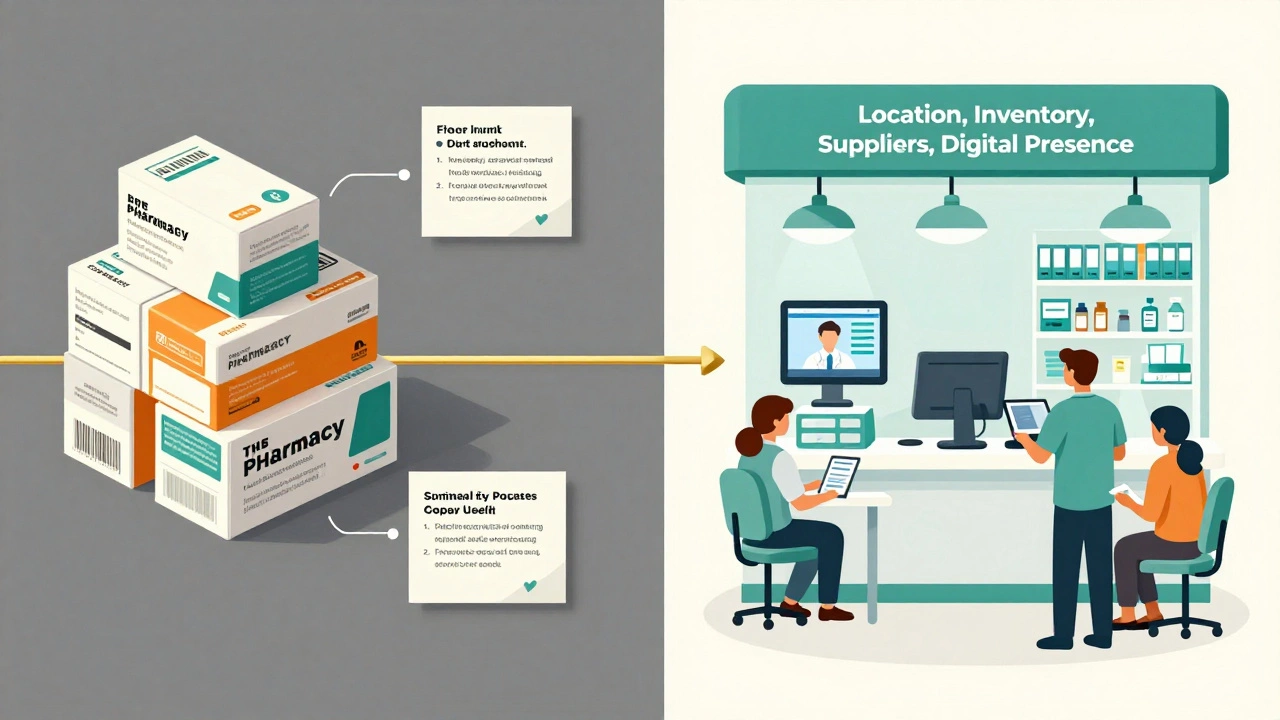
Three things: poor location, bad inventory, and no digital presence.
Many owners pick cheap rent in a quiet neighborhood, thinking they’ll save money. But if no one walks in, you’re just storing medicine. A pharmacy needs foot traffic. You need to be near a clinic, a nursing home, or a busy market. A pharmacy in a residential lane with 500 households? It might survive. One in a gated community with 2,000 homes? It’ll thrive.
Second, overstocking expired medicines is a silent killer. A single expired batch of insulin or antibiotics can trigger a raid by the drug inspector. Fines start at ₹50,000. Repeat offenses can shut you down. Use inventory software that auto-alerts you 30 days before expiry.
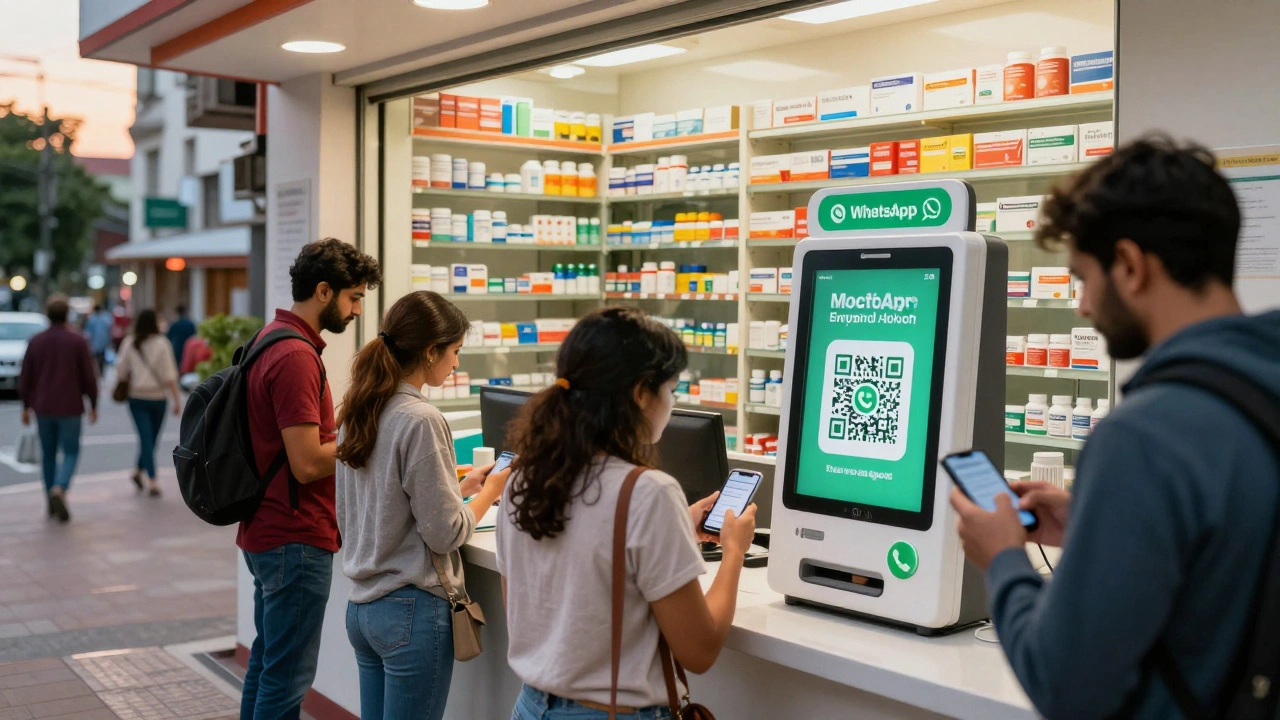
Third, no one searches for "pharmacy near me" on Google anymore. They use WhatsApp, Google Maps, or PharmEasy. If you don’t have a Google Business Profile, a WhatsApp number, and a simple Instagram page showing your daily stock, you’re invisible. One pharmacy in Patna added WhatsApp ordering and saw 40% of its sales shift online-without hiring extra staff.
Can you make ₹2 lakh a month?
Yes-but not with one small shop. You need scale. That means owning 3-5 outlets in the same city, each with a different specialty. One focuses on diabetic care, another on maternity and baby products, a third on chronic disease management with free BP and sugar checks.
Some owners partner with telemedicine platforms. They offer free consultations in-store, and the platform sends prescriptions directly to their pharmacy. That drives consistent sales. One chain in Ahmedabad runs 7 stores this way and pulls in ₹18-₹22 lakh monthly with ₹2.5-₹3 lakh net profit.
Another route? Become a supplier yourself. Buy in bulk from manufacturers, repack branded generics, and sell to smaller pharmacies. That’s a different business, but it’s how some owners eventually leave retail behind.
Is it worth it?
If you’re looking for a quick win, no. This isn’t a startup that scales overnight. But if you want a steady, legal, recession-proof business that doesn’t rely on trends-you’re looking at one of the best options in India.
It’s not glamorous. You’ll work 10-12 hour days. You’ll deal with angry customers who think their medicine should be cheaper. You’ll spend hours chasing delayed deliveries from distributors. But you’ll also be the person who helps a diabetic get insulin on a Sunday, or a grandmother get her blood pressure pills when the clinic is closed.
Profitability isn’t about luck. It’s about location, inventory discipline, supplier relationships, and digital presence. Get those right, and you’re not just surviving-you’re building something that lasts.
Can a single person run a pharmacy in India?
No. Indian law requires a registered pharmacist to be physically present during all operating hours. You can own the pharmacy, but you must hire a licensed pharmacist. Their salary is non-negotiable and ranges from ₹25,000 to ₹40,000 per month depending on experience and city.
Do I need a drug license for every pharmacy?
Yes. Every pharmacy must have a valid Drug License (Form 20 or 21) issued by the State Drug Control Authority. The license is tied to the location and pharmacist. You cannot transfer it between shops. Renewal is annual and costs ₹5,000-₹15,000 depending on your state.
How do I find reliable pharma manufacturers in India?
Start with authorized distributors listed on the websites of top manufacturers like Cipla, Sun Pharma, and Lupin. Attend pharmaceutical trade fairs like India Pharma Week or contact your local pharmaceutical association. Avoid cold-call suppliers who don’t have a physical office or GST registration. Always ask for a manufacturer authorization letter.
Are online pharmacies killing retail stores?
Not really. Online pharmacies handle only 15-20% of the total market, mostly for repeat prescriptions and OTC products. They can’t deliver controlled drugs like antibiotics or insulin overnight. Most people still walk into a local pharmacy for immediate needs, advice, or when they’re sick. The smart owner uses online platforms to supplement-not replace-their foot traffic.
What’s the biggest mistake new pharmacy owners make?
Trying to stock everything. A pharmacy doesn’t need 1,000 medicines. It needs 400-500 high-turnover items. Buy too much, and you tie up capital in slow-moving stock. Focus on essentials: painkillers, antibiotics, diabetic supplies, vitamins, and baby care. Let your sales data guide your inventory-not your gut.
Next steps if you’re serious
Start small. Rent a 300-400 sq. ft. space in a high-traffic area near a clinic or hospital. Get your license. Hire one pharmacist. Stock 300 SKUs from one trusted distributor. Set up Google Business and WhatsApp. Track every sale for the first 90 days. If you’re selling 100+ items daily and clearing ₹30,000+ profit after expenses, you’ve got a real business.
If you’re not? Go back. Adjust location. Switch suppliers. Improve service. This isn’t a get-rich-quick scheme. It’s a slow, steady grind that rewards patience, discipline, and attention to detail.