India Pharma Resilience Calculator
Adjust the sliders to simulate different scenarios for India's pharmaceutical sector in 2026.
Calculating...
- ► Adjust sliders to see analysis.
Walk into any pharmacy in Mumbai, Berlin, or New York, and you will likely find a bottle with "Made in India" printed on the label. It is not just an accident of geography; it is the result of decades of strategic policy, aggressive cost-cutting, and a massive workforce dedicated to one goal: making medicine affordable. But when we ask if India is truly strong in the pharmaceutical industry, we are asking more than just about volume. We are asking about resilience, innovation, and dependency.
In 2026, the answer is a complex yes. India remains the undisputed king of generic drugs, supplying over 50% of global demand for vaccines and nearly 40% of all generic medicines by volume. However, beneath this glossy exterior lies a fragile supply chain heavily dependent on imported raw materials. To understand the true strength of Indian pharma, we need to look past the export numbers and examine the structural realities facing manufacturers today.
The Scale of Dominance: Why the World Relies on India
Let’s start with the sheer size of the operation. The Indian pharmaceutical market is valued at approximately $135 billion as of 2026, with domestic consumption accounting for roughly 70% of that figure. The remaining 30% is exported to more than 200 countries. This isn’t just about selling pills; it’s about sustaining global health infrastructure.
Consider the case of antiretroviral drugs for HIV/AIDS. In the early 2000s, Western patents kept these life-saving treatments out of reach for millions in developing nations. Indian companies like Cipla and a major player in generic HIV medications challenged these patents, bringing prices down from $10,000 per patient annually to under $350. That precedent set the tone for India’s role as the "pharmacy of the world." Today, this dominance extends to essential antibiotics, cardiovascular drugs, and oncology treatments.
The strength here lies in economies of scale. With over 10,000 manufacturing units and a network of thousands of small-to-medium enterprises (SMEs), India can produce vast quantities of low-margin generics faster and cheaper than almost any other nation. For global health organizations like the WHO and UNICEF, India is not just a vendor; it is a critical partner in disease eradication programs.
| Metric | Value/Status | Global Context |
|---|---|---|
| Market Size | $135 Billion | 3rd largest globally by volume |
| Generic Drug Share | ~40% | Largest supplier worldwide |
| Vaccine Supply | >50% | Critical for Gavi/UNICEF programs |
| US FDA Approvals | 80+ Plants | Highest among non-US countries |
| API Dependency | ~70-80% | High risk due to China reliance |
The Achilles' Heel: Active Pharmaceutical Ingredient (API) Dependency
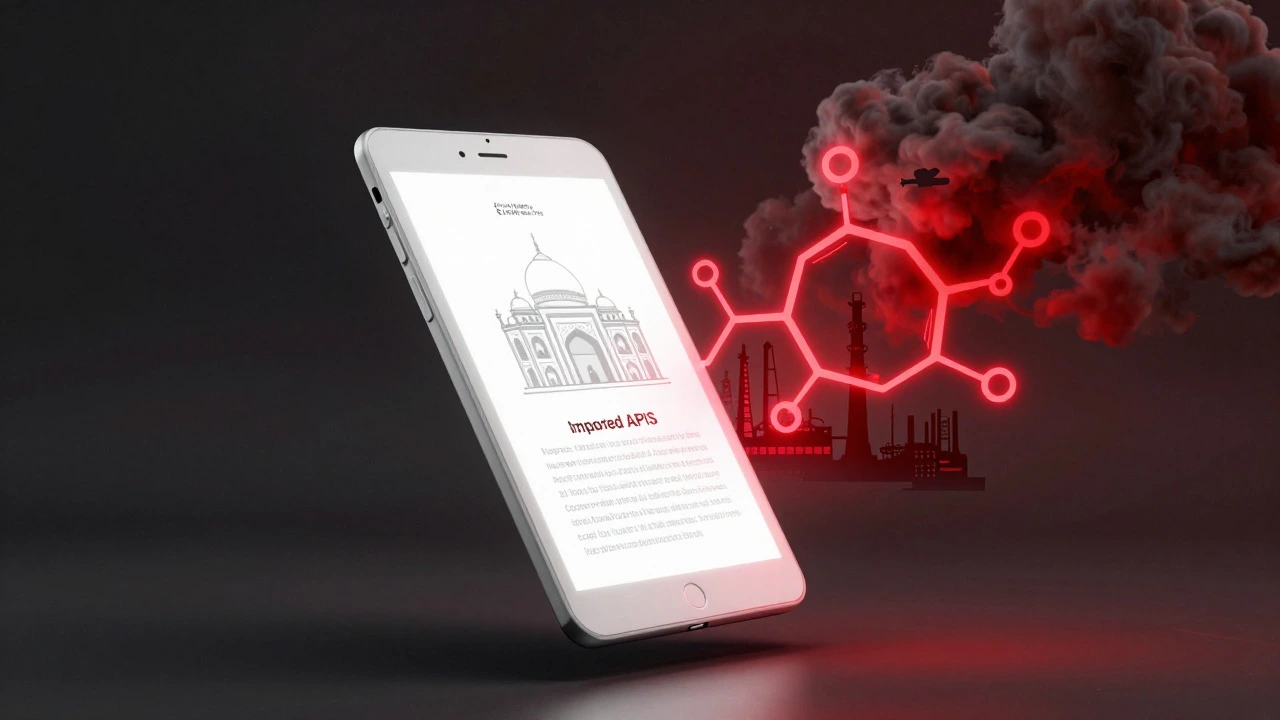
If you buy a finished tablet in India, the shell might be made locally, but the core ingredient-the Active Pharmaceutical Ingredient (API)-often comes from halfway across the world. Specifically, China. This is the single biggest vulnerability in India’s pharmaceutical ecosystem.
India imports roughly 70-80% of its bulk drugs and APIs from China. Key intermediates like Paracetamol, Metformin, and various antibiotic precursors are sourced almost exclusively from Chinese manufacturers. During the pandemic, this dependency caused panic. When lockdowns hit China in 2022 and again in 2025, Indian factories faced shortages, leading to price spikes and delayed deliveries for essential medicines.
Why does this happen? It boils down to cost and infrastructure. Chinese chemical industries benefit from integrated clusters where petrochemicals, basic chemicals, and fine chemicals are produced in close proximity. Energy costs are lower, and environmental regulations, while tightening, have historically been less stringent than those enforced by the US FDA or European EMA. Indian manufacturers, focused on the final formulation stage, found it cheaper to import APIs rather than build expensive, polluting chemical plants domestically.
This creates a paradox: India is strong in formulation but weak in foundational chemistry. True strength requires control over the entire value chain. Without reducing API dependency, India’s position remains precarious against geopolitical shifts or supply chain disruptions.
Innovation vs. Imitation: The Shift Towards Biosimilars and Specialty Drugs
For decades, the criticism of Indian pharma was simple: they only copy. They wait for patents to expire elsewhere and then rush to market with cheaper versions. While this model built their wealth, it didn’t foster deep scientific innovation. However, the landscape has changed significantly since 2020.
Today, major players like Sun Pharma and one of the largest pharmaceutical companies in India, Dr. Reddy’s, and Biocon are investing heavily in R&D. The focus has shifted from simple generics to complex generics, biosimilars, and specialty drugs. Biosimilars-biological products highly similar to already approved biologics-are particularly important because biologic patents are harder to challenge and offer higher margins.
Biocon, for instance, has become a global leader in insulin analogues and monoclonal antibodies. Their ability to manufacture complex biological molecules demonstrates a leap in technical capability. In 2025, several Indian firms received breakthrough therapy designations from the US FDA for novel oncology treatments, signaling a move up the value chain.
However, the R&D spending as a percentage of revenue in India (around 3-4%) still lags behind global giants like Pfizer or Novartis (which often spend 15-20%). The transition from imitation to innovation is happening, but it is slow. Most Indian companies still rely on reverse engineering and process optimization rather than first-in-class drug discovery.
Regulatory Scrutiny: The Price of Global Access
To sell in the lucrative US and European markets, Indian manufacturers must meet rigorous quality standards. The US Food and Drug Administration (FDA) has been both a gatekeeper and a teacher for the Indian industry. Over the last decade, hundreds of warning letters were issued to Indian plants for data integrity issues, poor sanitation, and inadequate testing protocols.
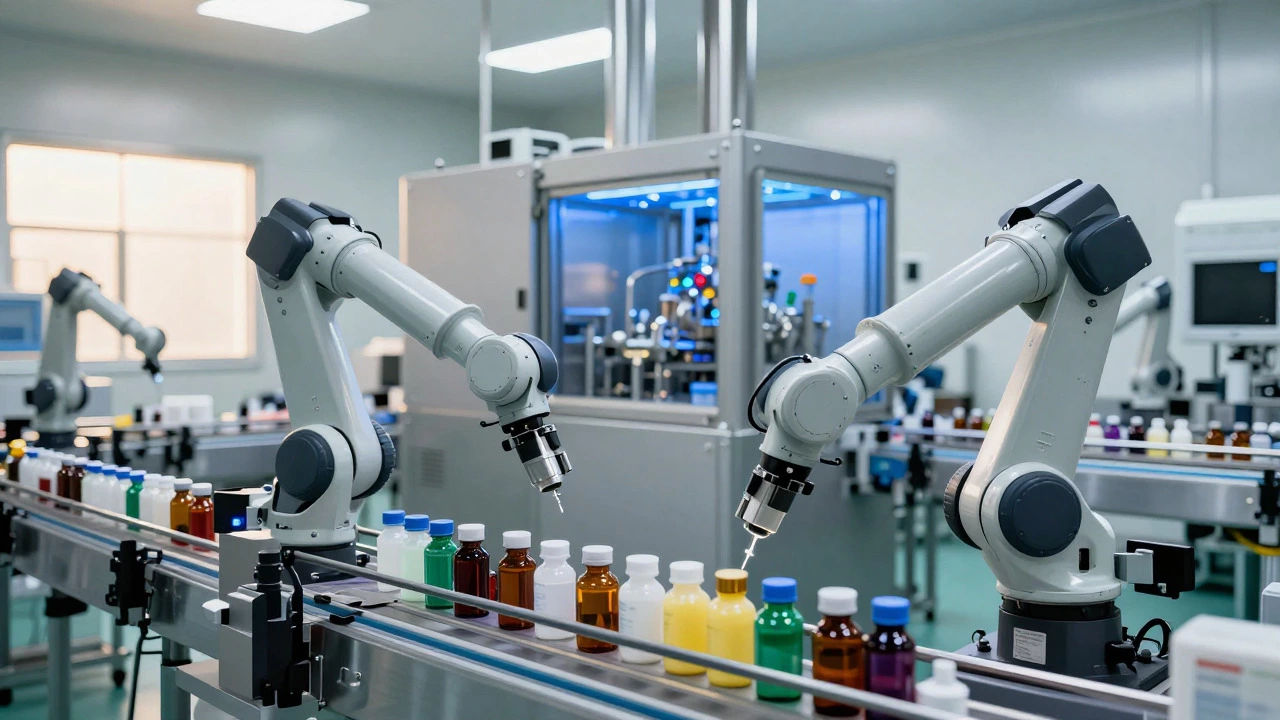
This scrutiny forced a painful but necessary upgrade. Many smaller, non-compliant factories shut down. Larger players invested billions in state-of-the-art facilities, automated manufacturing lines, and robust quality control systems. By 2026, the number of Indian plants with active US FDA approvals has stabilized around 80-90, representing the cream of the crop.
The regulatory strength of Indian pharma today is evident in its compliance rates. Recent inspections show fewer critical observations compared to the mid-2010s. This reliability is why multinational corporations increasingly choose India for contract manufacturing organization (CMO) services. If you trust your heart medication, you likely trust the factory that made it-and many of those factories are now owned or partnered with Indian conglomerates.

Government Policy: PLI Schemes and Self-Reliance
The Indian government recognizes the API vulnerability and has responded with aggressive policy interventions. The Production Linked Incentive (PLI) scheme for high-value pharmaceuticals and medical devices, launched in recent years, offers financial incentives to companies that set up domestic manufacturing for key starting materials (KSMs) and APIs.
The goal is clear: Atmanirbhar Bharat (Self-Reliant India). By subsidizing capital expenditure, the government hopes to lure chemical manufacturers back home. Early results are mixed but promising. Several large-scale KSM parks are coming online in Gujarat and Andhra Pradesh. These parks aim to replicate the cluster effect seen in China by providing shared infrastructure for waste treatment and power.
However, challenges remain. Land acquisition, labor laws, and environmental clearances can still delay projects for years. Additionally, the cost of energy in India is rising, which threatens the competitive advantage of local production. Unless these structural bottlenecks are addressed, the PLI scheme may boost capacity without fully solving the dependency issue.
Future Outlook: Can India Maintain Its Edge?
Looking ahead to the next five years, India’s strength will depend on three factors: diversification of API sources, acceleration in biotech innovation, and adherence to sustainability standards. The global market is moving towards green chemistry. European buyers, in particular, are demanding carbon-neutral manufacturing processes. Indian firms that fail to adopt sustainable practices may lose access to premium markets.
Furthermore, the rise of personalized medicine and mRNA technology poses a new challenge. India missed the initial wave of mRNA vaccine development during the pandemic, relying instead on traditional adenoviral vector platforms. Catching up in this high-tech arena requires significant investment in research infrastructure and talent retention. Brain drain remains a concern, with top scientists often migrating to the US or Europe for better opportunities.
Despite these hurdles, the fundamentals remain strong. India has a young demographic, a growing middle class driving domestic demand, and a proven track record of operational efficiency. As long as the world values affordability and accessibility in healthcare, India will remain indispensable. The question is no longer whether India is strong-it is whether it can evolve from being a cost-effective manufacturer to a knowledge-driven innovator.
What is the biggest weakness in India's pharmaceutical industry?
The most significant weakness is the heavy dependency on China for Active Pharmaceutical Ingredients (APIs). Approximately 70-80% of bulk drugs and key intermediates are imported from China, creating supply chain vulnerabilities during geopolitical tensions or global disruptions.
Does India manufacture its own vaccines?
Yes, India is a global leader in vaccine manufacturing. Companies like Serum Institute of India and Biological E. supply over 50% of the world's vaccines, including crucial doses for polio, measles, and hepatitis. They also played a pivotal role in producing Covishield during the pandemic.
Are Indian generic drugs safe and effective?
Yes, especially those manufactured by companies with US FDA or European EMA approvals. Regulatory scrutiny has improved quality standards significantly over the last decade. Major Indian exports undergo rigorous bioequivalence testing to ensure they perform identically to branded originals.
How does the PLI scheme help Indian pharma?
The Production Linked Incentive (PLI) scheme provides financial rewards based on sales growth for companies that manufacture high-value pharmaceuticals and medical devices domestically. It aims to reduce API imports by encouraging local production of Key Starting Materials (KSMs).
Which Indian companies are leaders in innovation?
Companies like Biocon, Sun Pharma, and Dr. Reddy's are leading the shift towards biosimilars and specialty drugs. Biocon, in particular, is recognized globally for its work in insulin analogues and monoclonal antibodies, marking a move beyond simple generic replication.