India Electronics Growth Calculator
Calculate Production Growth
Projection Results
Projected Growth (2025):
PLI Incentive Value:
Local Content Increase:
Based on data from the article: India's electronics production grew from $10B in 2020 to $120B in 2025 (12x growth)
India isn’t just making smartphones anymore-it’s building TVs, laptops, medical devices, and even circuit boards at a pace no one predicted five years ago. In 2020, India produced less than $10 billion worth of electronics. By 2025, that number crossed $120 billion. That’s a 12-fold jump in just five years. And it’s not just about volume. The quality, complexity, and local value addition are climbing fast. So yes, India’s electronics industry isn’t just growing-it’s surging.
Why Now? The PLI Scheme Changed Everything
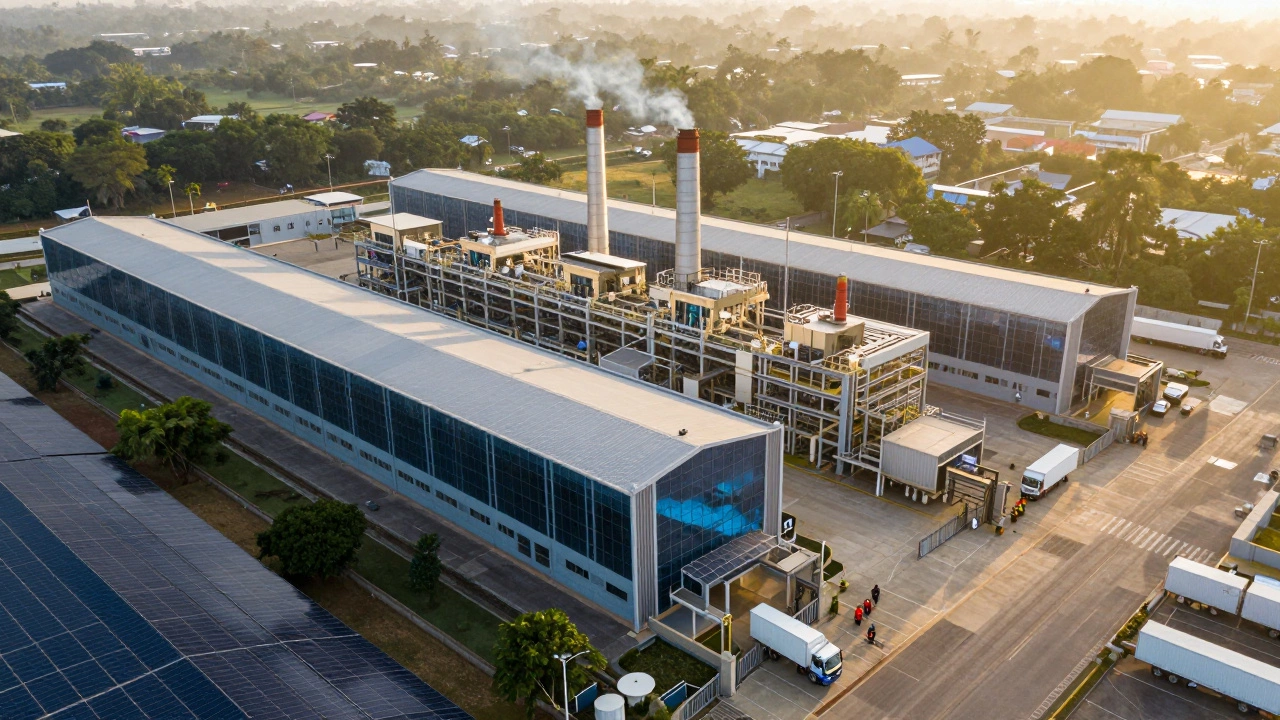
The big turning point was the Production Linked Incentive (PLI) scheme, launched in 2020. The government promised up to 6% cash incentives on incremental sales for electronics manufacturers who set up shop in India. It wasn’t a handout. Companies had to hit targets: invest in new machinery, hire local engineers, and boost output year after year. Only then did they get paid. Big names took the bait. Foxconn, Tata, and Dixon Technologies built massive plants in Tamil Nadu, Uttar Pradesh, and Telangana. By 2024, India was producing over 80% of the smartphones sold domestically. Even Apple shifted nearly half its iPhone production out of China and into India. That’s not a small shift-it’s a supply chain earthquake. The PLI didn’t just help big players. It pulled in hundreds of smaller suppliers. Companies making chargers, batteries, speakers, and display panels started setting up near the main assembly lines. This created a mini-ecosystem. No longer do manufacturers need to import 90% of components. Local sourcing now covers 40% of key parts, up from just 8% in 2020.It’s Not Just Phones Anymore
Most people think India’s electronics boom is all about iPhones and Redmi phones. But the real story is what’s happening beyond smartphones. In 2024, India manufactured over 30 million laptops, up from 2 million in 2020. Dell, HP, and Lenovo now have factories here. Even high-end gaming laptops are being assembled locally. The government pushed for this by requiring laptops sold in India to meet minimum local content rules. Then there’s TVs. India used to import 90% of its LED panels. Now, companies like TCL and Samsung produce panels inside the country. The first Indian-made OLED TV rolled off a production line in 2024. It wasn’t just assembled-it was designed with local software and tested for Indian voltage spikes and dust conditions. Medical electronics is another surprise. India now produces over 60% of its own pulse oximeters, ECG machines, and ventilators. During the pandemic, imports collapsed. That forced hospitals and startups to find local alternatives. Today, companies like Sysmex and Dr. Morepen are making advanced diagnostic tools with 70% local parts. Even semiconductors are starting to move. While India doesn’t make chips yet, it’s building packaging and testing facilities. Micron opened a $2.75 billion plant in Gujarat in 2024 to process chips imported from Taiwan and Korea. That’s not full manufacturing-but it’s the first step toward becoming a global semiconductor hub.Who’s Really Behind the Growth?
You might think it’s all about foreign companies like Apple and Foxconn. But the real engine is Indian firms. Dixon Technologies, founded in 1993, started as a small electronics distributor. Today, it’s India’s largest contract manufacturer. It produces over 100 million units a year-phones, smartwatches, routers-for global brands. Its founder, Ajay Chandan, didn’t wait for government help. He reinvested profits into automation and trained 15,000 local workers in surface-mount technology. Tata Electronics, part of India’s biggest conglomerate, launched its first electronics plant in 2023. It’s now making printed circuit boards for Apple and Samsung. The plant uses AI-driven quality control systems that catch defects before they leave the factory. Tata didn’t copy China’s model-it built something better: higher precision, less waste, and full traceability. Even startups are joining. Companies like Locus Robotics and InnoWatt are designing smart home devices with local sensors and solar-powered circuits. They’re not just selling to India-they’re exporting to Africa and Southeast Asia.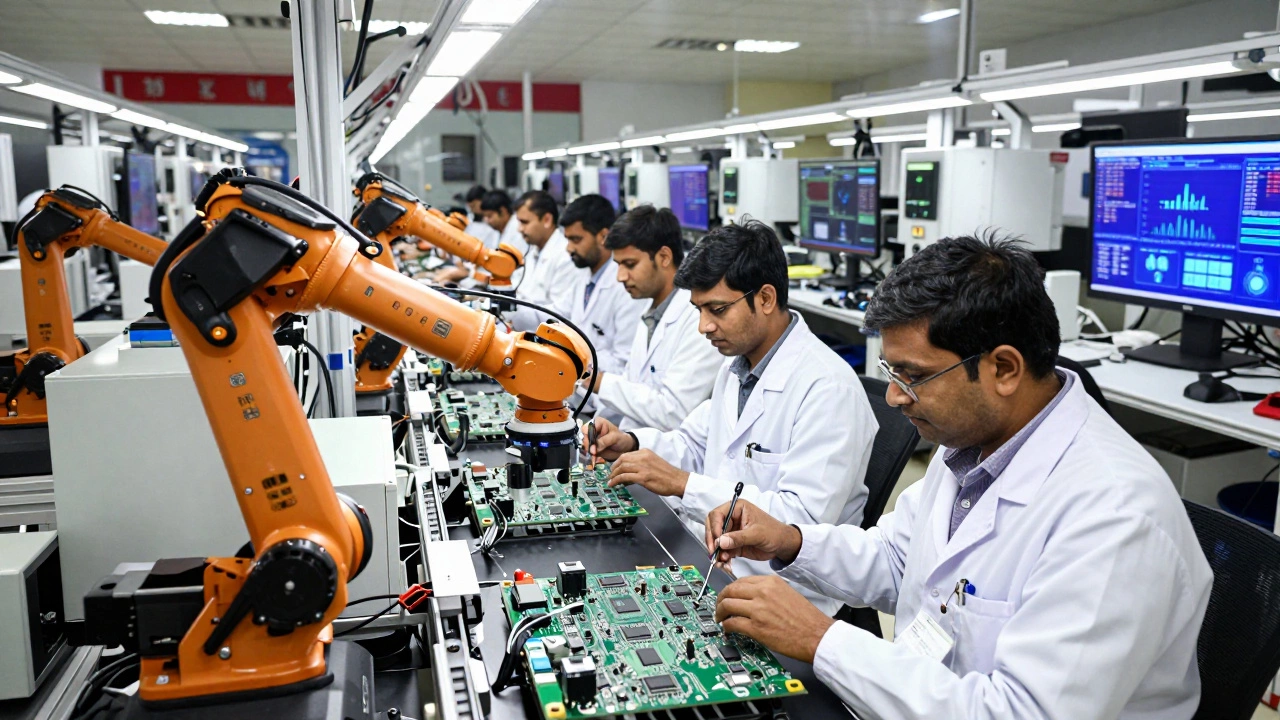
The Hidden Challenges
Don’t get fooled by the headlines. India’s electronics surge has cracks. First, most of the value still comes from assembly. The brain of your phone-the processor, memory chip, camera sensor-is still imported. India makes the case, the battery, the screen. But the core tech? Still from Taiwan, South Korea, and the U.S. Second, skilled labor is tight. There aren’t enough engineers trained in PCB design, SMT assembly, or automated testing. Training centers are opening, but they’re still behind demand. Many factories now hire engineers from Bangladesh and Vietnam because local talent isn’t ready. Third, power supply is unreliable in many industrial zones. One major electronics hub in Noida lost power for 12 hours in early 2025, halting production for two days. Factories are now installing backup generators, but that adds 15-20% to costs. And then there’s the land problem. Finding large, flat plots with good road and water access near ports is tough. Many factories had to wait over two years just to get approval for land use. The government is speeding things up, but bureaucracy still slows things down.What’s Next? The Road to 2030
India’s goal isn’t just to make more electronics. It wants to design them too. The National Semiconductor Mission, announced in 2024, plans to invest $10 billion over the next decade. The first chip design center opened in Bengaluru in late 2024. It’s not making silicon wafers yet-but it’s designing microcontrollers for smart meters and electric vehicles. By 2030, India aims to produce $300 billion in electronics. Half of that will come from exports. That’s ambitious. But if current trends hold, it’s possible. The next big push is in electric vehicle electronics. India is now the third-largest market for EVs after China and the U.S. Every EV needs a battery management system, charger, and motor controller. Local companies are racing to build those. By 2027, India could be exporting EV electronics to Europe and Africa. And if India can crack semiconductor packaging and testing at scale, it could become the world’s third-largest hub after Taiwan and Malaysia. That’s not fantasy. It’s the plan laid out by the Ministry of Electronics and IT.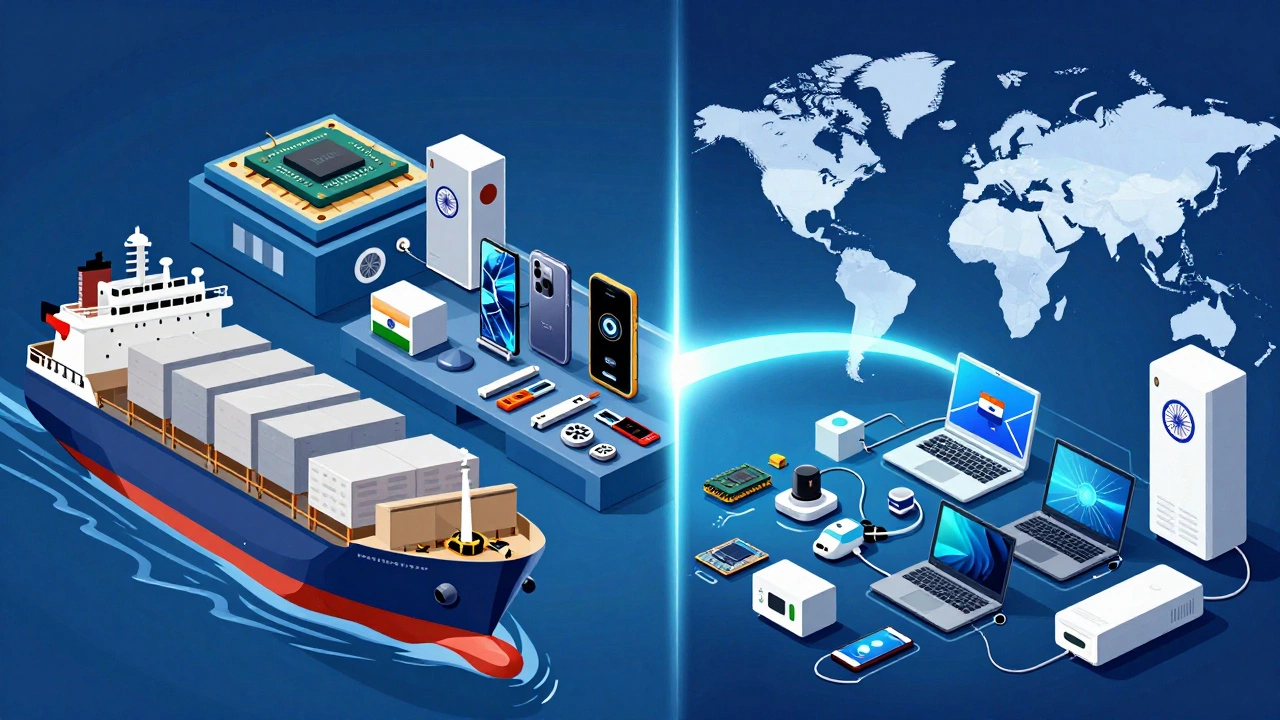
What This Means for the World
India’s electronics surge isn’t just good for India. It’s changing global supply chains. For years, the world relied on China for cheap, fast electronics. Now, companies are building a second pillar in India. It’s not replacing China-it’s diversifying risk. If a flood hits Shenzhen, or a trade war breaks out, production can shift to Chennai or Pune. Western brands are betting on this. Amazon now sources 40% of its Echo speakers from India. Google’s Pixel phones are being assembled here. Even Samsung is shifting its global tablet production to India. This isn’t about cheap labor anymore. It’s about reliability, scale, and growing local talent. India is proving it can handle high-tech manufacturing-not just low-cost assembly.Final Thought: It’s Not Over
The surge isn’t a flash in the pan. It’s a structural shift. The factories are built. The workers are trained. The policies are in place. The next five years will show if India can move from making parts to making breakthroughs. If it does, the world’s next big tech innovation might not come from Silicon Valley. It might come from a small town in Tamil Nadu, where an engineer just designed a chip that runs on solar power-and it’s made entirely in India.Is India producing its own semiconductors yet?
No, India doesn’t yet manufacture silicon chips from raw materials. But it’s building the infrastructure to get there. Factories in Gujarat and Tamil Nadu are now packaging and testing imported chips. The first chip design center opened in Bengaluru in 2024, and the government plans to fund full chip fabrication by 2030.
How much of India’s electronics is exported?
In 2024, India exported over $45 billion worth of electronics. That’s nearly 40% of total production. Major exports include smartphones, laptops, TVs, and medical devices to the U.S., Europe, Africa, and Southeast Asia. Exports are growing faster than domestic sales.
Are Indian-made electronics reliable?
Yes. Factories producing for Apple, Samsung, and Dell follow global quality standards. Many use AI-powered inspection systems that detect defects at a rate better than older Chinese plants. Independent tests show Indian-made smartphones and laptops now match global benchmarks in durability and performance.
Why are companies choosing India over Vietnam or Thailand?
India offers a larger domestic market, better infrastructure investment, and stronger government incentives. While Vietnam is cheaper, India’s scale is unmatched. A single factory in Tamil Nadu can produce 10 million phones a year. No other country in Southeast Asia has that capacity. Plus, India’s workforce is growing faster and more technically skilled.
Can India compete with China in electronics?
Not yet in total volume or cost. China still makes over 70% of the world’s electronics. But India is now the second-fastest growing electronics producer after Vietnam. Where India wins is in diversification and resilience. Companies are using India to reduce dependence on China-not replace it. In five years, India could be a top-three player in key segments like smartphones and medical devices.