India Electronics Investment Analyzer
Select Your Focus Sector
Choose a sub-sector to analyze its maturity level, growth drivers, and investment outlook based on current market data.
Mobile Phones
High MaturitySemiconductors
Early StageEV Batteries
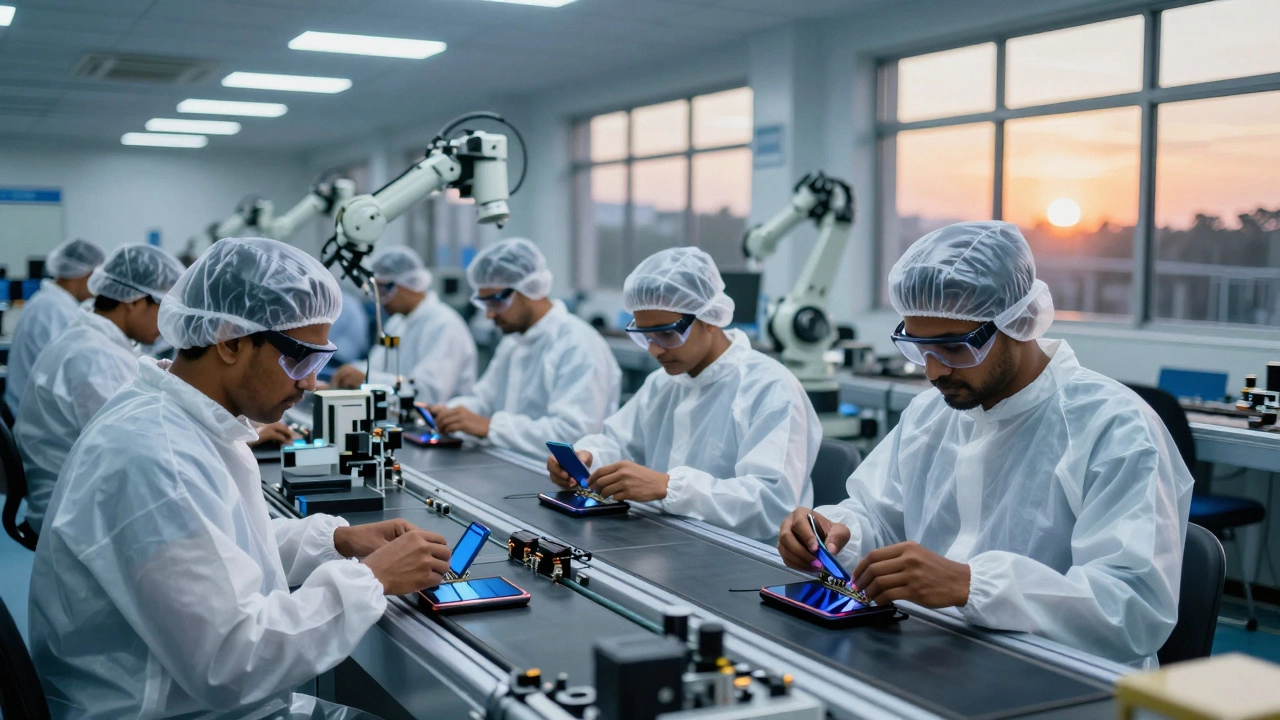
GrowingWalk into any industrial park in Tamil Nadu or Karnataka today, and you won't just see assembly lines; you'll see a global shift in motion. For decades, the world looked to East Asia for its gadgets. Now, the gaze has shifted southward. India is no longer just a market for electronics; it is becoming one of the world's most critical factories for them. This isn't a slow trickle-it's a flood. The electronics manufacturing sector in India is booming, driven by government incentives, geopolitical shifts, and a hungry domestic consumer base.
If you're tracking where capital and jobs are moving, this is the story that matters. But what exactly is driving this surge? Is it sustainable? And which specific technologies are leading the charge? Let's break down the mechanics behind India's transformation from an importer to an exporter of high-tech goods.
The Policy Engine: How PLI Changed the Game
You can't talk about this boom without talking about policy. The catalyst here is the Production Linked Incentive (PLI) scheme. Before 2020, India imported roughly $85 billion worth of electronics annually, with exports barely scratching the surface. The math didn't work for local manufacturers competing against established giants in China.
The PLI scheme flipped the script. By offering cash incentives based on incremental sales, the government effectively lowered the risk for big players to set up shop. It wasn't just a promise; it was a financial guarantee. Companies like Foxconn, Pegatron, and Wistron didn't just expand existing units; they built new, massive facilities dedicated to mobile phone assembly and component manufacturing.
The results speak for themselves. Mobile phone manufacturing alone crossed the $40 billion mark in recent fiscal years. More importantly, the export value of these phones skyrocketed. We aren't just making phones for Indians anymore; we're making them for Europe, Southeast Asia, and Africa. This structural change-from import substitution to export orientation-is the bedrock of the current boom.
What is the PLI scheme?
The Production Linked Incentive (PLI) scheme is a government program that provides financial incentives to manufacturers based on their incremental sales. It aims to boost domestic production and reduce reliance on imports across key sectors, including electronics and semiconductors.
Mobile Phones: The Trojan Horse of Electronics
Smartphones were the entry point. They are complex enough to require sophisticated supply chains but simple enough to assemble quickly. Today, India produces over 30% of the world's smartphones. You might be reading this on a device assembled in Chennai or Telangana.
Apple's move is the headline-grabber here. With brands like Xiaomi, Vivo, and Oppo already having deep roots in Indian manufacturing, Apple followed suit to diversify its supply chain away from China. This isn't just about final assembly. We're seeing a gradual increase in local sourcing for components like batteries, displays, and cameras. This "deepening" of the value chain is crucial. Assembling a phone is step one. Making the parts inside the phone is step two-and that's where the real economic value lies.
However, challenges remain. While assembly is robust, the raw materials and advanced components often still come from abroad. The goal now is to build a comprehensive ecosystem where even the screws and chips are sourced locally. That transition is underway, though slower than the assembly phase.
Semiconductors: The Next Frontier
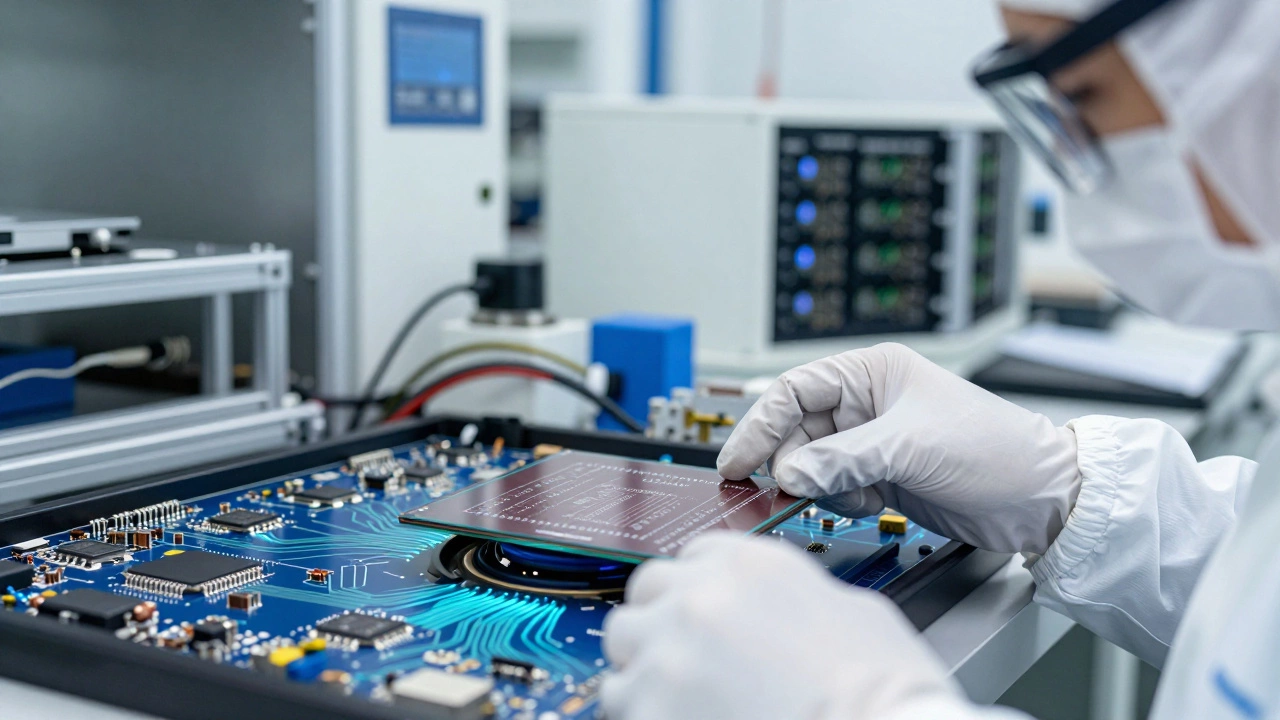
If mobile phones are the present, semiconductors are the future. India has announced ambitious plans to become a global hub for chip design and fabrication. This is a harder nut to crack. Semiconductor fabs cost billions to build and require immense technical expertise and stable power supplies.
Despite the hurdles, progress is visible. Tata Electronics, in partnership with GlobalFoundries, is setting up a state-of-the-art fab in Gujarat. Micron Technology is investing in memory packaging and testing facilities. These aren't small projects; they are multi-billion-dollar commitments that signal long-term confidence.
The focus initially is on OSAT (Outsourced Semiconductor Assembly and Test) and chip design. Fabrication-the actual printing of circuits onto silicon wafers-will follow. This phased approach makes sense. It allows India to build talent pools and supply chains before tackling the most capital-intensive aspects of the industry.
| Sub-Sector | Maturity Level | Key Players | Growth Driver |
|---|---|---|---|
| Mobile Phones | High | Apple, Samsung, Xiaomi | Domestic demand & exports |
| Semiconductors | Early Stage | Tata Electronics, Micron | Government subsidies & security needs |
| EV Batteries | Growing | National Battery Manufacturing Programme partners | Electric vehicle adoption |
Beyond Phones: EVs and Consumer Durables
The boom isn't limited to gadgets in your pocket. Electric Vehicles (EVs) are creating a parallel surge in battery manufacturing. The National Battery Manufacturing Programme is incentivizing companies to produce lithium-ion cells domestically. Why? Because an EV is essentially a smartphone on wheels, and its most expensive component is the battery.
Similarly, consumer durables like air conditioners, refrigerators, and televisions are seeing increased local content requirements. Brands are shifting production from Vietnam and China to India to avoid tariffs and tap into the growing middle class. This diversification ensures that if one sector slows down, others can carry the momentum.
For investors and entrepreneurs, this means opportunities beyond just assembling iPhones. Think logistics, packaging, recycling, and component manufacturing. The ecosystem is expanding, creating niches for smaller players to thrive alongside the giants.
While the industrial landscape transforms, lifestyle trends continue to evolve globally. For those interested in how urban centers adapt to changing social dynamics, resources like this directory offer insights into service economies in other major Asian hubs, highlighting how different cities cater to diverse international communities.
The Talent Gap: Can India Keep Up?
Technology doesn't run itself. You need engineers, technicians, and skilled labor. India has a vast pool of IT graduates, but manufacturing requires a different skill set. Precision engineering, quality control, and machine operation are not always covered in standard computer science degrees.
This is where vocational training comes in. Initiatives like Skill India are trying to bridge this gap, but the scale of need is enormous. Companies are increasingly partnering with technical institutes to create customized training programs. If India wants to move up the value chain-from assembly to design to fabrication-it needs a workforce that can handle complex machinery and software integration.
The competition for talent is fierce. Salaries for specialized roles in semiconductor design and automated manufacturing are rising. This is a good problem to have, as it indicates a healthy, growing sector, but it also raises operational costs for manufacturers.
Infrastructure and Logistics: The Backbone
You can't export billions of dollars worth of goods if your ports are congested and your roads are poor. Fortunately, India has been investing heavily in infrastructure. New airports, expanded port capacities, and improved highway networks are reducing logistics costs.
Dedicated Freight Corridors are speeding up the movement of raw materials and finished goods. Industrial corridors in states like Tamil Nadu, Karnataka, and Maharashtra are being developed with plug-and-play infrastructure, meaning companies can start operations faster without waiting for basic utilities.
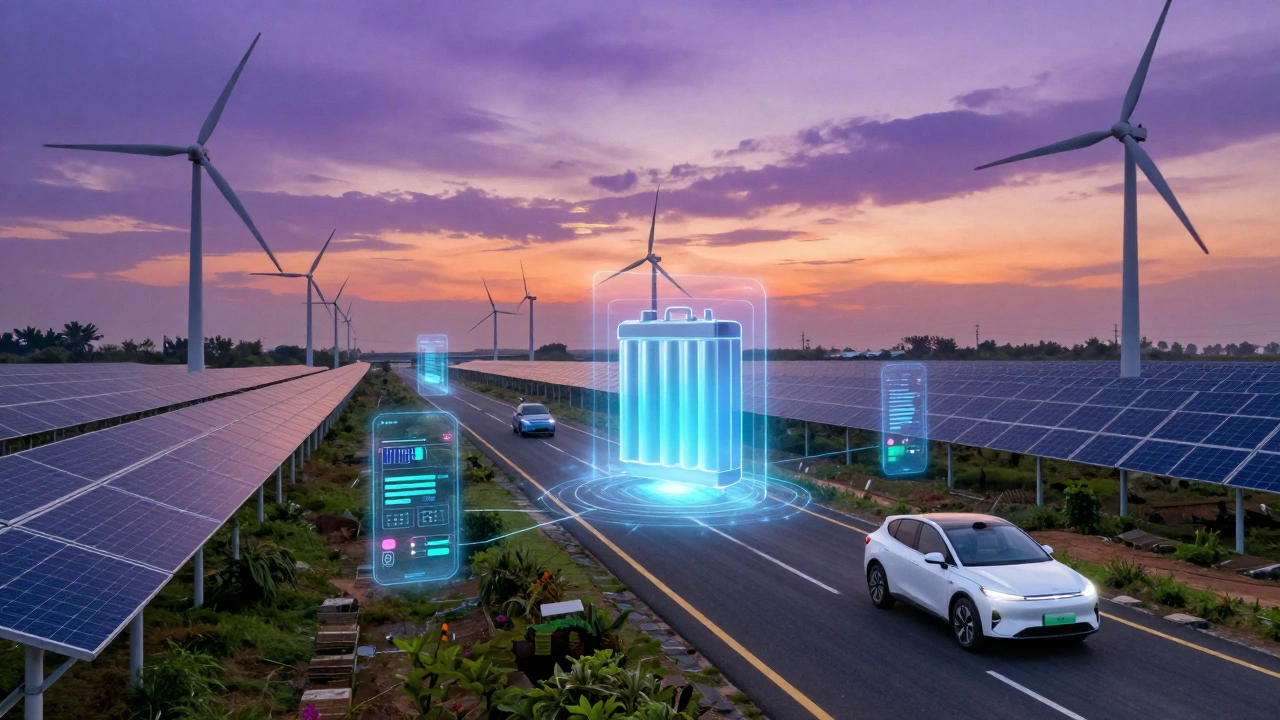
Power reliability is another critical factor. Electronics manufacturing requires uninterrupted electricity. States are improving grid stability and promoting renewable energy sources to meet the green energy demands of global buyers. Many multinational corporations now require their suppliers to use clean energy, making solar and wind investments essential for Indian manufacturers.
Challenges Ahead: Supply Chain Resilience
Despite the optimism, risks exist. Geopolitical tensions can shift overnight. If trade policies change, supply chains could be disrupted. India is still dependent on China for many raw materials and intermediate components. Reducing this dependency takes time and significant investment.
Another challenge is scale. While India is growing fast, it starts from a lower base compared to China. Achieving the same level of efficiency and cost-competitiveness will take years. Manufacturers must balance speed with sustainability, ensuring that rapid expansion doesn't lead to waste or environmental degradation.
Quality control is also paramount. A single batch of defective products can damage a brand's reputation globally. Indian manufacturers are adopting stricter quality standards and investing in automation to minimize human error. This focus on precision is key to winning trust in international markets.
Future Outlook: What to Watch in 2027 and Beyond
Looking ahead, keep an eye on three areas: semiconductor fabrication, EV battery chemistry, and AI-driven manufacturing. As India moves from assembling devices to designing chips and batteries, the value addition per unit will increase significantly.
Artificial Intelligence is transforming factories. Predictive maintenance, quality inspection using computer vision, and optimized supply chain management are becoming standard. Indian manufacturers that adopt these technologies early will gain a competitive edge.
The boom is real, but it's evolving. The next phase isn't just about volume; it's about value. India is positioning itself not just as a factory, but as a innovation hub. Whether it succeeds depends on continued policy support, infrastructure development, and, most importantly, the ability to nurture talent.
For anyone involved in business, technology, or investment, ignoring India's electronics manufacturing boom is no longer an option. The trains have left the station, and they're picking up speed. The question isn't whether India will be a major player-it already is. The question is how quickly it can climb the ladder to the top.
Is India replacing China in electronics manufacturing?
Not entirely, but it is becoming a significant alternative. While China remains dominant in component production, India is rapidly growing in final assembly and is beginning to localize component manufacturing. It's more of a diversification than a direct replacement.
Which states are leading in electronics manufacturing?
Tamil Nadu, Karnataka, Maharashtra, and Telangana are the primary hubs. Tamil Nadu leads in mobile phone and auto electronics, while Karnataka is strong in IT hardware and semiconductors.
How does the PLI scheme benefit consumers?
By boosting local production, the PLI scheme aims to reduce import duties and logistics costs, potentially lowering prices for consumers. It also increases product availability and variety in the domestic market.
What role do startups play in this boom?
Startups are innovating in niche areas like IoT devices, wearable tech, and specialized components. They fill gaps left by larger manufacturers and drive innovation in design and software integration.
Are there environmental concerns with this growth?
Yes, e-waste and energy consumption are major concerns. The government is implementing stricter regulations on waste disposal and encouraging manufacturers to adopt green energy sources to mitigate environmental impact.