India Chemical Industry Segment Analyzer
Select Chemical Segment
Click on a segment to view its global standing and key details.
Picture this: you are scrolling through a news feed and see that the United States is the largest producer of chemicals in the world. China follows closely behind. Then you look for India. It’s not at the top. But it is climbing fast. The question on everyone’s mind is simple: What is the rank of Indian chemical industry in the world?
The short answer? India holds the 4th position globally by production volume. This puts the country ahead of giants like Japan and Germany in terms of total output value, though exact rankings can shift slightly depending on whether you measure by revenue, volume, or export value. As of mid-2026, the Indian chemical sector contributes approximately 3% to the nation's GDP and accounts for about 15% of industrial production.
How We Measure Global Rankings
Before we dig into the numbers, let’s clarify what “rank” actually means. In the chemical industry, there are three main ways experts measure size:
- Production Volume: Total tonnage of chemicals produced annually.
- Market Value (Revenue): The monetary worth of all chemicals sold domestically and internationally.
- Export Share: How much of the global trade in chemicals comes from a specific country.
By production volume and market value, India sits firmly in 4th place. The top three are consistently:
- United States: #1 with advanced R&D and massive domestic demand.
- China: #2 due to scale, infrastructure, and government subsidies.
- European Union: #3 as a collective bloc, led by Germany.
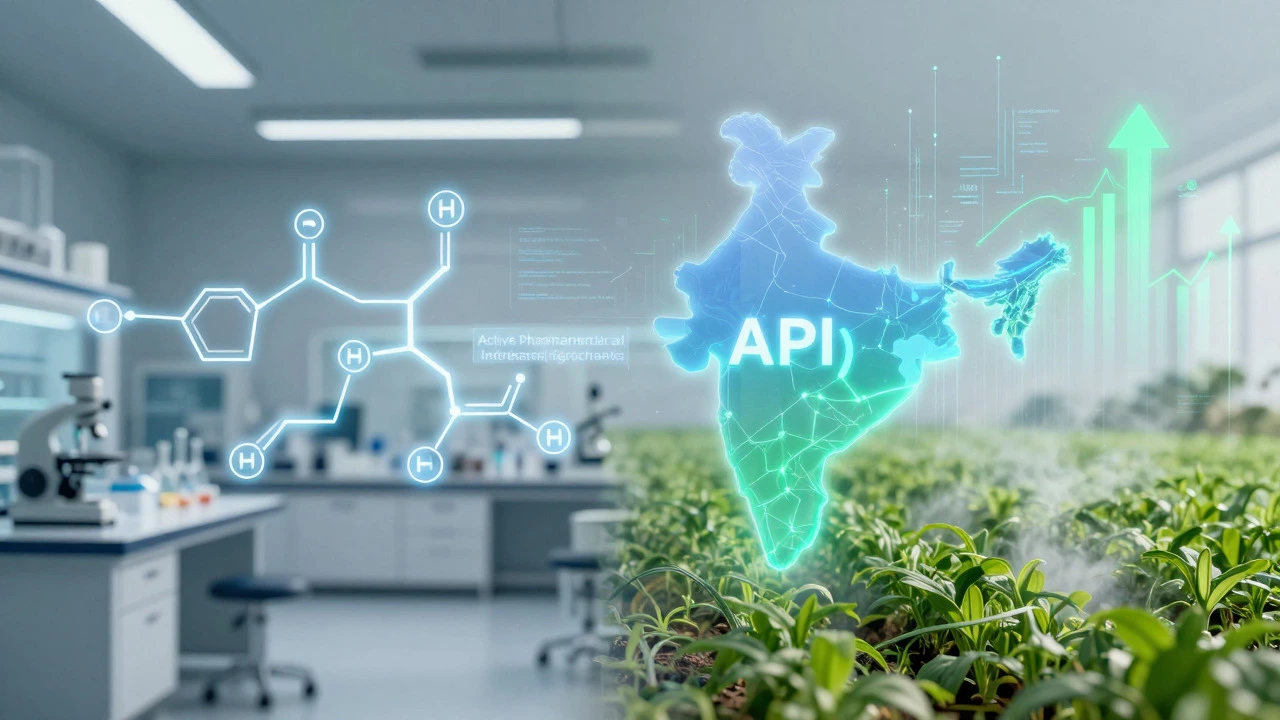
India punches above its weight in certain niches. For example, in active pharmaceutical ingredients (APIs) and agrochemicals, India often ranks #1 or #2 globally. This nuance matters because “chemicals” isn’t just one thing-it’s thousands of different products serving different industries.
Why Is India Rising So Fast?
You might wonder why a developing economy has climbed so high in such a capital-intensive sector. Several factors explain this rapid ascent.
Cost Competitiveness remains India’s biggest advantage. Labor costs are significantly lower than in Western nations, and energy prices-though fluctuating-are still competitive compared to Europe. This allows Indian manufacturers to produce bulk chemicals like caustic soda, sulfuric acid, and ammonia at margins that attract global buyers.
Diverse Raw Material Base gives India another edge. The country produces crude oil, natural gas, coal, salt, and limestone-all essential feedstocks for chemical synthesis. While India imports significant amounts of crude oil, its domestic mining and agricultural sectors provide cheap alternatives for many intermediate processes.
Government Support has accelerated growth. Policies like Production Linked Incentive (PLI) schemes for specialty chemicals and APIs have injected billions into the sector since 2021. These incentives reduce import dependency and encourage local manufacturing hubs, particularly in Gujarat, Maharashtra, and Tamil Nadu.
Skilled Workforce ensures quality control. India graduates over 150,000 chemical engineers annually. Combined with experienced plant operators and safety managers, this human capital allows complex facilities to run efficiently without frequent downtime.
Key Sectors Driving India’s Chemical Output
Not all chemicals are created equal. Some segments drive volume; others drive profit. Understanding which categories fuel India’s ranking helps explain where the real strength lies.
| Segment | Global Rank | Key Products | Growth Driver |
|---|---|---|---|
| Bulk Chemicals | #4 Globally | Sulfuric Acid, Caustic Soda, Urea | Agriculture & Industrial Demand |
| Agrochemicals | #2 Globally | Pesticides, Fertilizers | Food Security Needs |
| Pharmaceutical Intermediates | #1 Globally | APIs, Excipients | Generic Drug Exports |
| Specialty Chemicals | #6-8 Globally | Polymers, Surfactants, Dyes | Electronics & Auto Industries |
| Paints & Coatings | #5 Globally | Industrial Paints, Varnishes | Construction Boom |
Note how agrochemicals and pharma intermediates outperform overall rankings. This tells us something important: India doesn’t just make more chemicals-it makes smarter ones. High-value specialties generate higher margins than commodity bulk chemicals.
Challenges Holding Back Higher Growth
Rising to fourth place sounds impressive, but challenges remain. If you’re an investor or policymaker, these bottlenecks matter.
Environmental Regulations are tightening. After incidents like the Bhopal disaster decades ago, public scrutiny around chemical plants increased dramatically. Today, compliance with Clean Air Act standards and wastewater treatment norms adds operational complexity. Smaller firms struggle to afford modern scrubbers and filtration systems, leading to consolidation rather than expansion.
Logistics Costs eat into profits. Moving hazardous materials requires specialized transport. Rail networks lack sufficient tank car capacity, and road transport faces congestion and permit delays. Port inefficiencies further delay exports, making Just-In-Time delivery difficult for international clients.
Energy Price Volatility creates uncertainty. Natural gas prices swing based on geopolitical events and seasonal demand spikes. Since many chemical processes rely on continuous heating or cooling, sudden cost increases force producers to either raise prices or cut output.
Talent Gap in Advanced Roles persists. While entry-level engineering talent is abundant, senior roles in process optimization, digital twin modeling, and sustainable chemistry require experience that takes years to develop. Many professionals leave for overseas opportunities, creating leadership vacuums.
Future Outlook: Can India Reach Top Three?
Let’s talk possibilities. Could India surpass Germany or even challenge China within the next decade? Here’s what analysts predict.
If current trends continue, India could reach the top three by 2035 under two scenarios:
- Accelerated PLI Implementation: Expanding incentive programs beyond APIs to include electronics-grade polymers, battery materials, and green hydrogen derivatives would boost high-margin segments.
- Green Chemistry Transition: Investing in bio-based feedstocks and carbon capture technologies positions India ahead of countries locked into fossil-fuel-dependent models.
However, reaching #1 seems unlikely unless China slows down significantly. Beijing continues pouring trillions into chemical infrastructure, including mega-complexes in Zhejiang and Shandong provinces. Their state-backed approach allows faster scaling than India’s mixed public-private model.
Still, India’s trajectory is upward. With rising middle-class consumption driving domestic demand, plus strong export relationships across Africa, Southeast Asia, and Latin America, the foundation for sustained growth exists.
What Does This Mean for Businesses?
If you operate in supply chain management, procurement, or investment banking, understanding India’s chemical landscape affects your decisions.
For Buyers: Sourcing from India offers cost savings without sacrificing reliability. Major multinationals like BASF, Dow, and SABIC already partner with Indian suppliers for raw materials and contract manufacturing.
For Investors: Look beyond large-cap players. Mid-sized companies specializing in niche areas-like water treatment additives or food preservatives-often deliver outsized returns during periods of regulatory change.
For Policymakers: Focus on reducing friction points. Streamlining environmental clearances while maintaining safety standards builds trust. Improving rail connectivity between chemical clusters and ports cuts logistics costs by up to 20%, according to recent studies.
Is India really the 4th largest chemical producer?
Yes, based on combined production volume and market value metrics used by organizations like ICIS and S&P Global Platts, India ranks fourth globally after the US, China, and the European Union collectively.
Which chemicals does India produce most?
India leads globally in active pharmaceutical ingredients (APIs) and ranks second in agrochemicals. Bulk chemicals like sulfuric acid, caustic soda, and urea form the backbone of daily output.
How does India compare to China in chemical production?
China produces roughly twice as much by volume due to larger scale operations and heavier government investment. However, India competes strongly in high-value specialties and maintains better labor cost advantages.
Are Indian chemical exports growing?
Absolutely. Chemical exports exceeded $50 billion in FY2025, driven primarily by pharma intermediates, dyes, and surfactants shipped to North America, Europe, and emerging markets in Africa and Southeast Asia.
What risks should investors watch in India’s chemical sector?
Key risks include tightening environmental regulations, volatile energy prices, logistical bottlenecks, and potential trade tariffs from major importing nations. Companies with diversified product portfolios tend to weather these shocks better.