India Electronics Production Explorer (FY 2025-26)
Analyze the scale of India's industrial boom across key sectors and regions.
$180B+
▲ ~80% from FY 2023-24650M
~40-45% of total export value$50B+
Announced since 2020Sectoral Breakdown & Local Content
| Sector | Value ($B) | Growth YoY | Local Content |
|---|
Regional Production Hubs
Key Policy Driver: The PLI Scheme
The Production Linked Incentive (PLI) offers cash incentives of 4-6% on incremental sales over a base year for seven years. This has been the primary catalyst for shifting global brands like Apple, Samsung, and Xiaomi to assemble in India, increasing local value addition by an estimated 25% compared to 2020 levels.
India’s electronics sector has transformed from a small assembly hub into one of the world’s fastest-growing manufacturing bases. In fiscal year 2025-26, the country is projected to produce over $180 billion worth of electronic goods, marking a significant jump from the $100 billion milestone crossed just two years prior. This surge isn't just about volume; it reflects a structural shift where India is becoming a critical node in global supply chains, particularly for smartphones, semiconductors, and home appliances.
If you are looking at market entry, investment opportunities, or simply trying to understand the scale of this industrial boom, the numbers tell a complex story. It’s not just one product driving growth. Instead, we see a diversified push across consumer devices, industrial components, and emerging green energy technologies. Let’s break down exactly what is being produced, where it’s coming from, and what drives these figures.
Key Takeaways on India's Electronics Output
- Total Production Value: Estimated at $180-$190 billion in FY 2025-26, up from ~$100 billion in FY 2023-24.
- Smartphone Dominance: Smartphones account for roughly 40-45% of total export value, with India now producing more than 70% of its domestic demand locally.
- Semiconductor Breakthrough: The first major fab (Dolby/Samsung joint venture) began pilot production in 2025, targeting 100mm wafers per month by end-2026.
- Regional Hubs: Tamil Nadu, Karnataka, and Gujarat lead in production volume, accounting for nearly 60% of national output.
- Policy Driver: The Production Linked Incentive (PLI) scheme remains the primary catalyst, offering incentives that have attracted over $50 billion in announced investments since 2020.
What Exactly Is Being Produced? A Sectoral Breakdown
When people ask "how much electronics is produced," they often imagine only smartphones. While mobile phones are the headline act, the actual production mix is broader and increasingly sophisticated. The Indian Bureau of Electronics and IT (MeitY) categorizes production into several key verticals, each with distinct growth trajectories.
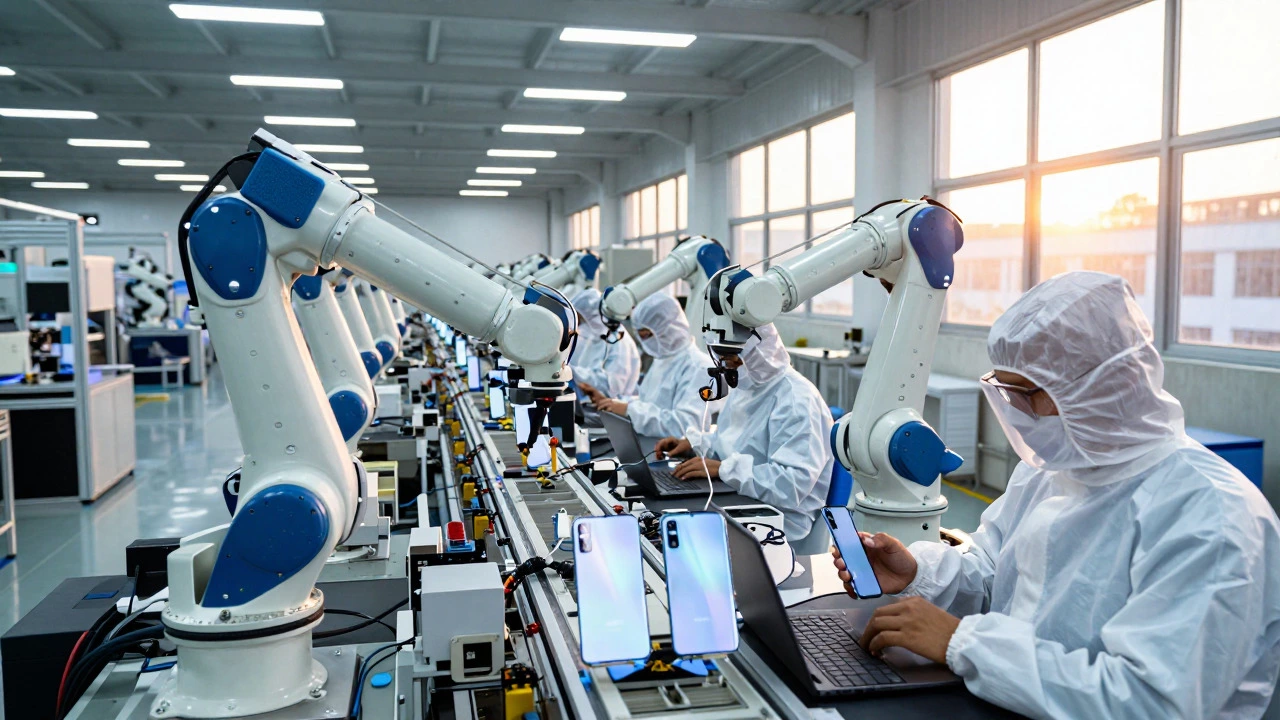
Consumer Electronics is the largest segment by revenue, encompassing smartphones, laptops, tablets, and wearables. In 2025, smartphone production reached approximately 650 million units annually. This includes both finished devices and complete built-up units (CBUs) imported for final assembly. Major manufacturers like Apple, Samsung, Xiaomi, and OnePlus operate large-scale facilities in Noida, Chennai, and Sriperumbudur. The shift from CBU imports to complete kit imports (CKD) has increased local value addition by an estimated 25% compared to 2020 levels.
Home Appliances is a rapidly expanding category driven by rising urban incomes and rural electrification. Production of air conditioners, refrigerators, washing machines, and televisions crossed the 50 million unit mark in 2025. Companies like LG, Whirlpool, and Voltas have expanded capacity significantly. Notably, the share of locally sourced components in these products has risen from 35% in 2020 to over 55% in 2025, indicating deeper integration into the domestic supply chain.
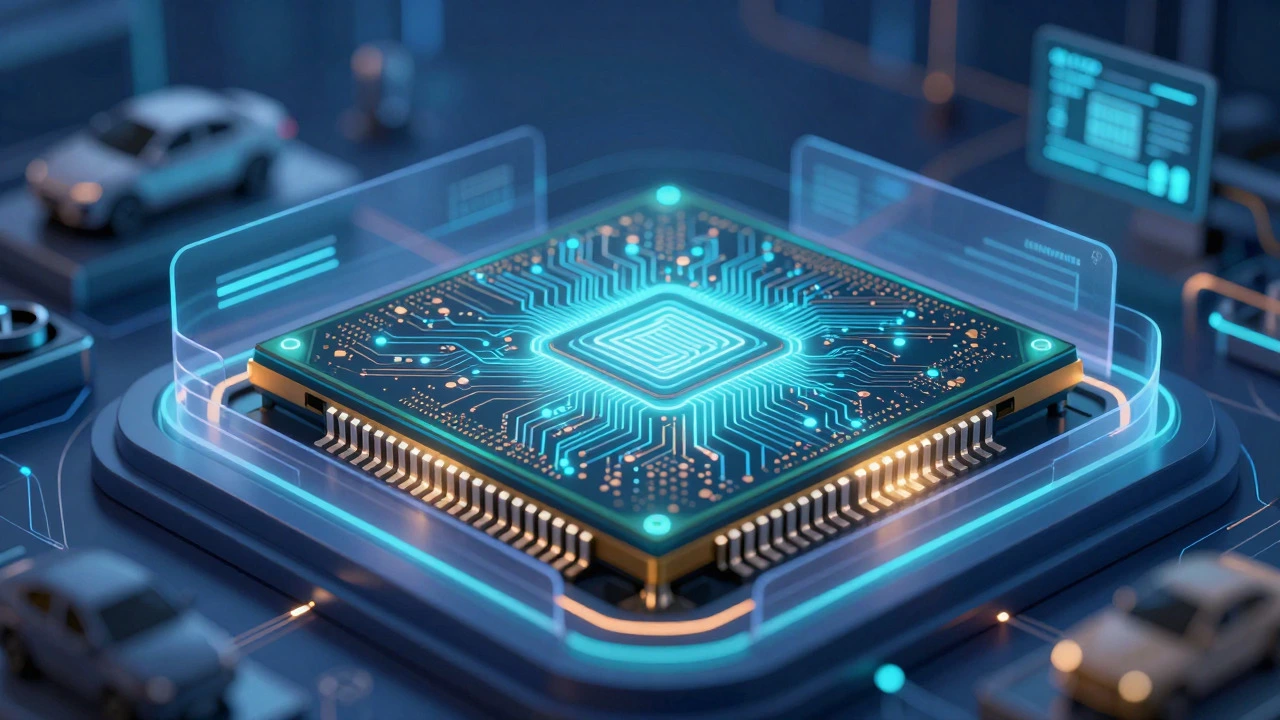
Semiconductors and Components is the strategic frontier, moving beyond assembly to wafer fabrication and advanced packaging. While historically negligible, this sector saw its first commercial-scale output in 2025. The focus is initially on mature-node chips (130nm and above) used in automotive, industrial, and IoT applications. By 2026, India aims to produce 10 billion discrete components and 500 million ICs domestically, reducing import dependence which currently stands at over 90% for high-end chips.
| Category | Production Volume | Estimated Value (USD) | Local Content % | Growth YoY |
|---|---|---|---|---|
| Smartphones | ~650 Million Units | $75 Billion | 70% | 12% |
| Home Appliances | ~50 Million Units | $35 Billion | 55% | 18% |
| Laptops & Tablets | ~45 Million Units | $25 Billion | 65% | 15% |
| Semiconductors | Pilot Scale | $2 Billion | 100% (Domestic Fab) | N/A (New) |
| Automotive Electronics | ~30 Million Vehicles | $20 Billion | 45% | 20% |
The Role of Policy: How the PLI Scheme Shaped Output
You can’t discuss India’s electronics production without mentioning the Production Linked Incentive (PLI) Scheme, launched in 2020. This policy was designed to incentivize manufacturing by offering cash incentives based on incremental sales performance. For the electronics sector, the scheme covers 14 product categories, including smartphones, solar modules, display panels, and specialty chemicals.
The impact has been tangible. Since inception, the PLI scheme has attracted over $50 billion in confirmed investments. But more importantly, it changed the behavior of global brands. Before 2020, most smartphones sold in India were imported as finished goods. Now, the majority are assembled within the country using local labor and increasing local parts. This shift wasn't accidental; it was engineered through tax breaks, duty exemptions on capital goods, and guaranteed minimum production targets.
Critics argue that the "local content" requirement is still too low for high-value components like processors and memory chips. However, proponents point out that building a full ecosystem takes time. The current strategy focuses on capturing the assembly and testing value first, while simultaneously investing in upstream capabilities like silicon carbide substrates and printed circuit boards (PCBs). This phased approach has allowed India to become the second-largest smartphone producer globally, right after China.
Regional Hotspots: Where the Factories Are Located
Electronics manufacturing in India is not evenly distributed. Three states dominate the landscape, each with specific strengths that drive their output levels.
Tamil Nadu is the undisputed leader in terms of variety and scale. The state hosts major plants for Apple, Samsung, and Foxconn in the Chennai-Sriperumbudur corridor. Its advantage lies in robust infrastructure, a skilled workforce, and proximity to ports for efficient logistics. Tamil Nadu accounts for nearly 35% of the nation’s total electronics production value.
Karnataka, centered around Bengaluru, is the hub for IT-enabled manufacturing and semiconductor R&D. While it produces fewer consumer devices than Tamil Nadu, it leads in software-defined hardware, embedded systems, and chip design. The presence of global tech giants’ engineering centers here creates a talent pool that supports advanced manufacturing processes.
Gujarat has emerged as a powerhouse for home appliances and automotive electronics. The state’s strong industrial base and favorable business environment have attracted companies like Daikin, Godrej, and Bosch. Additionally, Gujarat is positioning itself as a future hub for battery manufacturing, which is closely linked to the electronics supply chain for electric vehicles.
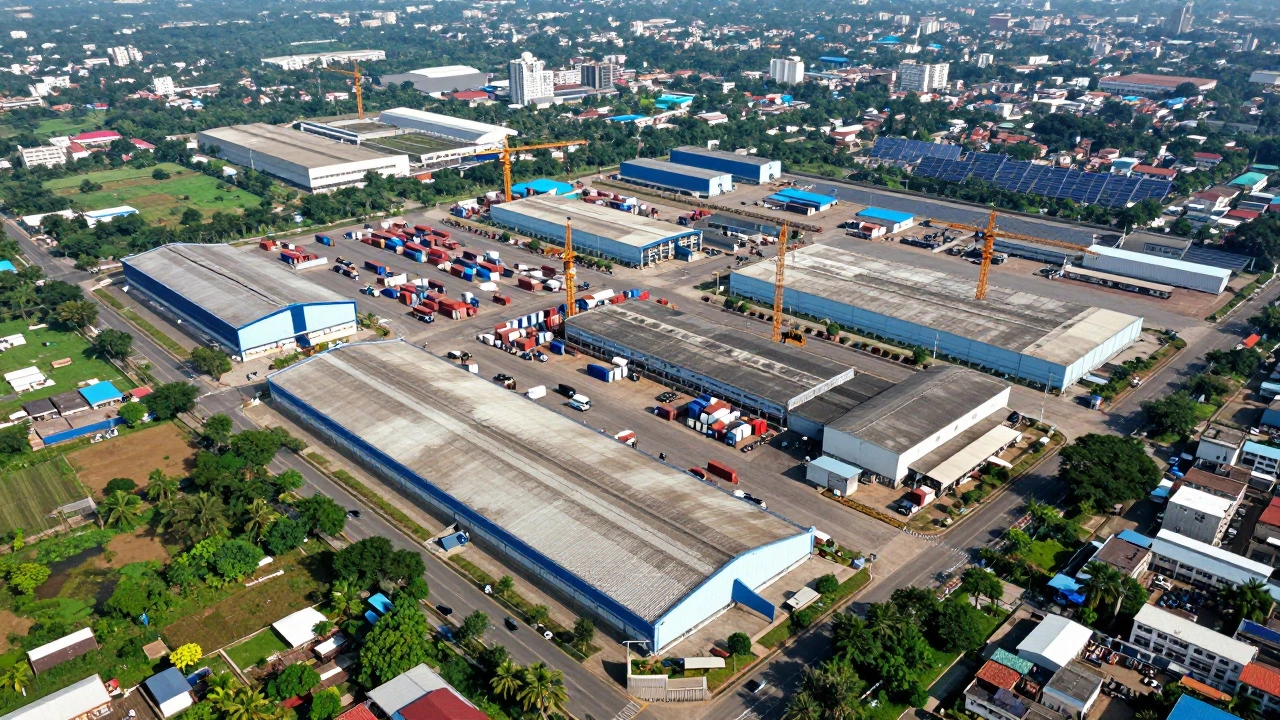
Other states like Uttar Pradesh (Noida/Greater Noida) and Maharashtra (Pune/Nashik) also contribute significantly, particularly in laptop assembly and component manufacturing. The government’s push to set up new Special Economic Zones (SEZs) in these regions aims to decentralize production and reduce logistical bottlenecks.
Challenges and Future Trajectory
Despite the impressive growth, several challenges remain. The biggest hurdle is the reliance on imported high-end components. While India assembles phones, the processors, cameras, and displays largely come from South Korea, Japan, and China. Reducing this dependency requires massive investment in semiconductor fabs and display panel lines, which are capital-intensive and technically complex.
Energy costs and power reliability are also concerns. Electronics manufacturing is energy-intensive, and fluctuations in power prices can affect profitability. To address this, many factories are now co-locating with renewable energy sources, such as solar parks in Rajasthan and Gujarat, to stabilize long-term costs.
Looking ahead, the next phase of growth will be driven by three factors: the ramp-up of semiconductor production, the expansion of EV-related electronics, and the rise of smart city infrastructure. By 2030, industry analysts project that India could reach $300 billion in electronics production, potentially overtaking Germany and France to become the third-largest producer globally. This trajectory depends on continued policy support, foreign direct investment, and the successful scaling of domestic component suppliers.
Frequently Asked Questions
Is India the largest electronics producer in the world?
No, China remains the largest producer, accounting for roughly 60-65% of global electronics output. However, India is the second-largest producer and is growing faster than any other major economy. India’s share of global production is expected to increase from 8% in 2024 to 12-15% by 2030.
What is the main product driving India's electronics exports?
Smartphones are the primary driver, contributing over 40% of total electronics export value. Other significant contributors include home appliances, laptops, and increasingly, automotive electronics. The export destination mix is dominated by the US, UK, and EU markets.
How does the PLI scheme work for electronics manufacturers?
The PLI scheme provides a cash incentive of 4-6% on incremental sales over a base year for seven years. Companies must meet minimum annual production targets to qualify. The incentive is paid in tranches based on verified sales data, encouraging sustained manufacturing activity rather than one-off spikes.
Are semiconductors being manufactured in India yet?
Yes, but at a pilot and early commercial stage. The first dedicated fab in Dholera, Gujarat, began trial runs in late 2025. It focuses on mature-node chips (130nm and above) for automotive and industrial use. Mass production of advanced logic chips (below 28nm) is not expected before 2028-2030.
Which cities have the highest concentration of electronics factories?
Chennai and its surrounding areas (Sriperumbudur, Oragadam) have the highest density of large-scale assembly plants. Noida and Greater Noida in Uttar Pradesh are major hubs for laptop and component manufacturing. Pune and Nagpur in Maharashtra are growing centers for automotive electronics and battery production.