PLI Scheme Incentive Calculator
Electronics
Mobiles, Laptops
~4% RatePharmaceuticals
APIs, Devices
~5% RateAutomobiles
EVs, Components
~6% RateTextiles
High-value Fabrics
~4.5% RateIncentive Analysis Report
Estimated Total Incentive Payout
₹ 0
Over the incentive periodStrategic Impact Summary:
- This incentive lowers your break-even point by reducing effective operational costs.
- Aligns with Atmanirbhar Bharat goals of building indigenous capacity.
- Creates opportunities for local SME suppliers to join your ecosystem.
- Enhances supply chain resilience against global disruptions.
Supply chains are fragile. If you were paying attention to global news between 2020 and 2023, you saw exactly what happens when a single bottleneck snaps. Ports clogged up. Ships sat idle. Factories ran out of parts. For decades, many nations operated on a simple rule: buy from whoever is cheapest, regardless of where they are located. That era ended abruptly. The question isn't just which policy changed things; it's why the shift was so sudden and so permanent.
The primary driver behind the surge in domestic manufacturing needs is not a single law, but a coordinated strategy of incentives and security mandates. In the United States, this looks like the Inflation Reduction Act and the CHIPS and Science Act, which tie massive subsidies to local production. In India, it is the Production Linked Incentive (PLI) scheme under the broader umbrella of Atmanirbhar Bharat (Self-Reliant India). These policies share a common goal: reduce dependency on foreign supply chains by making homegrown production financially irresistible and strategically mandatory.
The End of Globalization as We Knew It
For thirty years, the dominant economic model was hyper-globalization. Companies moved factories to wherever labor was cheapest. This worked until it didn't. The pandemic exposed a critical flaw: efficiency without resilience is a liability. When borders closed, efficient supply chains became broken ones.
Government policymakers realized that relying on a single country for critical goods-whether semiconductors, pharmaceuticals, or rare earth minerals-was a national security risk. This shift in mindset is often called "friend-shoring" or "near-shoring." Instead of looking at the world map for the lowest cost, governments started looking at their neighbors or their own backyards for reliability.
This geopolitical tension forced a rethink. It wasn't enough to just encourage manufacturing; governments had to actively build it. The old way of doing business relied on open markets. The new way relies on strategic autonomy. You can't have autonomy if you don't make the stuff yourself.
Understanding the Production Linked Incentive (PLI) Scheme
If you are asking specifically about recent Indian policy, the answer points directly to the Production Linked Incentive (PLI) scheme. Launched in 2020, this program offers financial incentives to companies based on the incremental sales of products manufactured in India. It’s not a handout; it’s a performance-based reward.
Here is how it works in practice. A company agrees to set up or expand a factory in India. Over a period of five to seven years, if they increase their production value above a baseline, the government pays them a percentage of that growth. The rates vary by sector, typically ranging from 4% to 6%. This direct cash infusion lowers the break-even point for new factories.
The PLI scheme targets specific high-impact sectors:
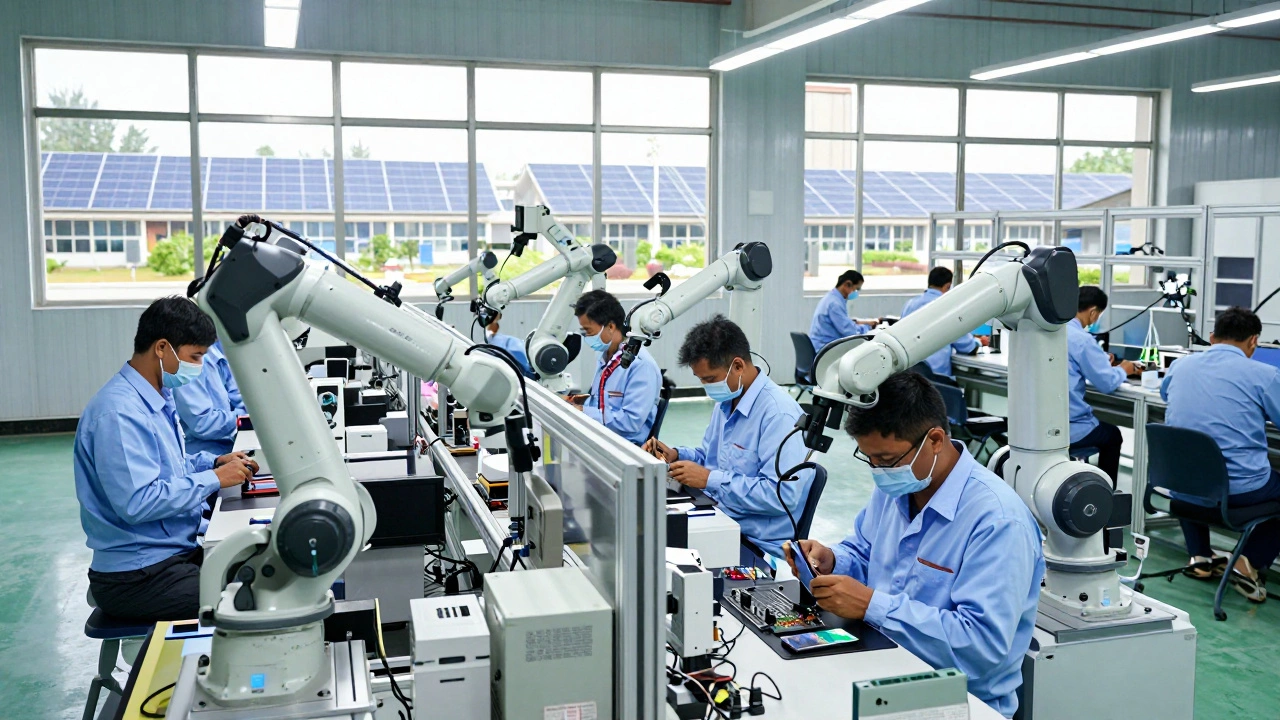
- Electronics: Mobile phones, laptops, and telecom towers. This has turned India into a major global hub for smartphone assembly.
- Pharmaceuticals: Active Pharmaceutical Ingredients (APIs) and medical devices. Previously, India imported most raw materials for drugs from China.
- Automobiles: Electric vehicles (EVs) and auto components.
- Textiles: High-value fabrics and technical textiles.
- Solar Modules: Photovoltaic cells to support renewable energy goals.
By targeting these specific areas, the policy doesn't just boost GDP; it builds capacity in sectors that were previously import-heavy. It forces multinational corporations to choose: stay out and lose market share, or invest locally and get subsidized growth.
The Role of Make in India and Atmanirbhar Bharat
The PLI scheme didn't appear in a vacuum. It sits on top of two larger frameworks: Make in India and Atmanirbhar Bharat.
Make in India, launched in 2014, focused on ease of doing business. It aimed to simplify regulations, improve infrastructure, and attract foreign direct investment (FDI). Think of it as clearing the runway. But a clear runway doesn't guarantee planes will land. That’s where Atmanirbhar Bharat, introduced during the pandemic, came in. It shifted the focus from just inviting foreign capital to building indigenous capability.
Atmanirbhar Bharat means "self-reliant." It acknowledges that while foreign investment is good, a nation must have its own base of skilled workers, suppliers, and technology providers. This philosophy led to stricter norms on public procurement. Government agencies are now encouraged-or sometimes required-to buy from domestic manufacturers first. This creates a guaranteed customer base for new local factories.

Global Parallels: The US and EU Approach
You aren't alone in this shift. Look at the United States. The CHIPS and Science Act allocated roughly $52 billion to boost domestic semiconductor manufacturing. Why? Because the US realized it couldn't rely on Taiwan or South Korea for chips essential to everything from iPhones to fighter jets. Similarly, the Inflation Reduction Act provides tax credits for electric vehicles only if certain percentages of battery components are sourced from North America or free-trade partners.
The European Union has followed suit with its Green Deal Industrial Plan. They want to secure supply chains for green technologies like wind turbines and batteries. The logic is identical: climate change requires rapid scaling of clean tech, and you can't scale if your suppliers are vulnerable to geopolitical shocks.
This global trend confirms that the push for domestic manufacturing is no longer about protectionism in the old sense. It’s about supply chain security. Every major economy is trying to keep critical production within its sphere of influence.
| Policy Name | Country | Primary Mechanism | Key Sectors Targeted |
|---|---|---|---|
| PLI Scheme | India | Cash incentive on incremental sales | Electronics, Pharma, Auto, Textiles |
| CHIPS Act | USA | Grants and loans for R&D/factories | Semiconductors |
| Inflation Reduction Act | USA | Tax credits for local sourcing | EVs, Clean Energy |
| Green Deal Industrial Plan | EU | Regulatory easing & funding access | Wind, Solar, Batteries |
Impact on Small and Medium Enterprises (SMEs)
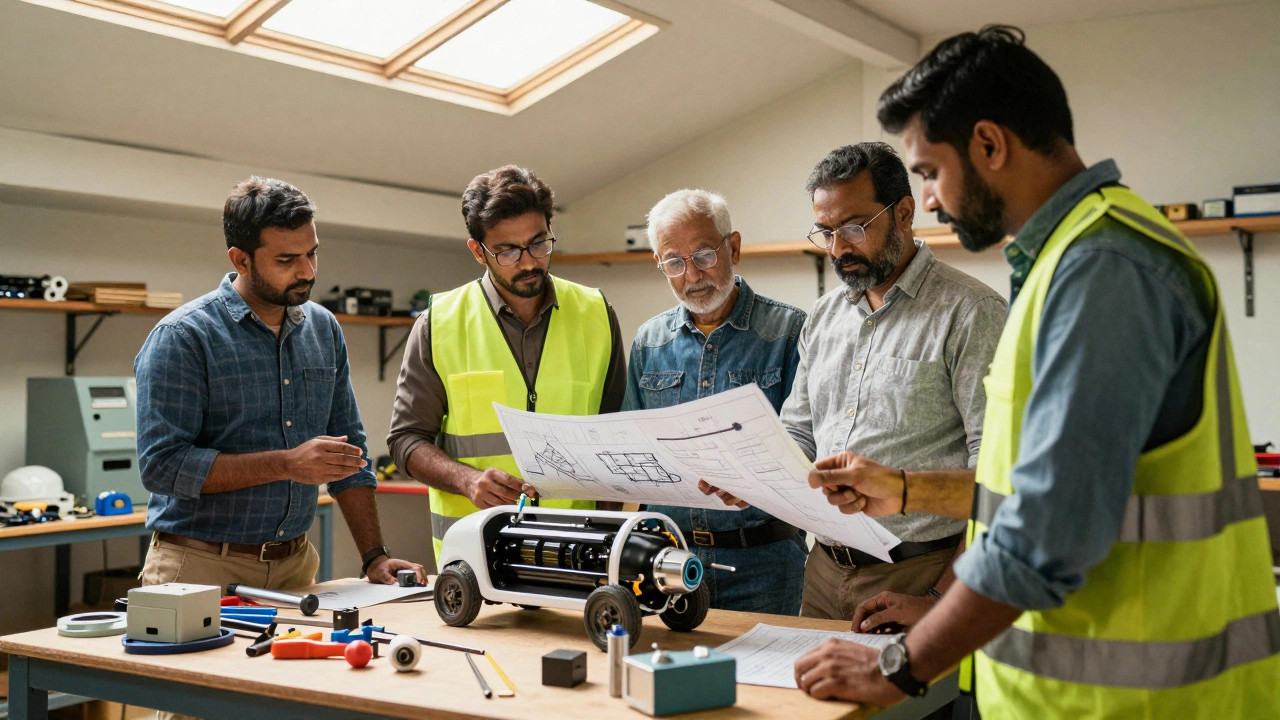
Big multinationals get the headlines, but the real engine of manufacturing is the small and medium enterprise (SME). Policies like PLI indirectly benefit SMEs by creating ecosystems. When a large company sets up a plant to qualify for incentives, it needs local suppliers for packaging, logistics, and components.
However, there is a catch. Accessing these benefits often requires significant upfront capital and compliance capabilities. Smaller players might struggle to meet the stringent quality standards demanded by large anchor tenants. To address this, governments are introducing schemes like the Credit Guarantee Fund to help SMEs get loans without collateral. The idea is to weave smaller businesses into the larger domestic supply chain.
If you are an SME owner, the opportunity lies in becoming a specialized supplier. Don't try to compete with giants on volume. Compete on niche quality, speed, and flexibility. Local manufacturers can respond faster to design changes than overseas suppliers. That agility is your selling point.
Challenges and Realities
Policies create intent, but execution determines success. Building a robust domestic manufacturing base takes time. You can't legislate expertise overnight. Skilled labor shortages remain a hurdle. Infrastructure gaps, such as reliable power and efficient ports, can erode the benefits of financial incentives.
There is also the issue of cost. Domestic production is often more expensive initially due to higher labor costs and less mature supply chains compared to established hubs like China. Governments accept this trade-off because they value security over short-term savings. Consumers may see slightly higher prices in the short term, but the long-term stability is worth it.
Another challenge is global competition. As other countries offer similar incentives, multinational companies play one government against another. This "subsidy race" can lead to inefficiencies. Policymakers must ensure that incentives drive genuine innovation and job creation, not just paper profits.
Future Outlook: What Comes Next?
The trend toward domestic manufacturing is here to stay. We are moving from a just-in-time model to a just-in-case model. Future policies will likely focus on digital integration. Smart factories using AI and IoT will be favored. Sustainability will also become a stricter requirement. You won't just need to make it locally; you'll need to make it cleanly.
For businesses, the message is clear. Align with national priorities. Understand the incentive structures. Build relationships with local suppliers. The era of passive globalization is over. The future belongs to those who build resilient, localized supply chains.
Which specific government policy increased the need for domestic manufacturing in India?
The Production Linked Incentive (PLI) scheme is the primary policy driving this shift. It offers financial rewards to companies that increase their production value in India, targeting sectors like electronics, pharmaceuticals, and automobiles. It operates under the broader framework of Atmanirbhar Bharat.
How does the PLI scheme work?
PLI provides a percentage-based cash incentive on the incremental sales of products manufactured in India over a baseline year. Companies must meet specific investment and production targets to qualify. The incentive rate varies by sector, typically between 4% and 6%.
Why are governments shifting away from global supply chains?
Geopolitical tensions and pandemic disruptions revealed the risks of over-reliance on foreign suppliers. Governments now prioritize supply chain security and resilience, leading to policies that encourage near-shoring and friend-shoring of critical industries.
What is the difference between Make in India and Atmanirbhar Bharat?
Make in India focuses on attracting foreign investment and improving the ease of doing business. Atmanirbhar Bharat emphasizes self-reliance, aiming to build indigenous capacity and reduce dependency on imports through stronger domestic supply chains and public procurement preferences.
How do these policies affect small businesses?
While large corporations receive direct incentives, small businesses benefit from the resulting ecosystem. As big firms set up local plants, they create demand for local suppliers. However, SMEs may face challenges in meeting compliance standards and accessing capital, prompting additional support schemes.