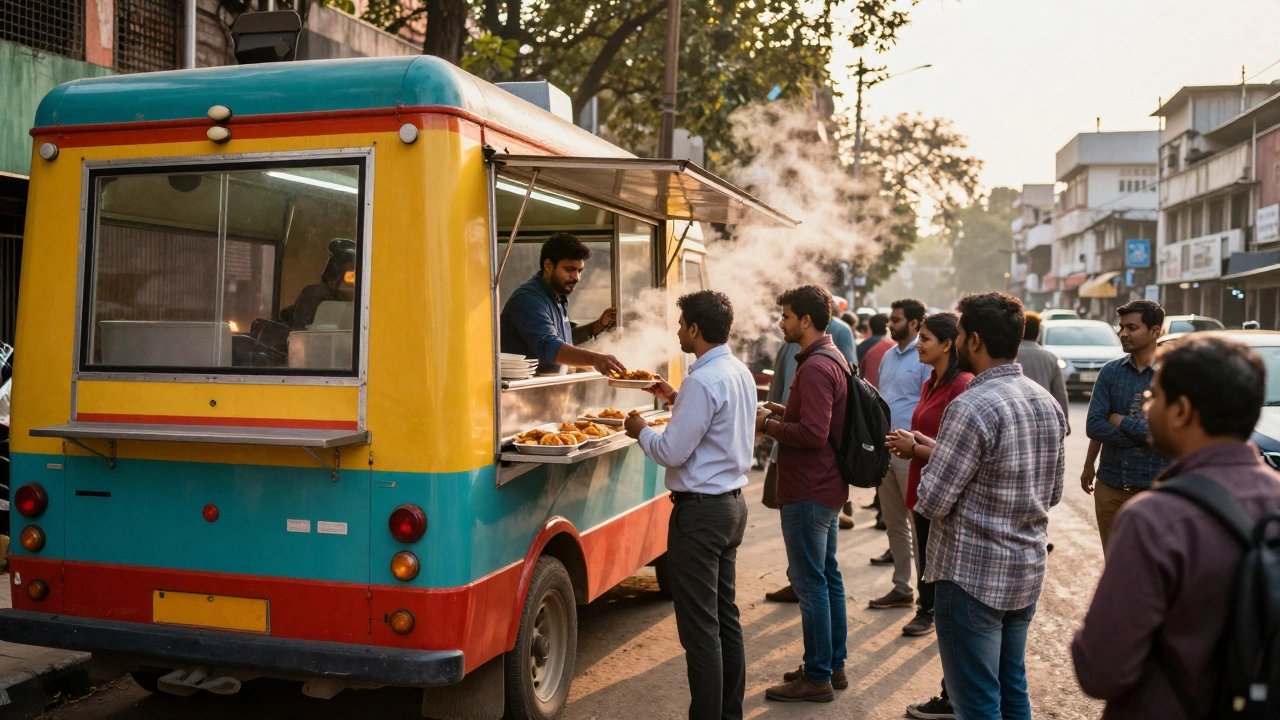
Food Truck Daily Profit Calculator
Enter Your Estimates
Financial Breakdown
- Gross Revenue $0.00
- Less COGS (30%) -$0.00
- Less Labor (25%) -$0.00
- Less Fixed Costs -$0.00
- Net Daily Profit $0.00
Assuming 20 working days a month, your estimated monthly take-home pay is $0.00.
You’ve seen them parked on corners, serving everything from gourmet tacos to artisanal ice cream. They look like a fun side hustle, maybe even a ticket to financial freedom. But here is the hard truth: most people who ask how much do most food trucks make a day are expecting a single number. That number doesn’t exist because the reality is messy, volatile, and highly dependent on location, menu, and operational efficiency.
If you are thinking about entering the mobile food industry, you need to move past the romantic idea of driving around in a van and counting cash. You need to understand the math. The average food truck generates between $500 and $2,000 in gross revenue per day. However, that is not money in your pocket. It is money that must cover fuel, ingredients, labor, permits, and vehicle maintenance before you see a single cent of profit.
The Daily Revenue Reality Check
Let’s break down what those daily numbers actually look like in practice. A small, solo-operated cart selling coffee or simple snacks might hit $300 to $600 on a good day. This model relies on high volume and low overhead. On the other end of the spectrum, a fully staffed, high-end food truck located in a dense urban center during lunch rush can easily clear $2,500 to $4,000 in a single shift. But these are outliers, not the norm.
For the vast majority of operators, the sweet spot for daily gross sales sits between $800 and $1,500. To hit this target, you typically need to sell 40 to 80 items depending on your average ticket price. If your average customer spends $12, you need roughly 70 customers a day to reach $840. Does your location have 70 hungry people within walking distance at noon? If the answer is no, your revenue ceiling drops significantly.
It is also crucial to distinguish between gross revenue and net profit. Gross revenue is the total cash collected. Net profit is what remains after all expenses. In the food service industry, a healthy net profit margin usually ranges from 6% to 9%. For a food truck, it can be slightly higher due to lower rent costs compared to brick-and-mortar restaurants, often landing between 10% and 15% if managed tightly. So, if you make $1,000 a day, your actual take-home pay before taxes might only be $100 to $150.
Key Factors That Swing Your Income
Why does one truck make $500 while another makes $2,000 in the same city? It comes down to three primary drivers: location, menu complexity, and operating hours.
| Factor | Low Impact Scenario | High Impact Scenario |
|---|---|---|
| Location | Suburban office park (low foot traffic) | Downtown business district or festival site |
| Menu Complexity | Simple assembly (burgers, wraps) - fast turnover | Complex cooking (sushi, pasta) - slower service, higher price point |
| Operating Hours | Lunch rush only (11 AM - 2 PM) | Lunch and Dinner + Weekend events (10 AM - 10 PM) |
| Staffing | Solo operator (higher owner labor cost) | Team of 3-4 (higher wage bill, faster service) |
Location is king. A truck parked outside a major tech campus will outperform one parked in a quiet residential neighborhood by a factor of ten. Foot traffic dictates potential customers. You cannot sell to people who aren’t there. Many successful operators rotate locations based on time of day-working the lunch crowd downtown and moving to a bar district for dinner service.
Menu complexity affects both speed and price. Simple menus allow you to serve more customers in less time. If you spend five minutes making each order, you cap your daily output at roughly 100 orders during a four-hour window. If you can serve an order in two minutes, that capacity doubles. Additionally, complex menus often require more expensive equipment and specialized ingredients, which squeezes your profit margins.
Understanding the Cost Structure
To know how much you keep, you must first know how much you spend. Food truck owners often underestimate their fixed and variable costs. Here is where your daily revenue goes:
- Cost of Goods Sold (COGS): This includes ingredients, packaging, and condiments. Industry standard is 28% to 35% of gross sales. If you sell $1,000 worth of food, $300 goes back into buying that food.
- Labor: Unless you are working every hour alone, you will pay staff. Wages typically consume 20% to 30% of revenue. Even if you work yourself, you should account for this as an opportunity cost.
- Fuel and Maintenance: Food trucks run generators and drive miles. Gasoline, diesel, propane, and routine repairs can eat up $100 to $300 a week, depending on usage.
- Permits and Licensing: Health department fees, business licenses, and parking permits vary wildly by city but are non-negotiable annual or monthly costs.
- Insurance: Commercial liability insurance is essential. Expect to pay anywhere from $1,500 to $3,000 annually.
- Marketing and Software: Social media ads, website hosting, and POS systems cost money. Don’t ignore these; visibility drives sales.
When you stack these costs against your daily revenue, the picture becomes clearer. A truck making $1,500 a day with 35% COGS ($525), 25% labor ($375), and $100 in miscellaneous fixed costs (fuel, permits amortized) leaves $500 in gross profit. From that, you subtract loan payments on the truck itself and taxes. What’s left is your true income.
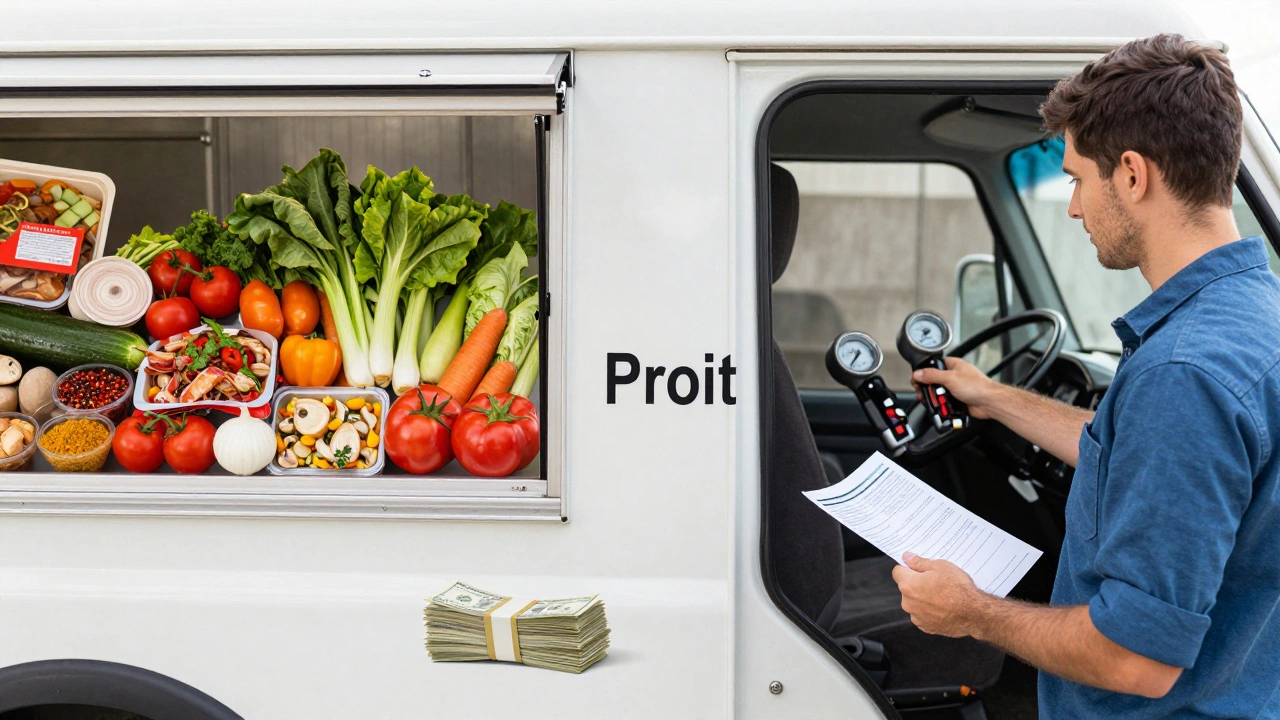
Profit Margins vs. Brick-and-Mortar Restaurants
One reason people flock to food trucks is the perceived lower barrier to entry. Compared to opening a sit-down restaurant, which can cost $250,000 to $500,000+, a used food truck might set you back $50,000 to $100,000. This lower initial investment means you can break even faster.
However, the margins are tighter in some areas. You don’t have the benefit of alcohol sales, which often carry the highest profit margins in traditional dining. Without a liquor license, your beverage options are limited to sodas, juices, or coffee, which have lower markups than wine or beer. To compensate, many food trucks focus on high-margin sides or upsells, like adding cheese, bacon, or premium sauces.
Another advantage is flexibility. If a location isn’t performing, you can move tomorrow. A brick-and-mortar restaurant is stuck with its lease. This agility allows food trucks to chase demand, attending festivals, corporate events, and private parties where they can charge premium prices and guarantee minimum payouts.
Strategies to Maximize Daily Earnings
If you want to push your daily revenue from $800 to $2,000, you need to optimize your operations. Here are proven tactics used by top-performing mobile vendors:
- Diversify Revenue Streams: Don’t rely solely on walk-up traffic. Catering for corporate lunches or weddings can provide guaranteed income. One large catering job can equal a week’s worth of street sales.
- Optimize Menu Engineering: Identify your highest-margin items and feature them prominently. Remove slow-moving, low-profit dishes. Keep the menu short to reduce waste and speed up service.
- Leverage Social Media: Post your location daily. Use Instagram Stories and Twitter to announce when you’re open and where you’re parked. Engage with followers to build a loyal following that seeks you out.
- Extend Operating Hours: If lunch is profitable, consider staying open for dinner. Partner with local bars to become their designated food provider. Nighttime events often have less competition.
- Control Waste Rigorously: Track every ingredient. Over-ordering leads to spoilage, which directly hits your bottom line. Use inventory management software to predict needs based on historical sales data.
Technology plays a huge role here. Modern POS systems integrate with inventory tracking, helping you see exactly how much profit each dish generates. This data-driven approach prevents guesswork and ensures you’re focusing on what sells.

Seasonality and Market Fluctuations
Your daily earnings won’t be consistent year-round. Summer months typically see a surge in outdoor dining and festival activity, boosting revenues by 20% to 30%. Winter can be brutal, especially in colder climates where foot traffic dwindles. Smart operators plan for this by saving profits during peak seasons to cover lean months or by shifting focus to indoor catering opportunities.
Economic conditions also matter. In times of inflation, ingredient costs rise, squeezing margins if you can’t pass those costs to consumers. Conversely, during economic downturns, cheaper alternatives like food trucks may see increased demand as people cut back on expensive restaurant meals. Understanding these macro trends helps you adjust pricing and promotions proactively.
Is It Worth the Hustle?
So, back to the original question: How much do most food trucks make a day? Most make enough to cover their costs and provide a modest living, but few get rich quick. Success requires treating it like a serious business, not a hobby. You need to manage finances meticulously, market aggressively, and deliver consistent quality.
If you can maintain an average of $1,200 in daily sales with a 12% net profit margin, that’s $144 a day. Over 20 working days a month, that’s $2,880 in personal income. It’s not millions, but it’s sustainable. For many, the freedom of being your own boss and the passion for food make the grind worthwhile. Just go in with your eyes open, armed with realistic expectations and a solid plan.
What is the average monthly income for a food truck owner?
The average monthly income varies widely, but most food truck owners earn between $5,000 and $15,000 in net profit per month. This assumes operating 20-22 days a month with average daily sales of $1,000-$1,500 and a net profit margin of 10-15%. Top performers in high-traffic urban areas can exceed $20,000 monthly.
Do food trucks make more money than restaurants?
Food trucks generally have lower overhead costs than brick-and-mortar restaurants, leading to potentially higher profit margins relative to revenue. However, restaurants often have higher total revenue due to larger seating capacity and alcohol sales. Food trucks offer faster break-even periods and greater flexibility, making them attractive for startups with limited capital.
How many customers does a food truck need per day to be profitable?
To be profitable, a food truck typically needs 40-80 customers per day, depending on the average ticket price. If your average sale is $12, you need roughly 70 customers to generate $840 in revenue. With a 30% COGS and 25% labor cost, this covers expenses and leaves room for profit. Higher-priced menus require fewer customers to reach the same revenue threshold.
What are the biggest expenses for a food truck?
The biggest expenses are Cost of Goods Sold (ingredients and packaging), labor wages, fuel and vehicle maintenance, permits and licenses, and insurance. COGS usually accounts for 28-35% of sales, while labor takes 20-30%. Fixed costs like permits and insurance are annual or monthly obligations that must be budgeted regardless of daily sales volume.
Can you make a full-time living from a food truck?
Yes, many food truck owners make a full-time living, but it requires significant effort and smart business practices. Earning a median household income is achievable with consistent daily sales of $1,000+ and tight cost control. Success depends on location, menu appeal, marketing, and operational efficiency. It is rarely a passive income stream and demands long hours, especially in the early years.