Small Manufacturing Startup Cost Calculator
Startup Cost Estimator
Estimated Total: $0
Starting a small scale manufacturing business doesn’t require millions. You don’t need a factory the size of a football field or a team of 50 workers. But you do need to know exactly where your money goes - and how to stretch every dollar. In 2026, across Australia, people are launching small manufacturing businesses with as little as $15,000. Some even begin under $10,000. The key? Starting small, smart, and focused.
What Exactly Counts as Small Scale Manufacturing?
Small scale manufacturing means producing goods in limited quantities, usually under 50 units per day, using basic machinery and local labor. It’s not about mass production. It’s about making something useful, reliable, and sellable - like custom metal brackets, organic soap bars, handmade furniture, small-batch jams, or recycled plastic containers. These aren’t just hobby projects. They’re real businesses that supply local shops, farmers markets, online stores, and even bigger companies looking for niche suppliers.
In Sydney, for example, one entrepreneur started a business making custom stainless steel kitchen fittings. She began in her garage with a used bench grinder, a welding torch, and a second-hand laser cutter she bought off Facebook Marketplace. Her first year’s revenue? $87,000. She didn’t need a loan. She used her savings and reinvested profits.
Where Does Your Money Actually Go?
Let’s break down the real costs - not the flashy estimates you see on blogs. Here’s what you’ll likely spend when starting small:
- Equipment: This is the biggest variable. A used industrial sewing machine? $1,200. A small CNC router? $3,500. A used hydraulic press? $2,000. Many beginners buy second-hand gear from auction sites or local workshops closing down. You can cut equipment costs by 60% just by shopping smart.
- Raw Materials: Don’t buy in bulk at first. Start with enough for your first 20-30 units. For soap makers, that’s $300 in oils, lye, and fragrances. For metal fabricators, it’s $500 in scrap steel and fasteners. Reuse, recycle, and partner with local businesses for offcuts - many are happy to give them away.
- Workspace: You don’t need to rent a warehouse. A garage, shed, or even a converted backyard studio works. In Sydney, a basic workshop lease runs $800-$1,500/month. But if you can use your own space, you save $9,600 a year. Just make sure it’s zoned for light manufacturing.
- Permits and Licensing: In Australia, you need an ABN (free), and if you’re selling food or cosmetics, you’ll need a food safety or cosmetic registration ($200-$400). Local council permits for noise or waste disposal? Usually under $300. Don’t skip this - getting fined once can wipe out your startup budget.
- Branding and Packaging: Simple custom labels, boxes, and stickers cost $500-$1,200. Skip the glossy brochures. Use Canva to design your own labels. Print them locally at a print shop - you’ll pay $0.20 per label instead of $1.50 from overseas suppliers.
- Online Sales Setup: A Shopify store costs $29/month. Add a domain name ($15/year) and a simple logo ($100 from Fiverr). Total? Under $500 for the first year. You don’t need a full website. Just a product page, payment system, and shipping labels.
Real-World Examples: What People Actually Spent
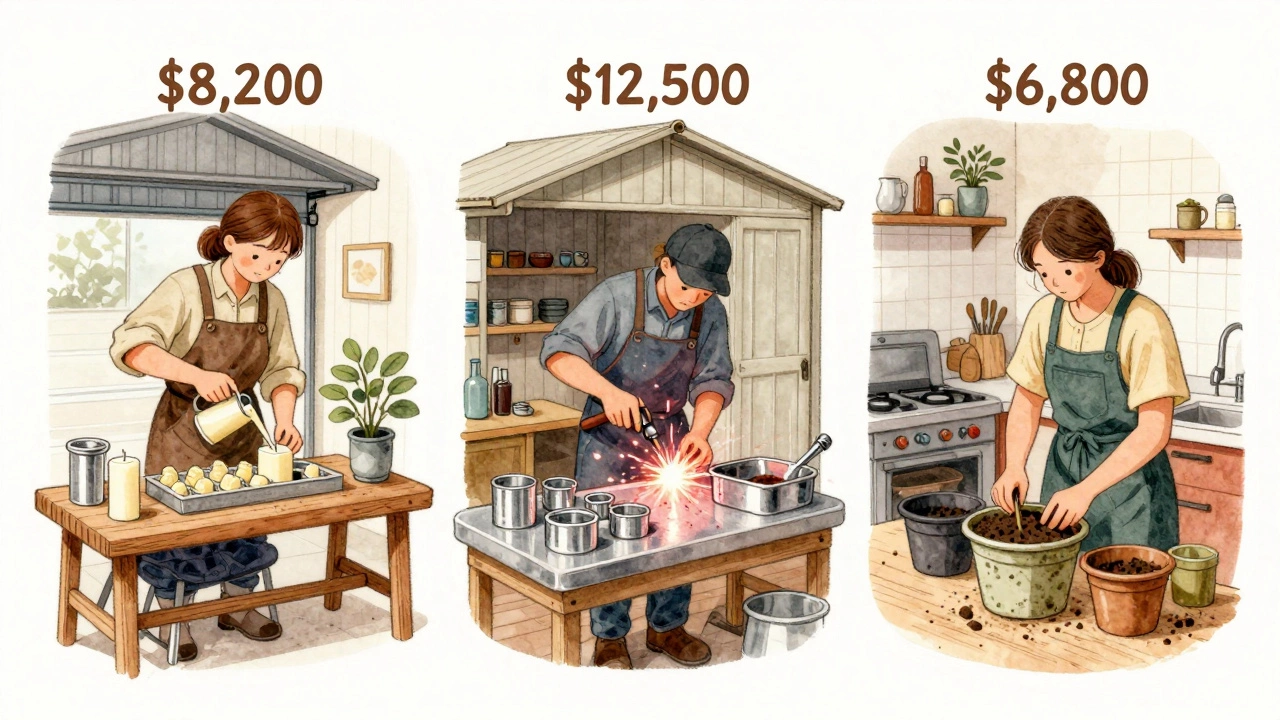
Here are three small manufacturing businesses in Australia that started lean:
- Emma, Sydney - Handmade beeswax candles: Spent $8,200. Equipment: $3,000 (used double boiler, melters, molds). Materials: $1,500. Packaging: $800. ABN and permits: $250. Website: $300. She sold her first 100 candles in two weeks. Revenue in Year 1: $24,000.
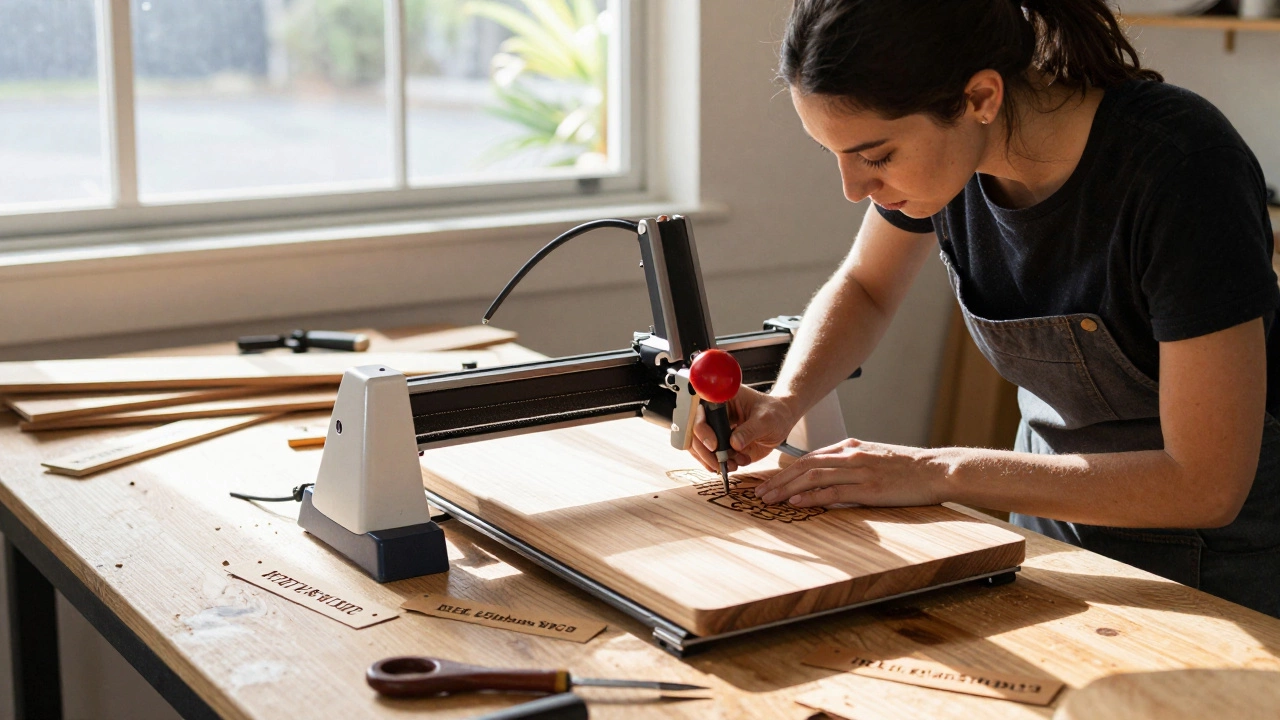
- Raj, Melbourne - Custom wooden cutting boards: Spent $12,500. Laser cutter (second-hand): $5,000. Wood supply: $2,000. Sanding equipment: $1,200. Website and branding: $1,000. He works out of his backyard shed. Now he supplies 12 local gourmet stores.
- Linh, Brisbane - Recycled plastic planters: Spent $6,800. Plastic shredder (used): $2,500. Molding press: $1,800. Raw plastic waste (collected from local recycling centers): $500. Packaging: $300. Website: $200. She sells to garden centers and schools. Year 1 profit: $17,500.
What You Can Skip (And Save Thousands)
Most people waste money on things they don’t need. Here’s what to avoid:
- Hiring staff right away: Do everything yourself for the first 6-12 months. You’ll learn the business inside out.
- Expensive marketing campaigns: Instagram and TikTok posts showing your process cost nothing. Post once a week. That’s enough.
- Buying new machinery: Used equipment is just as good. Check out MachineFinder or local classifieds. A 3-year-old CNC machine still runs like new.
- Over-packaging: Recycled paper, plain boxes, and handwritten thank-you notes build trust better than fancy boxes.
- Waiting for “perfect conditions”: There’s no perfect time. Start with what you have. You’ll refine as you go.
How to Get Started with Under $15,000
If you’re serious about starting small, here’s a step-by-step plan:
- Choose one product. Not three. Not five. One. Something you can make consistently, that people want, and that doesn’t require rare materials.
- Test it locally. Sell 10 units at a market, to friends, or on Facebook Marketplace. Get feedback. Adjust.
- Buy used equipment. Spend 30% of your budget here. Prioritize tools that directly make your product.
- Apply for local grants. Many councils in NSW and VIC offer small business startup grants up to $5,000 for manufacturers. Search “small business grant [your city]”.
- Set up a simple online store. Use Shopify or Etsy. Connect it to a local courier service like StarTrack or Sendle.
- Reinvest 70% of first profits. Buy better tools. Order more materials. Improve packaging. Don’t take money out until you’ve doubled your output.
Common Mistakes That Cost People Money
These are the traps most new makers fall into:
- Buying too much inventory: You don’t need 200 units ready to go. Sell first. Make later.
- Ignoring compliance: If you’re making food, cosmetics, or children’s products, regulations are strict. Skip the legal steps once, and you could lose everything.
- Not tracking expenses: Use a free app like Wave or QuickBooks Self-Employed. Track every cent. You’ll be surprised where the money goes.
- Trying to compete on price: Small manufacturers win on quality, uniqueness, and story - not being the cheapest.
Can You Start With Less Than $10,000?
Yes - if you’re smart. One woman in Adelaide started a business making herbal salves from plants she grew in her backyard. Her total startup cost? $4,300. She used her kitchen for production (with proper hygiene setup), bought a used double boiler for $400, and printed labels on her home printer. She sold 300 jars in 4 months. Her profit? $18,000.
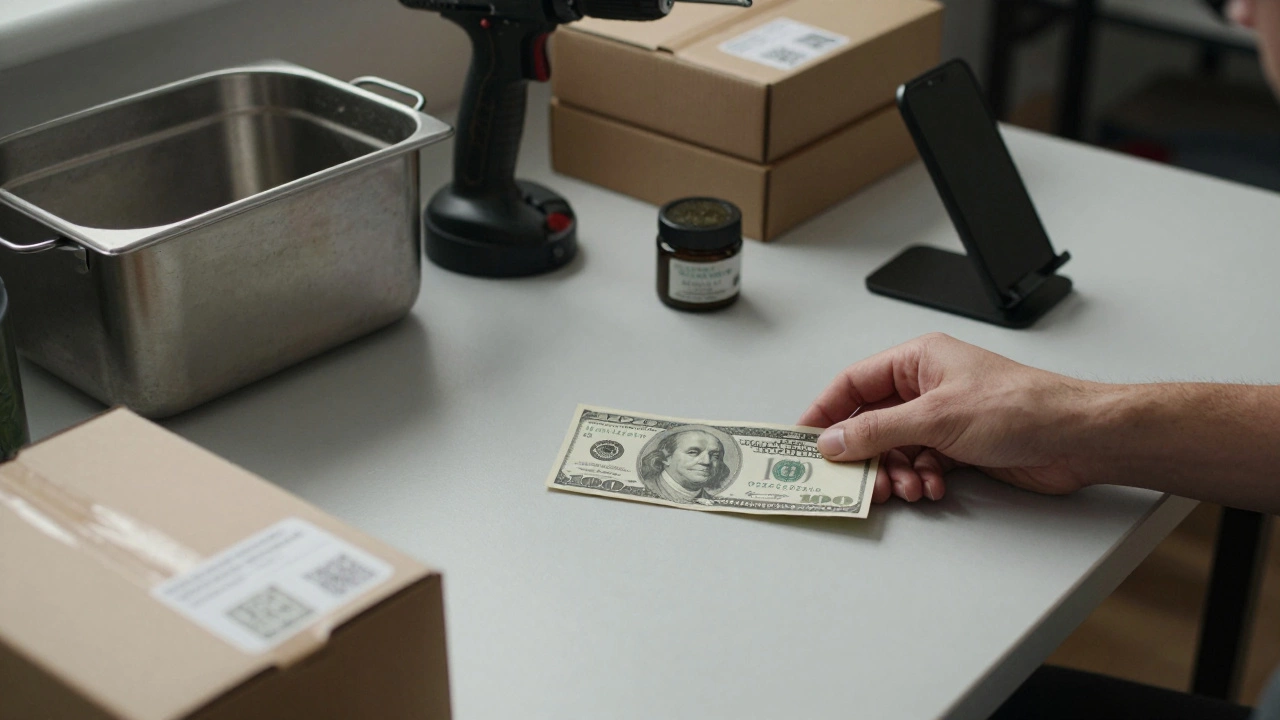
Another man in Perth turned scrap aluminum from local auto shops into custom phone stands. He used a hand drill, a file, and a polishing cloth. His tools cost $1,100. He sold 50 units on Etsy. Revenue: $7,500. He now has a waiting list.
You don’t need a big budget. You need a clear plan and the guts to start before you’re ready.
What Comes Next?
Once you hit $20,000 in annual revenue, you’ll start thinking about scaling: hiring a part-timer, buying a second machine, or applying for a small business loan. But that’s later. First, prove you can make something people will buy. That’s the real test.
Small scale manufacturing isn’t about how much money you have. It’s about how creatively you use what you do have. The most successful makers I’ve met didn’t start with resources - they started with curiosity, a workbench, and a stubborn refusal to wait.
How much does it cost to start a small manufacturing business in Australia?
Most small manufacturing businesses in Australia start between $8,000 and $20,000. You can begin under $10,000 if you use second-hand equipment, work from home, and avoid unnecessary expenses. The biggest costs are equipment, materials, permits, and basic online sales setup.
Do I need a business license to start small scale manufacturing?
Yes. You need an ABN (free to apply), and depending on your product, you may need additional permits. For example, food products require food safety registration ($200-$400). Cosmetics need NICNAS registration. Always check with your local council - they regulate noise, waste, and zoning for home-based manufacturing.
Can I start a manufacturing business from home?
Absolutely. Many small manufacturers in Australia operate from garages, sheds, or converted rooms. As long as you’re not causing excessive noise, pollution, or traffic, and your product is low-risk (like woodwork, soap, or metal parts), most councils allow it. Just confirm your zoning rules before you start.
What are the best low-cost manufacturing ideas for beginners?
Some of the easiest and cheapest to start include: handmade soap or candles, custom wooden items (cutting boards, shelves), recycled plastic products (planters, bins), small metal brackets or hardware, and printed textiles (tote bags, aprons). These require minimal equipment, low material costs, and have strong local demand.
Are there government grants for small manufacturers in Australia?
Yes. Many state and local councils offer grants up to $5,000 for small manufacturers. Programs like NSW’s Small Business Grants, VIC’s Manufacturing Growth Fund, and QLD’s Regional Business Support often fund equipment purchases, training, or product development. Search “[Your State] small business manufacturing grant” - you might be eligible.