
BOM vs MOM Assessment Tool
Select the statements that best describe your current manufacturing situation.
Analysis Result
Complete the assessment on the left to see whether your challenges align more with BOM or MOM concepts.
Imagine you are standing on a factory floor. One manager is holding a clipboard with a detailed list of every screw, wire, and circuit board needed to build a single product. Another manager is shouting orders to shift supervisors, tracking machine uptime, and ensuring quality checks happen before the next batch ships. These two managers represent the core tension in modern manufacturing: the static plan versus the dynamic execution.
This is the fundamental difference between BOM (Bill of Materials) and MOM (Manufacturing Operations Management). While they sound similar and both live within your manufacturing ecosystem, they serve entirely different purposes. Confusing them can lead to production bottlenecks, inventory waste, and missed deadlines. Let’s break down exactly what each one does, why you need both, and how they work together to keep your factory running smoothly.
What is a Bill of Materials (BOM)?
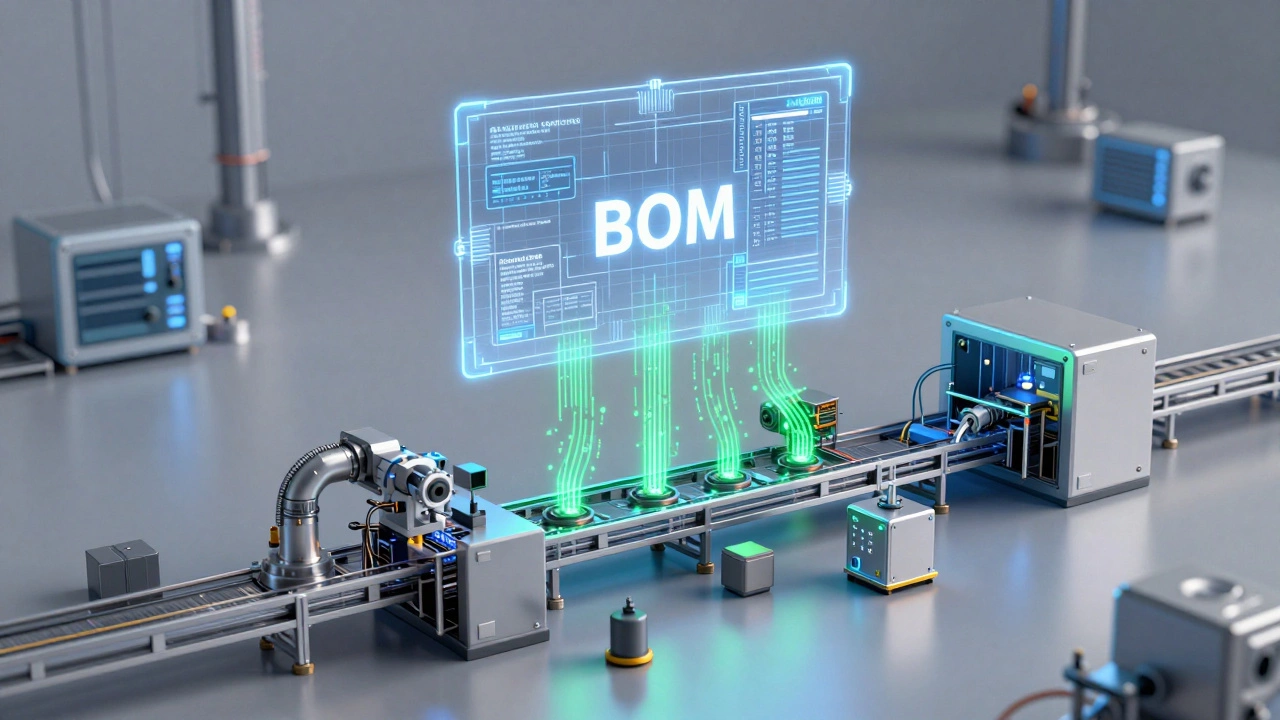
A Bill of Materials is essentially the recipe for your product. It is a comprehensive, structured list that details every raw material, assembly, sub-assembly, component, and part required to manufacture a finished good. If you were baking a cake, the BOM would be the list of ingredients: flour, sugar, eggs, and vanilla extract, along with the precise measurements for each.
Bill of Materials is a hierarchical document that defines the physical composition of a manufactured product, including all components, assemblies, and raw materials required for production.. It serves as the single source of truth for what goes into a product. Without an accurate BOM, procurement teams don’t know what to buy, engineers don’t know what to design, and production workers don’t know what to assemble.In a digital environment, this is often referred to as a digital BOM or eBOM (engineering BOM). It typically includes specific attributes for each item:
- Part Number: A unique identifier for each component.
- Description: What the part is.
- Quantity: How many of that part are needed per unit.
- Unit of Measure: Whether it’s counted by pieces, kilograms, or liters.
- Cost: The estimated or actual cost of the component.
- Supplier: Where the part is sourced from.
The BOM is relatively static. Once a product design is finalized, the BOM changes only when there is an engineering change order (ECO)-for example, if you decide to switch from plastic screws to steel ones to improve durability. Until that official change happens, the BOM remains constant.
What is Manufacturing Operations Management (MOM)?
If the BOM is the recipe, Manufacturing Operations Management is the suite of processes and software systems that oversee the daily execution of production activities, including scheduling, labor management, quality control, and maintenance.. MOM is not about *what* you are building; it is about *how* you are building it right now, today, on this specific line.
MOM encompasses the real-time data and workflows that happen on the shop floor. It bridges the gap between high-level enterprise planning (like ERP systems) and the actual machines and workers producing the goods. According to ISA-95 standards, which define the hierarchy of enterprise and control systems, MOM sits at Level 3, directly above the automated control systems (Level 2) and below the business planning systems (Level 4).
Key functions within a MOM system include:
- Production Scheduling: Assigning jobs to specific machines and shifts based on capacity and priority.
- Labor Management: Tracking who worked on what, for how long, and their skill certifications.
- Quality Management: Recording inspection results, defect rates, and non-conformance reports in real time.
- Maintenance Management: Monitoring equipment health and scheduling preventive maintenance to avoid downtime.
- Material Tracking: Consuming raw materials against work orders and tracking WIP (Work in Progress).
Unlike the BOM, MOM is highly dynamic. Data flows through it constantly. If a machine breaks down, the MOM system adjusts the schedule. If a quality check fails, the MOM system flags the batch for rework. It is the nervous system of the factory floor.
Core Differences: Static Plan vs. Dynamic Execution
To truly grasp the distinction, we need to look at how these two entities interact with time, data, and users. The BOM is a definition; MOM is an activity tracker.
| Feature | Bill of Materials (BOM) | Manufacturing Operations Management (MOM) |
|---|---|---|
| Primary Purpose | Defines product structure and composition | Manages daily production execution and efficiency |
| Data Nature | Static (changes only with engineering updates) | Dynamic (real-time operational data) |
| Key Users | Engineers, Procurement, Product Managers | Shop Floor Supervisors, Operators, Quality Inspectors |
| Time Horizon | Long-term (product lifecycle) | Short-term (shifts, days, weeks) |
| Output | List of parts and quantities | Production reports, yield metrics, OEE scores |
| Relationship to ERP | Often stored within ERP or PLM | Integrates with ERP to execute plans |
Consider a car manufacturer. The BOM tells them that each vehicle requires four tires, one engine, and 10,000 other parts. The MOM system tracks whether those tires arrived on time, if the engine installation took longer than expected due to a tool malfunction, and if the final quality check passed. The BOM says *what* should happen; MOM records *what actually happened*.
How BOM and MOM Work Together
While they are distinct, BOM and MOM are deeply interconnected. You cannot have effective MOM without an accurate BOM, and a BOM is useless if you cannot execute it efficiently via MOM.
The integration typically flows like this:
- Planning Phase: Sales orders trigger production plans. The ERP system uses the BOM to calculate how much raw material is needed (this is called MRP, Material Requirements Planning).
- Execution Phase: The MOM system receives the production order. It references the BOM to tell operators which parts to pick and assemble. It also tracks the consumption of those parts.
- Feedback Loop: As production occurs, the MOM system sends data back up to the ERP. This includes scrap rates, actual labor hours, and machine usage. This data helps refine future BOM costs and production schedules.
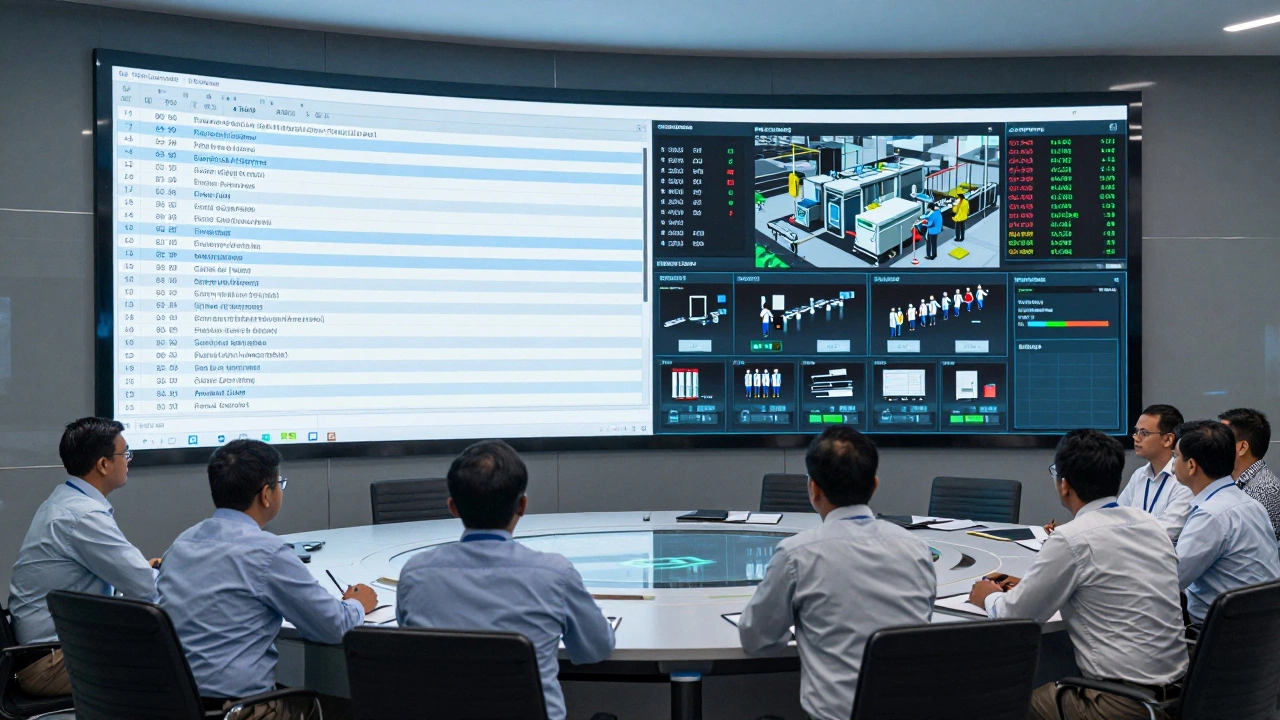
For example, if the MOM system consistently reports that workers are using 5% more glue than the BOM specifies, engineers might investigate. They could find that the glue nozzles are leaking, leading to waste. Fixing the nozzle solves the operational issue, but updating the BOM to reflect realistic usage prevents future budget overruns. This feedback loop is critical for continuous improvement.
Common Pitfalls When Managing BOM and MOM
Many manufacturers struggle because they treat these systems as silos. Here are common mistakes to avoid:
- Outdated BOMs: If the BOM in the system doesn’t match the physical product, the MOM system will drive production errors. Always enforce strict change management protocols for BOM updates.
- Lack of Real-Time Data in MOM: Using paper clipboards for MOM data entry creates lag. By the time you enter quality issues into the system, the defective batch may have already moved downstream. Invest in shop floor terminals or mobile apps for real-time MOM data capture.
- Ignoring Multi-Level BOMs: Simple products have flat BOMs. Complex products (like electronics or machinery) have multi-level BOMs where sub-assemblies have their own BOMs. Ensure your MOM system can handle this hierarchy so workers get instructions for the correct sub-assembly at the right station.
Why This Matters for Modern Manufacturing
In 2026, the push toward Industry 4.0 and smart factories makes the distinction between BOM and MOM even more critical. Smart factories rely on IoT sensors feeding real-time data into MOM systems. These systems then adjust production parameters dynamically. However, all of this agility depends on a foundational, accurate BOM.
If you are looking to optimize your manufacturing business, start by auditing your BOM accuracy. Then, evaluate your MOM capabilities. Are you capturing enough data to understand why variances occur? Do your supervisors have visibility into real-time performance?
Remember, the BOM is your blueprint. MOM is your construction crew’s daily log. You need both to build a successful product, on time and within budget. Mastering the relationship between these two concepts is a key step toward operational excellence.
Is BOM part of MOM?
No, BOM is not part of MOM, but they are closely integrated. The BOM (Bill of Materials) is a static definition of product components, usually managed in PLM (Product Lifecycle Management) or ERP systems. MOM (Manufacturing Operations Management) is the system that executes production using the data from the BOM. Think of the BOM as the input and MOM as the process that utilizes that input.
What is the difference between BOM and ERP?
ERP (Enterprise Resource Planning) is a broad business management system that handles finance, HR, sales, and inventory. The BOM is often a module or data set within an ERP system. MOM is more specialized, focusing specifically on shop floor operations. While ERP plans resources at a high level, MOM manages the granular, real-time execution on the factory floor.
Do I need MOM software if I have an ERP?
If your manufacturing processes are simple and low-volume, your ERP’s built-in production modules might suffice. However, for complex, high-mix, or high-volume manufacturing, dedicated MOM software provides deeper functionality for quality tracking, labor management, and real-time scheduling that ERPs typically lack. MOM fills the gap between strategic planning (ERP) and machine control.
What are the types of BOM?
There are several types of BOMs used across the product lifecycle. The EBOM (Engineering BOM) reflects the design intent. The MBOM (Manufacturing BOM) includes additional items needed for production, such as packaging or adhesives, that aren’t part of the final design. The SBOM (Service BOM) lists spare parts for maintenance. Each type serves a different stage of the product’s life.
How does MOM improve efficiency?
MOM improves efficiency by providing real-time visibility into production. It reduces downtime through predictive maintenance alerts, minimizes waste by tracking material consumption accurately, and enhances quality by catching defects early. By analyzing MOM data, managers can identify bottlenecks and optimize workflows, leading to higher Overall Equipment Effectiveness (OEE).