Egg Processing Level Checker
Select an egg product below to analyze its processing level according to the NOVA classification system.
Grab a carton of eggs from your fridge. Crack one open into a pan. Is that processed food? If you follow the strictest definition, yes. If you look at what’s actually in it, no. This contradiction confuses almost everyone trying to eat clean. We hear "processed" and think chemicals, preservatives, and factory sludge. But an egg is just... an egg. So where does it fit?
The answer depends entirely on which rulebook you are using. In nutrition science, not all processing is created equal. An egg sits right on the border between nature and industry. Understanding this distinction changes how you view your grocery list. It also explains why some health experts call eggs superfoods while others urge caution.
The NOVA Classification System: How Experts Categorize Food
To settle the debate, we need a common language. Most dietitians and public health officials use the NOVA classification system, which was developed by researchers at the University of São Paulo. This system doesn't judge food by calories or fat content. Instead, it looks at how much the food has been altered from its natural state.
NOVA splits foods into four groups:
- Group 1 (Unprocessed): Foods found in nature. Fresh fruits, vegetables, grains, nuts, seeds, milk, meat, and eggs. Nothing added. Nothing removed.
- Group 2 (Processed Culinary Ingredients): Substances extracted from Group 1 foods. Think oils, butter, sugar, salt, and honey.
- Group 3 (Processed Foods): Simple products made by adding Group 2 ingredients to Group 1 foods. Canned beans, fresh bread, cheese, and cured meats fall here.
- Group 4 (Ultra-Processed Foods): Industrial formulations with five or more ingredients, often including additives like emulsifiers, flavor enhancers, and artificial colors. Think sodas, packaged snacks, and reconstituted meat products.
Under NOVA, a raw, whole egg is firmly in Group 1. It is unprocessed. You take it off the hen, wash it, and eat it. That’s it. However, once you start altering the egg, it moves up the ladder. A hard-boiled egg remains Group 1 because boiling is a culinary preparation, not industrial processing. But a pre-cooked, sliced egg salad sandwich? That’s likely Group 3 or even Group 4, depending on the preservatives used.
The Hidden Processing: What Happens Before You Buy
Even if the egg itself is unprocessed, the journey to your kitchen involves significant industrial steps. This is where the confusion starts. When you buy eggs in Australia or anywhere else, they have already undergone several treatments.
- Cleaning and Washing: Commercial eggs are washed to remove dirt and bacteria. This removes the natural cuticle (bloom) that protects the shell.
- Vaccination: In many countries, hens are vaccinated against Salmonella. While this affects the bird, not the egg directly, it’s part of the production chain.
- Sanitization: After washing, eggs are sprayed with a sanitizing solution (often chlorine-based) to kill surface bacteria.
- Candling: Eggs are passed over bright lights to check for cracks or internal defects.
- Grading and Packaging: Machines sort eggs by size and weight before boxing them.
Does this make the egg "processed"? Technically, these are post-harvest handling procedures. They don’t change the chemical composition of the yolk or white. They ensure safety and shelf life. But they do mean that the egg in your supermarket is not exactly the same as an egg laid in a backyard coop and eaten immediately. The removal of the cuticle means commercial eggs must be refrigerated, whereas unwashed eggs can sit at room temperature for weeks.
Egg Products: When Eggs Become Ultra-Processed
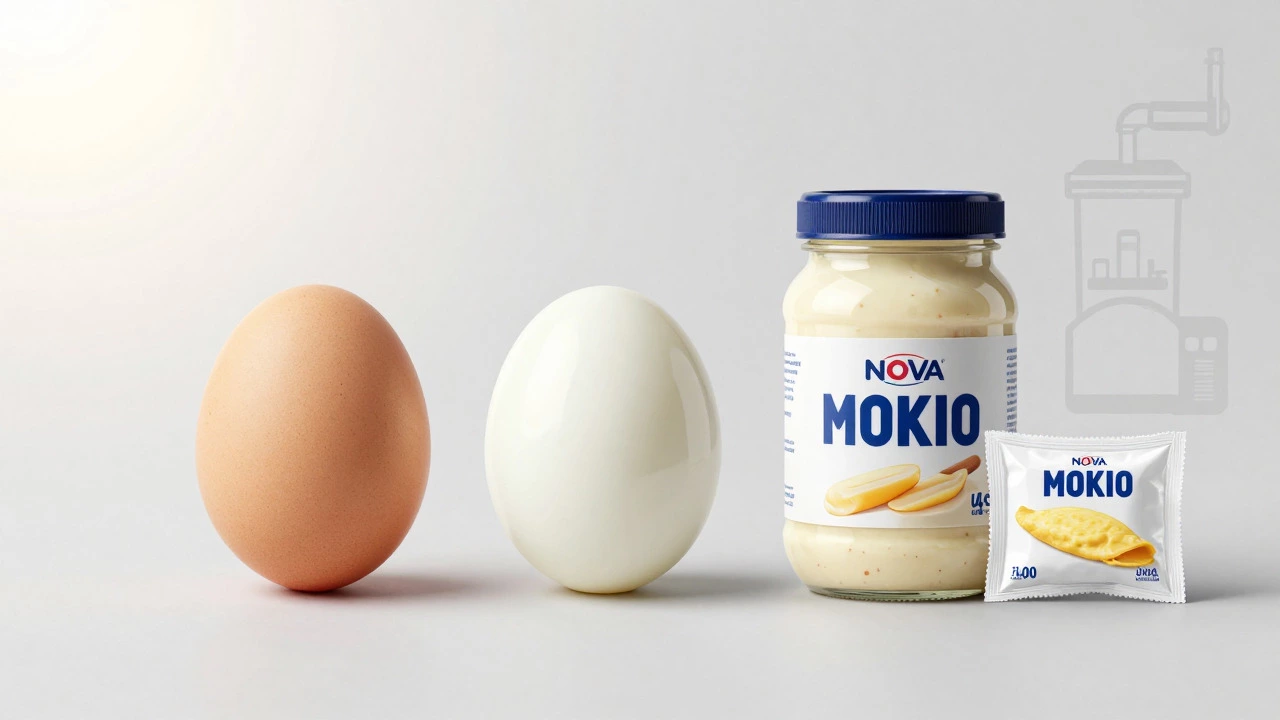
Whole eggs are safe. But the egg industry produces dozens of other items that blur the line. These are where the real processing happens. Let’s look at common egg-derived products and their NOVA status.
| Product | NOVA Group | Key Additives/Changes |
|---|---|---|
| Fresh Whole Eggs | Group 1 (Unprocessed) | None |
| Pasteurized Liquid Eggs | Group 3 (Processed) | Salt or sugar may be added; heat-treated to kill bacteria |
| Dried Egg Powder | Group 3 (Processed) | Water removed via spray drying; anti-caking agents sometimes added |
| Mayonnaise (Jarred) | Group 4 (Ultra-Processed) | Oil, vinegar, stabilizers, preservatives, colorings |
| Instant Omelet Mix | Group 4 (Ultra-Processed) | Dehydrated eggs, vegetable oil, thickeners, flavor enhancers |
| Quail Egg Snacks (Candied) | Group 4 (Ultra-Processed) | Sugar, soy sauce, spices, preservatives |
Liquid eggs, for example, are popular in restaurants because they’re convenient and pasteurized. But pasteurization involves heating the egg to a specific temperature to destroy pathogens. This denatures some proteins and alters texture. It’s a minimal process, but it’s still processing. Dried egg powder takes it further. Spray drying removes water, turning the egg into a shelf-stable powder. This requires high heat and often anti-caking agents to prevent clumping. While still nutritious, it’s far removed from the natural state.
Then there’s mayonnaise. Made from eggs, oil, and acid, it’s a classic processed food. But jarred mayo often contains stabilizers like xanthan gum, preservatives like calcium disodium EDTA, and artificial colors. These ingredients extend shelf life but add nothing nutritional. This is ultra-processing in action.
Nutritional Impact: Does Processing Change the Value?
Here’s the good news: mild processing doesn’t destroy nutrients. Boiling, scrambling, or poaching an egg retains most of its protein, vitamins, and minerals. Even pasteurized liquid eggs keep their nutritional profile intact. The main loss comes from heat-sensitive vitamins like vitamin B12 and folate, but the impact is minor.
However, ultra-processed egg products tell a different story. Instant omelet mixes, for instance, are loaded with sodium and unhealthy fats. They replace the natural balance of the egg with industrial shortcuts. You might get the protein, but you lose the bioavailability of nutrients. Bioavailability refers to how well your body absorbs and uses nutrients. Whole eggs have high bioavailability. Processed egg products often have lower bioavailability due to additives and structural changes.
Consider cholesterol. For decades, eggs were demonized for their cholesterol content. Recent research shows that dietary cholesterol has a smaller impact on blood cholesterol than previously thought. But this applies to whole eggs. Ultra-processed egg products often contain trans fats or saturated fats from cheap oils, which do raise bad cholesterol. So, the form matters as much as the content.
How to Read Labels Like a Pro
If you want to avoid ultra-processed eggs, you need to read labels. Here’s what to look for:
- Ingredient List Length: If it’s longer than five ingredients, be cautious. Whole eggs should have zero ingredients listed.
- Unfamiliar Words: If you can’t pronounce it, question it. Sodium alginate, carrageenan, and monosodium glutamate (MSG) are common in processed egg products.
- Added Sugars and Salts: Many processed egg dishes hide sugar and salt. Check the nutrition panel for high sodium or added sugars.
- Preservatives: Look for terms like "BHT," "BHA," or "calcium propionate." These extend shelf life but aren’t necessary in fresh eggs.
In Sydney, where I live, we have access to fresh, local eggs from small farms. These eggs are often sold without washing, preserving the cuticle. They’re cheaper in the long run because they last longer at room temperature. If you’re buying commercial eggs, stick to the carton. Avoid the aisle with boxed mixes and jarred sauces unless you’ve checked the label.
The Bottom Line: Context Matters
So, are eggs processed food? It depends. A raw, whole egg is unprocessed. A hard-boiled egg is minimally processed. A packet of instant scrambled eggs is ultra-processed. The key is to understand the spectrum. Not all processing is bad. Pasteurization makes eggs safer for vulnerable groups like pregnant women and the elderly. Drying allows for storage in emergencies.
But when it comes to daily eating, whole eggs win. They’re affordable, versatile, and packed with nutrients. Your body recognizes them easily. Processed egg products are convenient, but they come with trade-offs. Use them sparingly. Prioritize whole foods whenever possible.
The next time you crack an egg, remember: you’re eating one of nature’s perfect packages. Just don’t let the industry convince you otherwise.
Is a boiled egg considered processed food?
No, a boiled egg is considered unprocessed under the NOVA classification system. Boiling is a culinary preparation method, not industrial processing. It does not add ingredients or alter the chemical structure significantly.
Are liquid eggs healthier than whole eggs?
Liquid eggs are slightly less nutritious than whole eggs due to pasteurization, which can reduce some heat-sensitive vitamins. However, they are still a good source of protein. Choose unsalted versions to avoid extra sodium.
What is the difference between processed and ultra-processed eggs?
Processed eggs, like canned eggs or simple dried powders, have few additives and retain most nutrients. Ultra-processed eggs, such as instant omelet mixes or flavored egg snacks, contain multiple additives, preservatives, and unhealthy fats.
Do commercial eggs have chemicals in them?
Commercial eggs are washed with sanitizers like chlorine to kill bacteria. Residual amounts are negligible and safe for consumption. The egg itself does not contain chemical additives unless it’s a processed product like liquid or powdered eggs.
Can I eat eggs if I’m avoiding processed foods?
Yes, absolutely. Whole, fresh eggs are unprocessed and highly recommended in any low-processed diet. Stick to whole eggs and avoid pre-packaged egg meals or mixes to stay within your guidelines.