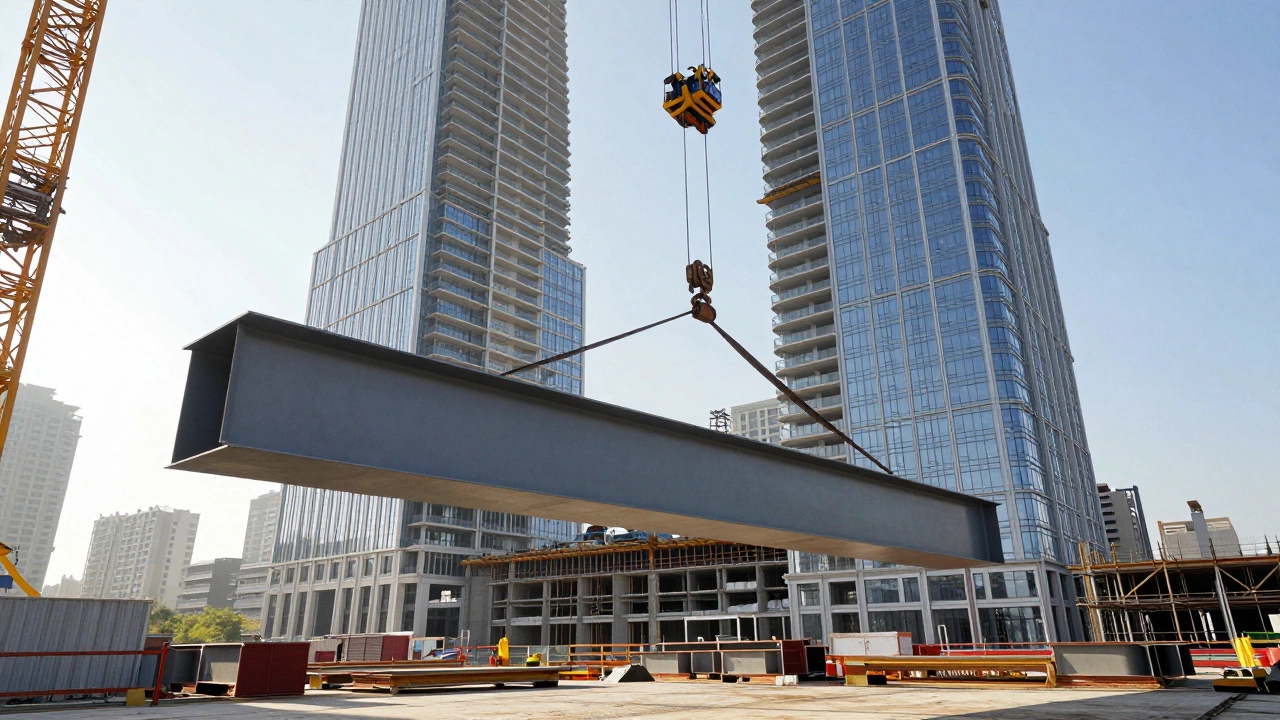
The Core Difference: Standardized Quality Control
When people say American steel is superior, they are usually talking about consistency. In the U.S., the industry relies heavily on ASTM International (formerly the American Society for Testing and Materials). This organization sets the exact chemical composition and mechanical properties a piece of steel must have to be certified for a specific use. If a beam is rated for a high-rise in New York, it has to meet a strict, verifiable set of data points.
In contrast, the Chinese steel market is massive and fragmented. While their top-tier state-owned enterprises produce world-class metal, there are thousands of smaller, private mills. Some of these smaller operations may cut corners on smelting times or use lower-grade scrap, leading to "off-spec" steel. This creates a gamble: you might get a piece of steel that is perfectly fine, or you might get one with internal impurities that lead to premature cracking. That unpredictability is why engineers often prefer U.S. sources for critical infrastructure.
How They Make It: EAF vs. BF-BOF
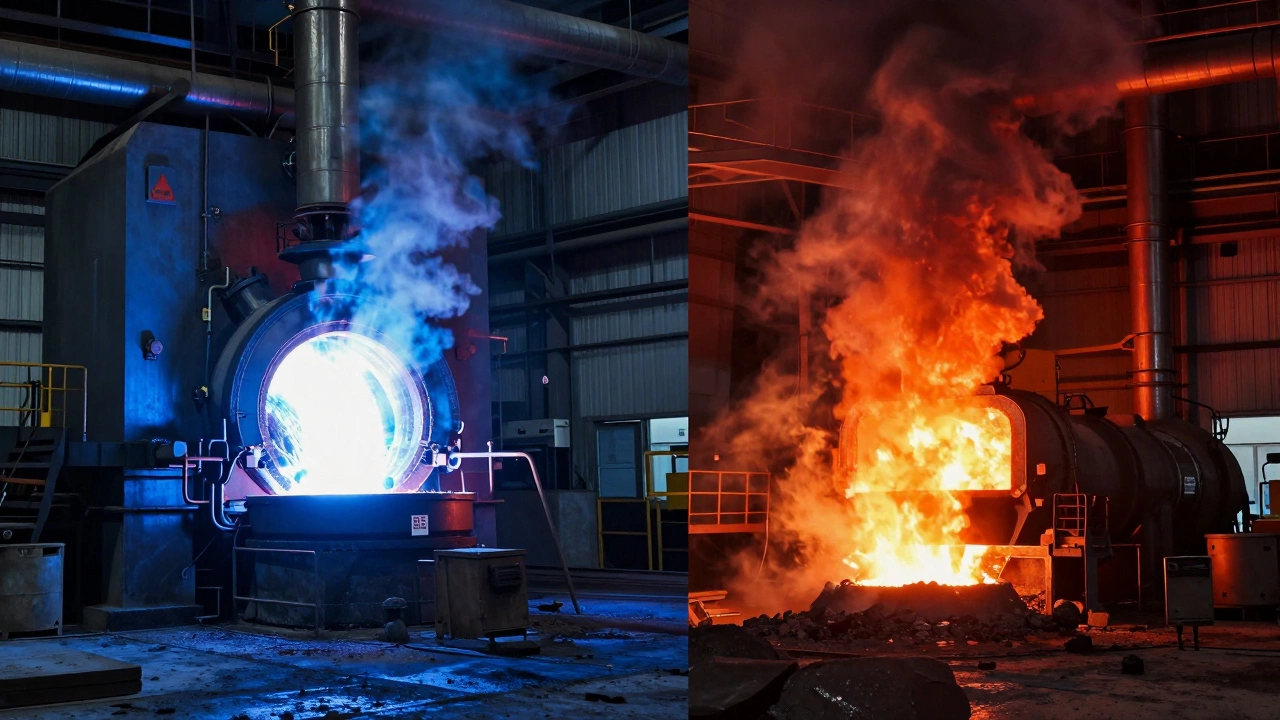
The way steel is made fundamentally changes its properties and its environmental footprint. Most modern American plants have shifted toward the Electric Arc Furnace (EAF). An EAF essentially melts down recycled steel scrap using high-voltage electricity. This process is faster, more flexible, and allows for tighter control over the final chemistry of the melt.
China, while catching up, has historically relied much more on the Blast Furnace-Basic Oxygen Furnace (BF-BOF) route. This involves smelting iron ore from scratch using coke (carbon from coal). While this produces very "clean" steel in terms of recycled impurities, it is incredibly energy-intensive and prone to wide variances if the ore quality fluctuates. The shift in the U.S. toward American steel quality via EAF technology means the industry can pivot quickly to produce specialized, high-strength alloys that the rigid BF-BOF process struggles to mimic without massive investment.
| Feature | U.S. (Predominantly EAF) | China (Predominantly BF-BOF) |
|---|---|---|
| Primary Raw Material | Recycled Steel Scrap | Iron Ore and Coal |
| Quality Consistency | High (Tight ASTM compliance) | Variable (High at top mills, low at small mills) |
| Carbon Footprint | Lower (Recycling focus) | Higher (Heavy coal usage) |
| Production Speed | Fast, batch-based | Slow, continuous flow |
The "Dirty Steel" Problem and Impurities
In the metallurgy world, "dirty steel" refers to metal with too many non-metallic inclusions-basically tiny bits of slag or gas bubbles trapped inside the steel. These inclusions act as stress concentrators. If you're making a paperclip, it doesn't matter. If you're making a turbine blade or a bridge cable, a single microscopic impurity can cause a catastrophic failure through a process called fatigue.
American mills generally use more advanced Secondary Metallurgy processes, such as vacuum degassing, to suck these impurities out of the molten metal. Because the U.S. market is driven by high-value specialized sectors (aerospace, defense, medical), the investment in these refining technologies is higher. Many Chinese mills produce "commodity steel"-massive quantities of standard rebar and sheet metal where the priority is volume and low cost rather than ultra-high purity.
Certifications and the Paper Trail
If you buy steel from a reputable U.S. mill, it comes with a Mill Test Report (MTR). This is a legal document that lists the exact heat number, the chemical analysis (carbon, manganese, sulfur, silicon levels), and the results of physical tests like tensile strength and yield point. It's a birth certificate for that specific batch of metal.
When importing from China, the documentation can be a headache. While large companies provide certificates, there have been documented cases of "paper-milling," where certificates are forged or represent a different, higher-quality batch than the one actually shipped. This lack of transparency is a major reason why the Buy America Act exists; it's not just about supporting local jobs, but about ensuring a verifiable chain of custody for materials used in public safety projects.
The Role of Specialized Alloys
Where the U.S. truly pulls ahead is in high-performance alloys. Think of the steel used in jet engines or nuclear reactors. This requires Alloy Steel, which is steel mixed with elements like chromium, nickel, or molybdenum to resist heat and corrosion. The U.S. has a deeply integrated ecosystem of research universities and private labs that develop these recipes.
China is rapidly closing this gap by investing billions in R&D and acquiring foreign technology. However, the "institutional knowledge"-the decades of experience in refining the process of heat-treating and quenching-still leans toward American producers. When you need a material that can survive 2,000 degrees Fahrenheit without warping, you're looking for the specialized expertise found in U.S. specialty mills.
Cost vs. Value: The Real Trade-off
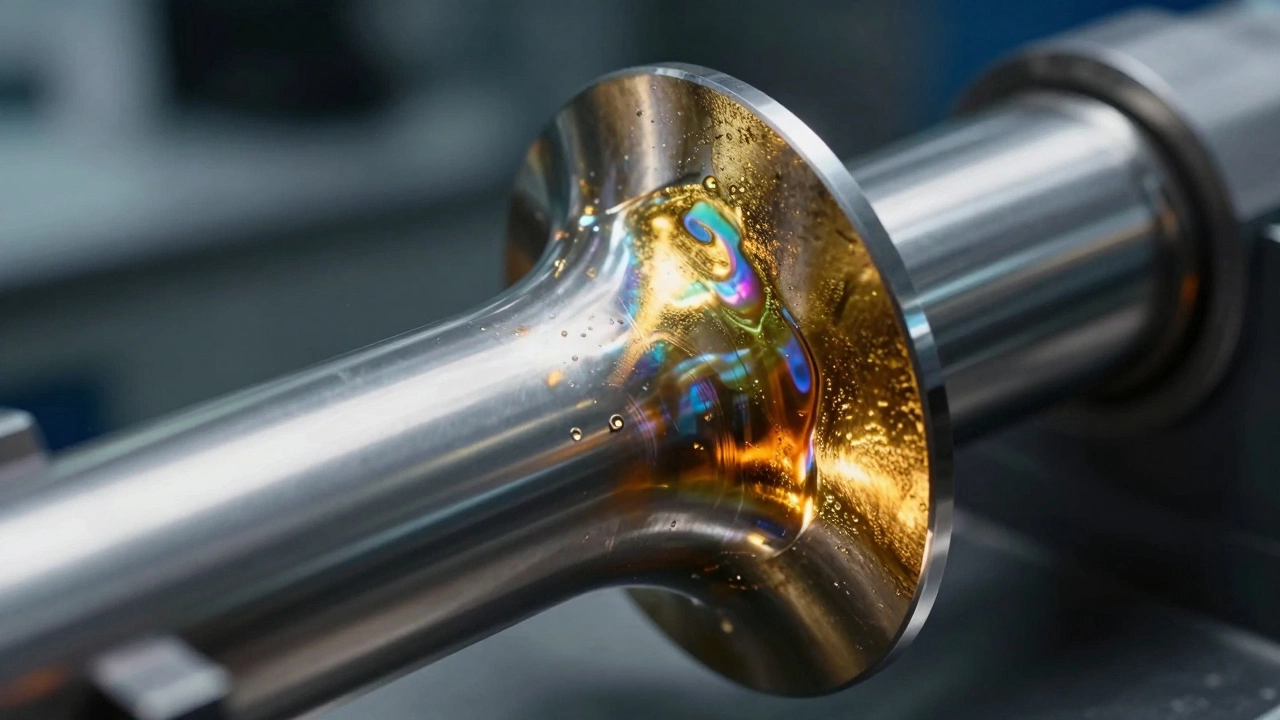
Let's be honest: Chinese steel is often cheaper. This is because of massive government subsidies and a focus on scale. For a project where the stakes are low-like a warehouse fence or basic residential framing-the difference in quality is negligible. You wouldn't pay a 30% premium for "premium" steel if the structure is only meant to hold up a light roof.
But when you factor in the long-term cost of ownership, the math changes. Steel with higher purity and better corrosion resistance lasts longer before it needs painting or replacing. If a bridge needs a full deck replacement every 20 years instead of every 40 because of inferior steel quality, the "cheap" Chinese steel actually becomes the most expensive option over the life of the project.
Is all Chinese steel low quality?
No. China has some of the largest and most advanced steel plants in the world. Their top-tier state-owned enterprises produce steel that meets international standards. The issue is the lack of consistency across the thousands of smaller, unregulated mills that produce the bulk of their exports.
What is the "Mill Test Report" (MTR)?
An MTR is a certified document provided by the manufacturer that proves the steel's chemical composition and physical properties match the required specifications. It allows engineers to verify that the metal is safe for its intended load-bearing use.
Why is the Electric Arc Furnace (EAF) considered better for quality control?
EAFs allow for more precise control over temperature and chemistry because they operate in batches. It is easier to adjust the alloy mix in an EAF than in a massive, continuous blast furnace, resulting in a more consistent final product.
Does "Buy America" only benefit U.S. workers?
While it supports jobs, it also focuses on national security and safety. By requiring domestic steel for critical infrastructure, the government ensures that the materials meet strict ASTM standards and have a verifiable, transparent audit trail.
Can you tell the difference between the two by looking at them?
Visually, no. Steel looks like steel. The differences are found in the microstructure (visible under a microscope), the chemical makeup, and the performance under stress tests (tensile and yield tests).
Next Steps for Buyers and Engineers
If you're deciding which steel to source for your next project, start by defining your "failure cost." If a structural failure would lead to a disaster, prioritize ASTM-certified American steel with full MTR documentation. If you're working on a low-risk project where cost is the primary driver, imported steel is a viable option, but you should insist on third-party inspections to verify the quality of the specific batch you're receiving.
For those looking to diversify their supply chain, consider looking into "mini-mills" in the U.S. These smaller EAF-based plants often provide a great balance of competitive pricing and the high quality standards the U.S. industry is known for.